Εμφάνιση αναρτήσεων με ετικέτα Ειδικές Επιχειρήσεις. Εμφάνιση όλων των αναρτήσεων

Κυριακή 14 Οκτωβρίου 2012

Jordan: US Forces Plan Shield Against Syria


RUSSEIFEH, Jordan -- From the edge of a steep mountain overlooking a desert compound built into an old rock quarry, machine gunfire echoes just outside hangars where U.S. special operations forces aretraining Jordanian commandos.

The Americans, who arrived in the kingdom a few weeks ago at the request of the Jordanians, are helping them develop techniques to protect civilians in case of a chemical attack from neighboring Syria, according to Jordanian officials.

On the Syrian border farther north, British military officers recently assessed the dangers of rockets constantly falling on the kingdom and ways to shield the Jordanian population and Syrian refugees as President Bashar Assad widens his military offensive against rebel enclaves in the vicinity, according to Jordan-based Western diplomats.

Jordan's King Abdullah II has repeatedly discussed plans for reinforcing security along the Syrian border and expressed concern over Syria's chemical stockpiles in meetings with visiting Western allies, according to the two diplomats, who monitor Syria from their base.

They said it is believed that Abdullah has also been shopping around for an anti-missile defense system to shield his densely populated capital, Amman -- home to nearly half of Jordan's population.

There is also talk of contingency plans for a quick pre-emptive strike if Assad loses control over his stock of chemical weapons in the civil war. The fear is that those weapons might otherwise fall into the hands of al-Qaida or Lebanon's Islamic militant group Hezbollah.

"There are dangers involved, and we have to ensure the safety of our country and the well-being of our citizens," a senior government official said in the first public Jordanian confirmation of the presence of foreign military personnel here. "We are benefiting from the experience of our allies as we prepare for the worst scenarios."

The presence of some 150 Americans at the King Abdullah II Special Operations Training Center northeast of the capital is a clear message to Assad that Jordan's longtime Western allies stand ready to defend the country if it is dragged into the 19-month Syria conflict.

Assad's regime, which is believed to have one of the world's largest chemical weapons programs, has said it might use them against external threats but not against Syrians.

But the Jordanians worry that Assad may use his chemical weapons against his neighbors, or his countrymen, if he felt that his days in power were numbered.

In May, the U.S. held joint exercises with Jordan, nicknamed the "Eager Lion," which focused on the ways to deal with a chemical weapons attack.

On Wednesday, U.S. Defense Secretary Leon Panetta said at a NATO conference of defense ministers in Brussels that the U.S. has been working with Jordan to monitor chemical and biological weapons sites in Syria and was helping Jordan deal with refugees pouring over the border.

Although the senior government official insisted that the Americans were "advisers, not troops," two senior U.S. defense officials said most were Army special operations forces. The U.S. officials spoke on condition of anonymity because they were not authorized to comment publicly about the mission.

The troops are operating out of a military center near Amman and have moved back and forth to the Syrian border. Their work involves gathering intelligence and planning joint Jordanian-U.S. military maneuvers, one U.S. official said.

The revelation of U.S. military personnel so close to the Syrian conflict suggests an escalation in theAmerican involvement, even as the Obama administration pushes back on any suggestion of a direct intervention in Syria.

The Jordanian official insisted that the kingdom was "capable of shielding itself from Syrian attack," but London-based Mideast analyst Rosemary Hollis disagreed.

"For Jordan, the more unstable Syria becomes, the deeper the crisis proceeds, the more likely Jordan will suffer from all kinds of spillover, but they are incapable of doing anything to intervene to try to turn the conflict in one direction rather than another unless they have the ballast, cover and involvement of serious international forces, which is the Americans," Hollis said.

She also saw the American military presence as a step toward possible future military operations to secure Syria's chemical stockpiles.

Torbjorn Soltvedt, a senior analyst with the Britain-based Maplecroft risk analysis group, said he saw the current situation as a "monitoring and training stage."

"Given the degree to which Syria's chemical weapons stockpiles have been dispersed across the country, an operation to secure them would be extensive and require significant numbers of troops," he said. "The Pentagon has estimated that an operation to secure Syria's chemical weapons stockpiles could require as much as 75,000 troops given the presence of several chemical agent manufacturing plants and many more storage sites throughout the country."

Panetta said that while the U.S. believes the weapons are still secure, intelligence suggests the regime might have moved some to protect them.

Steven Bucci, an expert in chemical weapons at the Heritage Foundation, has told Congress there might be as many as 50 chemical weapons sites in Syria. He said in an interview Wednesday that Syria's stockpile is potentially "like a gift from God" for militants since they don't have the know-how to assemble such weapons, while some of Syria's chemical agents are believed to have already been fitted into missile warheads.

At the desert facility, stretching 25 kilometers (16 miles) on the edge of this predominantly Palestinian suburb, Jordanian soldiers guard the walled compound, where Iraqi and Libyan special forces once received training. They refused to allow reporters in.

Jordanian officials were eager to downplay the U.S. role, concerned about the possibility of raising tensions with Syria and giving the kingdom's largely conservative population the impression that they were allowing foreigners to use Jordan as a potential launching pad for a pre-emptive attack against another Arab country.

The senior government official and two others who discussed the American military role all spoke on condition of anonymity, citing possible diplomatic sensitivities with Syria. Assad is thought to have sleeper cells scattered across the kingdom and plotting attacks on Syrian opposition and Jordanian figures.

Information Minister Sameeh Maaytah, the only official who spoke on the record, said the U.S. presence was part of "routine training exercises."

"Jordan and U.S. forces exchange visits regularly, and the presence of tens of their forces here is part of efforts to expand cooperation, exchange capabilities and protect regional stability," he said in an interview. He declined to elaborate or comment on any link to the Syrian crisis.

Amman has long had bumpy relations with Damascus because of its alliance with the United States -- Jordan's largest donor of economic and military aid -- and its 1994 peace treaty with Israel.

Jordan would like to see the Syrian regime toppled because of growing concern that Assad's key ally, Iran, is trying to spark Shiite uprisings in Arab countries ruled by members of the rival Sunni sect. Assad's ruling Alawite minority is an offshoot of Shiite Islam.

Abdullah was the first Arab leader to warn in 2004 of the sweep of Iran's "Shiite crescent," stretching from Lebanon through Syria and Iraq.

Jordanian officials have advocated a buffer zone inside the Syrian border to protect civilians fleeing bombardment. There is mounting speculation that Jordan would dispatch highly skilled special forces to secure such a zone when Assad's regime falls to prevent chaos on its border.

In the past six weeks, more than 20 Syrian rockets have fallen on Jordanian villages near the border. At least two people were wounded, including a 4-year-old Jordanian girl.

The two Western diplomats said the Britons, about a half-dozen officers specialized in intelligence gathering and special operations techniques, visited Jordan a few times over the past three months. The diplomats insisted on anonymity, saying that public comment may hamper their information gathering on Syria.

The Jordanian army already has an extensive presence on the border and has been assisting waves of Syrian refugees, who are straining the country's meager resources, mainly health care, water and utilities.

Jordan hosts some 200,000 Syrian refugees, more than any other neighboring country. Some come under constant firing from their army as they cross into the kingdom. Jordanian border guards have been wounded and a 6-year-old Syrian boy was killed in July.

Jordanian men also are moving the other way across the border, joining what intelligence officials have estimated to be about 2,000 foreigners fighting alongside Syrian rebels trying to topple Assad

Παρασκευή 5 Οκτωβρίου 2012

Tracking The Tiny Terrors

The U.S. Air Force is spending nearly $4 billion to build a S-Band radar on Kwajalein Island in the Pacific. This will make it easier and cheaper to find and track small (down to 10mm/.4 inch) objects in orbit around the planet. Such small objects are a growing threat and Space Fence will make it possible to track some 300,000 10mm and larger objects in orbit.

Getting hit by an object 100mm (4 inch wide), if it’s coming from the opposite direction in orbit, results in an explosion equivalent to 20 kg (66 pounds) of TNT. That's all because of the high speed (7 kilometers a second, versus one kilometers a second for high-powered rifles) of objects in orbit. Even a 10mm object hits with the impact of 50-60 g (2 ounces) of explosives. In the last 16 years eight space satellites have been destroyed by collisions with one of the 300,000 lethal (10mm or larger) bits of space junk that are in orbit. As more satellites are launched more bits of space junk are left in orbit. Based on that, and past experience, it's predicted that ten more satellites will be destroyed by space junk in the next five years. Manned space missions are at risk as well. 

Three years ago a U.S. Space Shuttle mission to fix the Hubble space telescope faced a one in 229 chance of getting hit with space junk (that would have likely damaged the shuttle and required a backup shuttle be sent up to rescue the crew). Smaller, more numerous, bits of space junk are more of a danger to astronauts (in space suits) working outside. The shuttle crew working outside to repair the Hubble satellite had a much lower chance of being killed by space junk because a man in a space suit is much smaller and the space suits are designed to help the person inside survive a strike by a microscopic piece of space junk.

The U.S. is spending nearly a billion dollars a year in an attempt to better identify, and track, the larger, more lethal bits of space junk. Two years ago the U.S. Air Force put a special Space Based Space Surveillance system (SBSS) satellite into orbit. This $830 million system uses a satellite that contains a digital camera to take pictures of space debris and make it easier to count and track the growing quantity of space junk. Getting a better and timelier look at space junk has become a priority.

The U.S. has proposed using a space based laser to destroy much of the space junk. The laser either vaporizes debris or damages the larger bits so that its orbit "decays" and the junk moves down into the atmosphere and burns up. Many nations object to this proposal, as such a laser system could also be used as an anti-satellite weapon. However, if the growing swarm of space junk destroys a lot more satellites, that attitude may change.

After over half a century of humans putting objects into orbit there is a lot of junk circling the planet. There are nearly 18,000 objects 100mm (4 inches) or larger. These can do some catastrophic damage to satellites or spacecraft. There are millions of objects smaller than 10mm, and these are responsible for many satellites failing early because of cumulative damage from getting hit by a lot of these micro objects.

SBBS has a military purpose, to spot and track hostile KillSats sent up to destroy American satellites. If the initial SBBS continues to be successful more will be launched, to provide real time surveillance of orbital space. But most of the time SBBS will serve to make space safer from catastrophic accidental collisions. The two or three ground based Space Fence radars will complement the satellites in finding and tracking dangerous space junk.

Source

Πέμπτη 4 Οκτωβρίου 2012

"Αμερικανικά μεταγωγικά αεροσκάφη στη Σούδα". Τι σενάριο "παίζει"


Ένα σκηνικό προετοιμασίας στρατιωτικών επιχειρήσεων στον Κόλπο, αλλά και στη Βόρεια Αφρική περιγράφει σε ανάλυσή του το Stratfor. Η ανάπτυξη αμερικανικών και γαλλικών δυνάμεων δεν περνά απαρατήρητη και σ΄ αυτή εμπλέκεται και η Σούδα.

Δώδεκα αεροσκάφη MC-130H, HC-130N, HC-130P και AC-130 Υ και ελικόπτερα διέσχισαν τον Ατλαντικό Ωκεανό στις 13 Σεπτεμβρίου και προσγειώθηκαν ,σύμφωνα με δημοσίευμα του Stratfor στη Σούδα. 

Το Stratfor χαρακτηρίζει με νόημα “ενδιαφέρουσα” αυτή τη “μαζική” αποστολή αεροσκαφών τα οποία συνδέει με αποστολές Ειδικών Δυνάμεων.

Στις 24 Σεπτεμβρίου ,επισημαίνει το Stratfor αεροσκάφη F/A-18 προσγειώθηκαν στην αεροπορική βάση Moron στην Ισπανία. Οι πληροφορίες θέλουν τα αεροσκάφη αυτά να κατευθύνονται προς τον Περσικό Κόλπο.

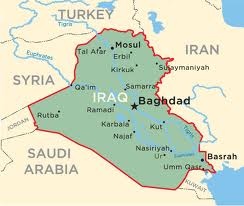
Την ίδια ημέρα οι New York Times δημοσίευσαν ένα άρθρο ,σύμφωνα με το οποίο μετά από συμφωνία με το Ιράκ, αμερικανικές ειδικές δυνάμεις θα επιστρέψουν στη χώρα.

Το Stratfor επισημαίνει και την αυξημένη κινητικότητα των Γαλλικών Ενόπλων Δυνάμεων στη βόρεια Αφρική ,όπου το Παρίσι ανέπτυξε ειδικές δυνάμεις στη νότια Σαχάρα και στο βόρειο Μάλι. Αμερικανικές δυνάμεις έχουν εντοπιστεί στη Λιβύη.

Όπως σωστά επισημαίνουν οι Αμερικανοί αναλυτές κανείς δεν μπορεί να αγνοήσει την ανάπτυξη αυτών των δυνάμεων και να μην την συνδέσει με όσα γίνονται στη Συρία,το Αφγανιστάν,αλλά και στη βόρεια Αφρική.

Τρίτη 2 Οκτωβρίου 2012

US Special Forces Deployed in Iraq, Again


Despite the official US military withdrawal last December, American special forces “recently” returned to Iraq on a counter-terrorism mission, according to an American general in charge of weapons sales there. The mission was reported by the New York Times, in the fifteenth paragraph of a story about deepening sectarian divides.

The irony is that the US is protecting a pro-Iran Shiite regime in Baghdad against a Sunni-based insurgency while at the same time supporting a Sunni-led movement against the Iran-backed dictatorship in Syria. The Sunni rebellions are occurring in the vast Sunni region between northwestern Iraq and southern Syria where borders are porous.

During the Iraq War, many Iraqi insurgents from Anbar and Diyala provinces took sanctuary in Sunni areas of Syria. Now they are turning their weapons on two targets, the al-Malaki government in Baghdad and the Assad regime in Damascus.

The US is caught in the contradictions of proxy wars, favoring Iran’s ally in Iraq while trying to displace Iran’s proxy in Syria.

The lethal complication of the US Iraq policy is a military withdrawal that was propelled by political pressure from public opinion in the US even as the war could not be won on the battlefield. Military “redeployment”, as the scenario is described, is a general’s nightmare. In the case of Vietnam, a “decent interval” was supposedly arranged by the Nixon administration to create the appearance of an orderly American withdrawal. During the same “interval”, Nixon massively escalated his bombing campaign to no avail. Two years after the 1973 Paris peace accords, Saigon collapsed.

It is unlikely that the Maliki regime will fall to Sunni insurgents in Iraq, if only because the Sunni population is approximately twenty percent of the population. However, the return of US Special Forces is not likely to restore Iraqi stability, and they may become trapped in crossfire as the sectarian tensions deepen. The real lesson may be for Afghanistan, where another unwinnable, unaffordable war in support of an unpopular regime is stumbling towards 2014.

Δευτέρα 1 Οκτωβρίου 2012

US Special Forces involved in Syria


An analyst says Western countries stoke violence in Syria, supporting death squads who ravage the local population, as well as undermine the functioning government.

The United States has announced that it will be providing an additional USD 45 million to the insurgents fighting against Syrian President Bashar al-Assad’s government. 

The US has already provided some USD 25 million to the armed groups. 

Some European and Arab countries have also provided weapons to the insurgents fighting against the Syrian government. 

Press TV has conducted an interview with Stephen Lendman, a writer and radio host from Chicago, to further discuss the issue. The following is a rough transcription of the interview. 

Press TV: Why is Turkey doing this to itself? Let’s start off with the “why” of this to begin with, why is Ankara even involved in trying to overthrow a neighboring country? 

Lendman: Well, in a word, Turkey is involved because Turkey is a NATO country; 28 countries; every country is obligated to the other 27. 

Washington leads NATO. Washington gives the orders. The conflict in Syria, it’s a proxy war; it’s a Western proxy war. 

One correction on what Johnny Miller said, it is not a civil war. There is nothing civil about what’s going on. It’s an invasion. It’s a Western-generated invasion. 


The militants that are in Syria, they are death squads, the same type of death squads that ravaged Nicaragua in the 1980s. They are killers. They are hired paramilitaries; they are hired to kill local people, to stoke terror, to stoke fear.
They can keep coming. There are many of them who, I guess, can be recruited for a buck, for ideology, whatever reason they may have. 

I can’t imagine what Turkey can gain out of this except staying on Washington’s good side. 

But aside from the expense internally in Turkey, and the internal opposition from its own people, what on earth does Turkey want to get involved with a country that over many years it had good relations with and it kept the PKK from stirring up too much trouble? 

Well, exactly the opposite is going on now. 

Everybody is losing on this. The Turkish people are losing. The Syrian people are losing. 

The opposition in Syria, most of the internal opposition is non-violent. You never hear that reported in the major media. 

There is opposition in every country. There is plenty of opposition in America. They don’t go out on the streets, shooting people and blowing up buildings. The people doing that are the Western-recruited death squads brought in from the outside. They’re responsible for the massacres, for the killing. 

Press TV: I saw you shaking your head when our previous guest [John Hajjar] was talking. Your take on what he was saying, that basically the focus of attention is not what we’re calling these armed infiltrators in Syria but on the government itself, and that Turkey is actually not a secular government as many of us have believed, but an Islamic one. Your take, Stephen Lendman. 

Lendman: Your guest from Boston, my home city, he sounds more like a propagandist who appears on Fox News in America. He simply doesn’t know what he’s talking about. 

Number one, Turkey is a secular government. It’s not an Islamist government. It’s run pretty much by the military. It has civilian heads but the military is the ultimate power in Turkey, and it certainly is a secular government. It has been that way for a long time. 


As far as Assad, Assad is doing what any responsible leader would do. Syria was invaded from the outside by killers. These death squads have been imported from surrounding countries; they’re coming from Libya; they’re coming from Iraq; they’re coming from Jordan; Israel is very much involved.
America is supplying all kinds of things by proxy. The so-called humanitarian money that’s being donated, that’s a cover. That’s a cover. There are American weapons being used. These people are being supplied; they’re being directed. The CIA is involved. US Special Forces are being involved. 

British intelligence have been involved. They’ve been involved since last year. These are the facts that are going on in the country. 

Any government would do exactly what Assad has done. He is fighting these killer invaders that have come into his country. 

If they came into Chicago, the Chicago police would do the same thing. If they couldn’t handle it, the National Guard would do the same thing. They’d come out with guns, with tanks. 

If they couldn’t handle it, the US Marines would come in, and they would come in with F-16s, and they would get rid of these people; they would route them; they would kill them. 

If I was Assad, I would do exactly what he is doing, and I am absolutely non-violent. If the Syrian people don’t have Assad to protect them, who do they have? They’re aligned with him. 

They are not war crimes. They are not war crimes. War crimes are committed by the mercenaries.

Κυριακή 30 Σεπτεμβρίου 2012

French Special Forces operating in Libya and Mali


The principle of military action against AQIM (al-Qaeda in the Islamic Maghreb) is now established. The capitals of countries are actively working to develop a politico-military scenario intended to rid the region of the terrorist threat. Because that is targeted by AQIM , France is at the forefront of future operation, which will be composed of the backbone forces of ECOWAS, the Economic Community of West Africa.

Bogged down in Afghanistan for over ten years, the victims of strokes plane strain their budget numbers, the French armies were warned that their participation in overseas operations now limited to a multilateral framework. The colonial past of France and the threat that weigh on the lives of the hostages if Paris was at the forefront in the Sahel also call for moderation. “We just want to have a facilitating role. No question of sending ground troops, “said a French diplomat. The Defence Minister, Jean-Yves Le Drian, promised a “logistical support” to help resolve the crisis.
French Special Forces in the region

But France is getting impatient. One hundred members of French Special Forces have been deployed in the region. They should soon be strengthened, in particular by the commandos of the French Navy. French aid also includes maritime patrol aircraft, who gather intelligence and surveillance system based in Niger. According to the hypotheses, notably in Paris, it would form an action force of a few hundred men to reconquer northern Mali, held for several months by armed Islamist groups.

A core group of 40 men, a first circle 200 to 400 men and footmen from 3000 to 4000 that men are Islamist. “This is not the Russian campaign,” says one expert dossier. “They are actually quite few. A thousand men occupies part of a state that no longer existed, “he says. The operation should not be limited to “give a kick in the anthill then go, warns an expert on the issue. Must be entered in the action duration, otherwise the problem will resurface six months later. ”

According to the daily El Khabar, an Algerian newspaper knowledgeable about security issues, the result of French Special Forces African military in Libya. “This is not information that surprises me. The French interests in the region, as Libya to Niger. Intervention but requires caution and tact due to entangling alliances uncertain actors and influence of foreign powers who have their own agenda, “said Liess Boukra, the former director of the ACSRT a Centre for the Study of Terrorism based in Algiers.

Algeria, which is to keep the pressure on terrorism outside its borders – and if possible to push towards sub-Saharan Africa – rejects any interference in the Sahel. This position does not prevent maintaining links with some ambiguous protagonists of the crisis, as the Islamist Ansar Dine Tuareg who control Kidal, one of the major cities of northern Mali. “There is something in the attitude trouble Algiers,” says a French diplomat.

Chadians in ambush

The French could be strengthened to address the shortcomings of the African Standby Force. Niger has announced its intention to provide troops and Burkina Faso and Senegal could follow. Reinforcements from Chad, a country where France has military bases could actively participate in the operation. But Chadian fighters, hardened in combat in the desert, scare their neighbors because of their reputation of soldiers uncontrollable.

For their part, Malians are divided and destroyed their army. Now, everyone knows that ECOWAS can hardly play more than a “buffer role” in this case, in the words of a diplomat. “His military capabilities are limited. ECOWAS will never be able to form the core of the intervention. ”

To support Africans, Britain has sided with France. Between the two countries’ cooperation is excellent, “says an officer. Germans and Poles have pledged support intelligence. Italians and Spaniards, their political contest. The Russians were assured that they not block the Security Council of the UN an operation in the fight against international terrorism. The Chinese seem to share this view. As for the Americans, they have offered their support, including intelligence, while denying the leading role.

Several steps are difficult to negotiate, must still be completed before the start of the operation. Acting President Traoré Dioncounda asked ECOWAS to help Mali to restore its territorial integrity. An agreement on the conditions for the deployment of an African peacekeeping force, with headquarters in Bamako, was found Sunday. If Malians refuse any deployment of foreign forces in the South, Bamako gave a discreet green light to reconquer the North. A special envoy for the Sahel will be appointed. The name of the Gabonese diplomat Jean Ping is mentioned. Its role would be to involve the African Union (AU) folder.

Source: Le Figaro

Τρίτη 11 Σεπτεμβρίου 2012

A SEAL’s Most Daring Mission


Navy SEALS are taught to practice OPSEC, elaborate operational security tactics to preserve the element of surprise in carrying out missions. Former commando Matt Bissonnette seems to have put that training to good use in the publication of his controversial tell-all book about the assault that killed Osama bin Laden. Bissonnette, who was a member of the SEAL team that snuffed out the terrorist mastermind, and his publisher went to unusual lengths to conceal the existence of the project until the publisher announced it last month.


noeasy-day-nb10-klaidman
The SEALS train hard and stay quiet. But a new tell-all by a member involved in the bin Laden raid is testing the group’s code of silence. (Clockwise fom left: no credit; Lance Iversen / San Francisco Chronicle-Corbis; Aamir Qureshi / AFP-Getty Images)

For the Pentagon it was tantamount to a sneak attack. Officials were taken by complete surprise when details of the sensational account began appearing in the media. Adding to the pressure was the fact that Bissonnette’s account of the bin Laden raid was at odds with the Obama White House’s version in some key respects, notably whether the terrorist mastermind represented a genuine threat to the commandos when they killed him. Last week officials scrambled to get a copy of the book to see whether Bissonnette’s account, No Easy Day (written under the pseudonym Mark Owen), revealed classified information. But by the time government vetters got their hands on it, thousands of copies had already been shipped to stores and the title stood atop Amazon’s sales list.

“We were caught completely off guard,” conceded one senior Pentagon official, who says national-security personnel are obligated to submit manuscripts containing sensitive information for prepublication review (Bissonnette’s lawyer says the regs merely “invite” authors to show vetters but don’t require it). Late last week, Defense Department general counsel Jeh Johnson sent a letter to Bissonnette in a last-ditch bid to minimize the damage. The threat of legal action was aimed at pressuring Bissonnette and his publisher, Dutton, to submit to the Pentagon’s demands for prepublication review. In the past, the DOD has succeeded in halting distribution of books, even in some cases pulping printed copies. But in the case of No Easy Day, it is likely too late to prevent the book from receiving wide public exposure. “At this point the onus is on the SEAL and his publisher to put the genie back in the bottle,” says one senior Pentagon official, declining to explain how that would be possible.

The Pentagon has not disclosed whether it believes No Easy Day divulges classified secrets, though one official told Newsweek “you can bet we wouldn’t have sent the letter if we didn’t think there were serious security breaches.”

Making the situation all the more awkward: the administration itself may have opened the door. The White House has drawn fire for putting out its own cinematic version of the bin Laden raid. The move rankled critics, who say it smacks of end-zone dancing and could compromise future missions. Several SEALS were motivated to back a super-PAC ad faulting Obama’s leadership. All the attention would seem at odds with the culture of the SEALS, who pride themselves on a code of omertà. But if the organization hates the spotlight, you wouldn’t know it from their recent behavior. This spring, they helped produce a wide-release movie called Act of Valor—no Oscar threat, but a good way to recruit successors to Matt Bissonnette.

Δευτέρα 10 Σεπτεμβρίου 2012

The Navy SEALS’ Dying Words

The CH-47 was shot down a year ago 


Monday, August 6 marks the first anniversary of the Afghan crash of a U.S. military CH-47 Chinook helicopter that killed 30 Americans, including 17 Navy SEALS. It was the worst single loss-of-life day for the U.S. in the war in Afghanistan. It was also the worst in the history of Naval Special Warfare.

Just six weeks before the crash, I spent several days meeting with members of the Navy’s elite SEAL Team SIX, talking to them about the loss of one of their teammates, Adam Brown, who had been killed in action during an especially complex raid on a compound in Afghanistan.

I met with two of them in a crowded bar in a remote Alaskan village. The salmon run had just begun so the place was packed with fishermen, one of whom approached our group with a tray of shot glasses overflowing with whiskey. It was also a place that SEALs would come to before heading for training exercises in the surrounding mountains.

The man offered to buy a round. “I’d be honored if we could have a drink together, to thank you all for your service. And for taking care of business in Pakistan,” he said. Tom Ratzlaff, one of the SEALs I was with, took two shots and handed one to me. “This is for Adam,” he clicked his glass against mine, I nodded, and we threw them back together.

Tom, who was better known as “Rat,” and Chris Campbell shared memories of their teammate, but as they talked about his life and the circumstances surrounding his death, they alluded to the fact that they were keenly aware death might be just around the corner, quite literally, for them too. They were about to be redeployed, and with the loss of Adam weighing heavily on their minds, there was some urgency to have a chance to talk and honor their brother-in-arms.

Kevin Houston, one of the SEALs I met with in Virginia Beach the following week acknowledged, “I could end up getting killed on my next mission I go on, but until that happens, for me, business will continue to be conducted.”

One of things I was most interested in understanding from these men was how they managed moving so fluidly between their family lives and their work as highly-trained warriors. Frequently, they were deployed, came home, and then were suddenly redeployed.

In some cases they developed rituals. Tom shared that whenever he boarded a helicopter for a mission, he said the Lord’s Prayer silently, once he got seated, and then prayed for protection. “I don’t ask for protection myself because that’s in his hands. I ask him to look after my wife and kids. Then I ask him to protect all my buddies and forgive them of all their sins and me of my sins. Then I move straight into thinking about what I’m about to do-the target, the map study, making sure I know which way’s north so I can call out things correctly on the target.”

During my interview with Heath Robinson, another teammate of Adam Brown’s, I asked “How do you do it?” referring to how they transition from lethal missions—shooting and killing people—and then coming back home, sometimes just hours later. Heath answered using his friend’s horses as an analogy. “His wife and daughter have horses,” said Heath. “Nothing makes [them] happier. Well, horses are dirty animals, every weekend he puts on his waders, goes in the barn, and shovels the manure…the dirty hay…their piss. It’s not a good job, it’s miserable, but somebody has to shovel the shit so the family can enjoy what they have.”

Kelley Brown, Adam’s wife, recalled the one time she saw “that side” of her husband. He had just returned home and was relaxing in a bubble bath when a very unlucky burglar attempted to break into their house. Adam, naked but covered in bubbles, flew out of the tub and the look in his eyes was someone she did not recognize. Moments later, the intruder bolted in fear and Adam returned to being her loving husband and the adoring father of their two young children.

The SEALs were also circumspect about death in a way that only those confronted with it regularly can be.

“I either want to die in combat, doing my job right now, or live till I’m 98 years old and see my great, great grand kids,” one of them told me. “I don’t want anything in between. None of us do. A warrior’s death, you can’t get any higher than that. It’s horrible for the family, they don’t want to hear that, but for us, the guys at our command, we’re okay with it. That is our duty, the highest calling. And if that happens to you, you hope you are in the right frame of mind that you are okay with it. I have seen a lot of people go, not well. Had they been able to do another take on it, they would probably want it to go better. I remember everything else about Adam also, but I will always remember the end. You know, your first impression lasts a relationship, and your last impression is with you forever. Adam died well.”

Six weeks after my last interview, I was returning to civilization from my version of being off the grid: camping with my family. My own happy grubby kids were in the back seat of our car when my cell phone indicated I had voicemail.

I called in and listened to one message after another and I learned that all seven of the men I had interviewed — John, Kevin, Brian, Heath, Matt, Tom, and Chris — had been killed in action the day before.

The team had been on a mission in the Wardak Province of Afghanistan, part of an operation intended to capture or kill leaders from an insurgent cell that was holed up in the region. The Chinook carrying them, along with 23 other Americans, and eight Afghan troops, had crashed and exploded after a single rocket propelled grenade struck its aft rotor blade.

Questions surrounded the crash: Why were so many from our most elite military unit on one helo? The most credible view is that it was a lucky shot, but some speculated that it might have somehow been retaliation at the same unit that had only a couple months earlier taken out Bin Laden.

As of today, some family members remain unsatisfied with the investigation. A few days after the crash, I attended Kevin Houston’s funeral, then began transcribing the interviews, haunted as I listened to their voices and read their reflections on life and on death.

As they had talked about Adam Brown, they had unknowingly defined themselves: humble, selfless, and fearless.

With the one-year anniversary of that tragedy upon us, I think of them, and their families, often.

My mind wanders to the inside of that helicopter, envisioning their final moments. It’s a dark place filled with questions — mainly the questions I didn’t ask when I interviewed each of them just weeks before they were killed — but the one thing I know for certain is that they died honorably: serving their country, doing what they believed in.

I have no doubt that they died well.


Eric Blehm is the author of FEARLESS: The Undaunted Courage and Ultimate Sacrifice of SEAL Team SIX Operator Adam Brown, which is dedicated to the memory of the men who were killed on August 6, 2011. See www.fearlessnavyseal.com

Παρασκευή 17 Αυγούστου 2012

The Makin Island Raid

Makin Island as seen from the periscope of USS Nautilus during the raid of August 17-18, 1942.
The Makin Island Raid (occurred on 17–18 August 1942) was an attack by the United States Marine Corps on Japanese military forces on Makin Island (now known as Butaritari Island) in the Pacific Ocean. The aim was to destroy Japanese installations, take prisoners, gain intelligence on the Gilbert Islands area, and divert Japanese attention and reinforcements from the Allied landings on Guadalcanal and Tulagi.

The raid was among the first American offensive ground combat operations of World War II. The force was drawn from the 2nd Raider Battalion and comprised a small battalion command group and two of the Battalion's six rifle companies. Because of space limitations aboard ship, each company embarked without one of its rifle sections. Battalion headquarters, A Company and 18 men from B Company—totaling 121 troops—were embarked aboard the submarine Argonaut and the remainder of B Company—totaling 90 men—aboard Nautilus. The raiding force was designated Task Group 7.15 (TG 7.15).

The Makin Atoll garrison consisted of the Japanese seaplane base led by Sgt. Major Kanemitsu with 73 naval air force personnel with light weapons.
 
Execution of the raid 
 
The Marines were launched in LCRLrubber boats powered by small, 6 hp(4.5 kW) outboard motors shortly after 00:00 (midnight) on 17 August. At 05:13, Companies A and B of the 2nd Raider Battalion—commanded by Lt. Col. Evans Carlson—successfully landed on Butaritari. The landing had been very difficult due to rough seas, high surf, and the failure of many of the outboard motors. Lt. Col. Carlson decided to land all his men on one beach, rather than two beaches as originally planned. At 05:15, Lt. Oscar Peatross and a 12-man squad landed on Butaritari. In the confusion of the landing, they did not get word of Carlson's decision to change plans and land all the Raiders on one beach. Thus, Peatross and his men landed where they originally planned. It turned out to be a fortunate error. Undaunted by the lack of support, Peatross led his men inland.

At 07:00, with Company A leading, the Raiders advanced from the beach across the island to its north shore before attacking southwestward. Strong resistance from Japanese snipers and machine guns stalled the advance and inflicted casualties. The Japanese then launched two banzai charges that were wiped out by the Raiders, thus killing most of the Japanese on the island. At 09:00, Lt. Peatross and his 12 men found themselves behind the Japanese who were fighting the rest of the Raiders to the east. Peatross's unit killed eight Japanese and the garrison commander Sgt. Major Kanemitsu, knocked out a machinegun and destroyed the enemy radios; but suffered three dead and two wounded. Failing to contact Carlson, they withdrew to the subs at dusk as planned.

At 13:30, 12 Japanese planes—including two flying boats—arrived over Butaritari. The flying boats—carrying reinforcements for the Japanese garrison—attempted to land in the lagoon, but were met with machinegun, rifle and Boys anti-tank rifle fire from the Raiders. One plane crashed; the other burst into flames. The remaining planes bombed and strafed but inflicted no U.S. casualties.


Τετάρτη 27 Ιουνίου 2012

Octave Fusion (2012)


Octave Fusion (2012)In a mission codenamed Octave Fusion, on January 24, 2012, SEAL Team Six successfully rescued an American woman and a Danish man who had been detained by Somali bandits in north-central Somalia. 

Jessica Buchanan, 32, and Poul Hagen Thisted, 60, had been abducted around the area of Galkayo three months earlier while working as aid workers helping to remove land mines. Officials stated said plans for a rescue operation had been under development for weeks, but acted after discovering that Buchanan's health was deteriorating due to an undisclosed illness.

The special operations forces were prepared to capture the hostage takers but this proved unfeasible as nine "heavily armed" kidnappers were killed. The SEALs parachuted at night before advancing two miles to the enemy compound on foot. After securing the safety of Thisted and Buchanan the team, which suffered no injuries, was extracted by helicopter.

Πηγή


Πέμπτη 24 Μαΐου 2012

U.S. Special Forces Being Deployed to Protect “Security” of Yemen


When asked by reporters if U.S. troops would be sent to Yemen, Secretary of Defense Leon Panetta responded, “There’s no consideration of that. Our operations now are directed with the Yemenese going after al-Qaida.”

“No consideration” is exactly the type of vague and undefined phrase the American people have come to expect from representatives of the national government, particularly when it comes to questions about the interminable “War on Terror.”

In what would be a surprise to no one, just days before the Secretary of Defense made this pronouncement, the Obama administration announced that it would be sending troops (“military advisors” is the way the DoD classifies them) back to Yemen to help the Yemeni government track and kill militants associated with al-Qaeda in the Arab Peninsula (AQAP).

As readers may recall, U.S. armed forces were previously deployed to Yemen, but had been recalled after President Obama suspended the mission pending a resolution to the revolution in the host nation.

In February, after 30 years ruling the Middle Eastern country, Ali Abdullah Saleh was sent packing and a new government, one more friendly to drones and “boots on the ground” than the previous administration, took over. Upon hearing the good news, President Obama rescinded his previous order and now U.S. soldiers are back in Yemen.

In language eerily (and purposefully) similar to that used to describe our ongoing role in Afghanistan, the Chairman of the Joint Chiefs of Staff, General Martin Dempsey, told reporters that the goal of the American military mission in Yemen is to “build their capacity, not use our own.”

Naturally, Yemeni government officials echoed this assessment of the renewed joint venture.

Yemeni Foreign Minister Abu Bakr al-Kirby said that the deployment of U.S. troops into his country was a “routine military-to-military cooperation.”

That, say constitutionalists, is precisely the problem. It indeed has become global standard operating procedure to send in the U.S. military whenever some gang of militants needs to be tracked through the mountains in some distant land.

Just how will American “assets” help the Yemeni intelligence service and armed forces capture and eliminate the AQAP presence in that country?

A defense analyst at the Center for Strategic and International Studies in Washington, Anthony Cordesman, reports that, “Some of these you use to cooperate very closely with the Yemenis, and some you use to figure out who’s on first.”

The “small numbers of trainers” that the Pentagon has reintroduced into Yemen consist mainly of special operations units that are typically sent in to assist in the carrying out of covert operations.

What is just as likely is that these Special Forces units will assist the ongoing drone war being waged in Yemen. According to a report on CNN, there have been at least 15 drone strikes in Yemen this year.

Last year two Predator drones shot Hellfire missiles and killed three American citizens in Yemen: Anwar al-Awlaki, his 16-year-old son, Abdulraham al-Awlaki, and Samir Khan. Notably, none of these three men was ever charged with or tried for any crime. The Obama administration seems to favor the ease of remote-control killing of its enemies over the tedium of a trial and the use of drones over due process.

While such decisions demonstrate a lack of commitment by the President to the peace and stability of our constitutional republic, an executive order signed by him yesterday aims to protect the “peace, stability, [and] security of Yemen.”

According to a statement issued in conjunction with the signing of the edict:

This Executive Order will allow the United States to take action against those who seek to undermine Yemen’s transition and the Yemeni peoples’ clear desire for change. The President took this step because he believes that the legitimate aspirations of the Yemeni people, along with the urgent humanitarian and security challenges, cannot be addressed if political progress stalls.

This order unconstitutionally used the power of the U.S. government to block the “property and interests in property that are in the United States, that hereafter come within the United States, or that are or hereafter come within the possession or control of any United States person, including any foreign branch” of any person believed by the Obama administration to be threatening the security and stability of Yemen.

When paired with the indefinite detention provisions of the National Defense Authorization Act (NDAA), the President has been designated the arbiter of safety here and abroad. Should anyone, U.S. citizen or foreigner, be found to have aroused the suspicion of the White House, there is now “legal authority” to have those unfortunate individuals lose their homes, their money, and their freedom — all without being charged, tried, or convicted.

Yemeni stability is the stated goal; however, if Afghanistan and Iraq are any example, that day will never come, and thus thousands of American servicemen and women will be sacrificed on the already-blood-soaked altar of global security.

Even Secretary Panetta admits that it’s anyone’s guess how wide the scope of this mission will eventually get.

“None of us know where this is going,” he says.

“No one in any way underestimates the fact that all of them represent a concern for the United States in terms of our national security,” he added.

There on prominent display is the hubris of the federal government presuming to speak for all Americans.

The truth is that there are millions of Americans who recognize that there is no constitutional authority for the deployment of troops to Yemen or the signing of an executive fiat freezing the assets of those who are suspected of threatening the stability of a foreign regime (particularly one so rife with scandal and plagued by accusations of a lack of clean hands).

Furthermore, these concerned citizens realize that “our national security” is threatened less by Yemeni militants than by the manifold due process-destroying acts passed into law by our very own Congress and signed by an increasingly despotic President.

Source: The New American

Παρασκευή 27 Απριλίου 2012

Israel stepping up covert ops: defence chief


Israel's defence chief has confirmed his forces are carrying out increased special operations beyond the country's borders.

In an interview to be published on Wednesday to mark the eve of Israel's independence day, Lieutenant General Benny Gantz also says Israel is ready to attack Iran's nuclear sites if ordered to do so.

"We think that a nuclear Iran is a very bad thing, which the world needs to stop and which Israel needs to stop - and we are planning accordingly," he said.

"In principle, we are ready to act."

But General Gantz says that does not mean he is about to order the air force to strike.

He says 2012 will be a critical year in efforts to halt what Israel and much of the international community believe is an Iranian nuclear arms program.

The United States says it does not believe Iran has so far taken a decision to develop a nuclear weapon or that the time is right for military action, preferring to give international sanctions time to work.

But Israel, which sees a nuclear Iran as a threat to its existence, claims Tehran may be on the cusp of "breakout" capability - when it could quickly build a nuclear weapon - and it does not rule out staging a pre-emptive strike.

General Gantz said he had increased the number of covert Israeli operations in other countries, but gave no details.

"I do not think you will find a point in time where there is not something happening, somewhere in the world," he said.

"The threat level is also higher.

"I'm not taking the credit," he added.

"I'm just accelerating all those special operations."

Κυριακή 22 Απριλίου 2012

Competition In The Shadows

SOCOM (Special Operations Command) is being called on to do more in the next decade as U.S. military policy pulls back from large scale combat in favor of special operations. The SOCOM leadership, never known for shyness, has made it clear that if more is expected from SOCOM more resources will be needed. Recruiting additional operators (commandos, Special Forces, and other field specialists) is not an option because there are simply not a lot of people qualified to do this sort of demanding work. But what SOCOM can use more of is support (specialized aircraft, intelligence resources, and support specialists in general) and greater authority to commandeer local American resources when sent out to do something. This last proposal has caused unease among senior military commanders because for decades they have enjoyed a lot of autonomy when they were given a major geographic command (like CENTCOM). Now SOCOM wants the authority to grab what is needed to accomplish a mission (rather than negotiating, as is the current custom, and sometimes being turned down).

Then there are the problems with several intelligence agencies. Over the last three years SOCOM (Special Operations Command) and the CIA convinced Congress to allow the two organizations to merge some of their operations and share personnel and other resources. This is a process that started during World War II and, despite some political ups and downs, never completely stopped. By the time September 11, 2001, rolled around the CIA was routinely requesting Special Forces operators to work directly for them, a custom that goes back to the early days (1950s) of the U.S. Army Special Forces.

In the last decade SOCOM (which controls the Special Forces as well as U.S. Navy SEALs and U.S. Air Force special operations aircraft) increasingly found that they could compete with the CIA in producing quality intelligence. The Department of Defense now allows Special Forces troops to be trained for plain clothes and uniformed espionage work in foreign countries. The Special Forces have unofficially been doing this sort of thing for decades, sometimes at the request of the CIA. In 1986, the Special Forces even established an "intelligence operations" school to train a small number of Special Forces troops in the tradecraft of running espionage operations in a foreign country. In practical terms, this means recruiting locals to provide information and supervising these spies, agents, and informants.

By law the CIA controls all overseas espionage operations, and many senior CIA people are not happy with this SOCOM competition. Lower ranking CIA operatives are more open to cooperation. That's because the CIA and Special Forces were both founded by men who had served with the OSS (Office of Strategic Services) during World War II and the close relationship continued after the OSS veterans retired from their CIA and Special Forces careers. While senior CIA people tend to lose sight of this, the field operatives can still clearly see the advantages.

The army wants to more aggressively use Special Forces troops for espionage so that the "battlefield can be prepared" more quickly. This is seen as necessary in order to effectively run down fast moving terrorist organizations. Currently, the Special Forces depend on the CIA to do the espionage work in advance of Special Forces A-Teams arriving. In practice some Special Forces troops are often there, along with CIA personnel, doing the advance work of finding exactly who is who, what is where, and, in particular, who can be depended on to help American efforts. The CIA has not made a big stink about this Department of Defense effort, if only because the CIA is short of people and is still aggressively recruiting people for anti-terrorism operations. Besides, a prime source of new CIA agents has long been former or retired Special Forces operators. With the new espionage training Special Forces troops are getting the CIA will be able to hire these guys later and put them to work without having to train them in a lot of espionage techniques. SOCOM is also believed to be hiring retired CIA personnel to help run SOCOM intel operations.

SOCOM isn't the only ones thinking outside the box. In 1998, the CIA revived an organizational name they originally created in the early 1960s: the Special Operations Group. The original SOG (which eventually had its name changed to "Studies and Observation Group" for security reasons) used CIA personnel, Special Forces troops, and local tribesmen to run intelligence patrols into Laos, Cambodia, and North Vietnam during the early days of the Vietnam war. Actually, the CIA was doing this since the late 1950s. But once SOG was set up the CIA handed it over to the Special Forces but continued to run their own SOG missions in other parts of the world until bad publicity and Congressional hostility pretty much brought the organization to a halt in 1990.

As the Cold War ended the CIA was getting out of the daredevil field work business. The 1998 SOG was created to do what the original SOG did, go into hostile territory and get the information any way you can and do something with it. The new SOG had only a few hundred agents. Most of them are former military, with preference given to Special Forces, SEALs, Air Force paracommandos, and marines with interesting service records. Some of the SOGs are retired military, with at least twenty years of experience. The minimum requirement is five years military experience. The starting pay was about $50,000 a year and you had to get through a one year training course first.

But while the CIA was recruiting military people for field operations, the Department of Defense was setting up its own espionage service that duplicated a lot of what the CIA does. Part of this is driven by dissatisfaction with the inability of the CIA to provide the military with timely intelligence. These lapses have frequently come to light after the fact and the generals have not forgotten. When SOCOM was set up in the 1980s, a major capability it acquired was the thousands of Special Forces troops who spent several months to a year overseas working with foreign armies. This was always seen as an excellent way to collect quality intelligence and even the CIA depended on the Special Forces reports to keep current. This was one reason the CIA revived its SOG. While this growing duplication seems inefficient it also provides competition. If the president doesn't like what he's getting from the CIA he can ask SOCOM to take a look. This keeps everyone on their toes. Competition in the shadows, so to speak. The new law, if passed, would simply formally recognize a lot of the cooperation that has been going on for over half a century.

Πέμπτη 19 Απριλίου 2012

The Age of American Shadow Power


The Obama administration’s severe unilateral sanctions on Iran and attempts to cut that country off from the world banking system have a shadow power aspect, says Juan Cole.

Covert operations are nothing new in American history, but it could be argued that during the past decade they have moved from being a relatively minor arrow in the national security quiver to being the cutting edge of American power. Drone strikes, electronic surveillance and stealth engagements by military units such as the Joint Special Operations Command (JSOC), as well as dependence on private corporations, mercenary armies and terrorist groups, are now arguably more common as tools of US foreign policy than conventional warfare or diplomacy. But these tools lend themselves to rogue operations that create peril for the United States when they blow back on us. And they often make the United States deeply unpopular.

Shadow power has even become an issue in the presidential campaign. Newt Gingrich advocates ramped-up “covert operations” inside Iran. President Obama replied to Mitt Romney’s charge that he is an “appeaser” by suggesting that his critics “ask bin Laden” about that.

Obama often speaks of the “tide of war receding,” but that phrase refers only to conventional war. In Afghanistan, where the administration hopes to roll up conventional fighting by the end of 2013, it is making plans for long-term operations by special forces through units such as JSOC. It is unclear what legal framework will be constructed for their activities, other than a wink and a nod from President Hamid Karzai.

Although the Iraqis managed to compel the withdrawal of US troops by the end of last year, Washington is nevertheless seeking to remain influential through shadow power. The US embassy in Baghdad has 16,000 employees, most of them civilian contractors. They include 2,000 diplomats and several hundred intelligence operatives. By contrast, the entire US Foreign Service corps comprises fewer than 14,000. The Obama administration has decided to slash the number of contractors, planning for an embassy force of “only” 8,000. This monument to shadow power clearly is not intended merely to represent US interests in Iraq but rather to shape that country and to serve as a command center for the eastern reaches of the greater Middle East. The US shadow warriors will, for instance, attempt to block “the influence of Iran,” according to the Washington Post. Since Iraq’s Shiite political parties, which dominate Parliament and the cabinet, are often close to Iran, that charge would inescapably involve meddling in internal Iraqi politics.

Nor can we be sure that the CIA will engage only in espionage or influence-peddling in Iraq. The American shadow government routinely kidnaps people it considers dangerous and has sent them to black sites for torture, often by third-party governments to keep American hands clean. As usual with the shadow government, private corporations have been enlisted to help in these “rendition” programs, which are pursued outside the framework of national and international law and in defiance of the sensibilities of our allies. How the United States might behave in Iraq can be extrapolated from its recent behavior in other allied countries. In November 2009 an Italian court convicted in absentia twenty-three people, most of them CIA field officers who had kidnapped an alleged Al Qaeda recruiter, Abu Omar, on a Milan street in the middle of the day and sent him to Hosni Mubarak’s Egypt for “interrogation.” Obama has explicitly continued this practice as a “counterterrorism tool,” though he says torture has been halted. Iraq is likely to continue to be an arena of such veiled struggles.

The Obama administration’s severe unilateral sanctions on Iran and attempts to cut that country off from the world banking system have a shadow power aspect. Aimed at crippling Iran’s oil exports, they are making it difficult for Iran to import staples like wheat. Although Washington denies carrying out covert operations in Iran, the US government and allies like Israel are suspected of doing just that. According to anonymous US intelligence officials and military sources interviewed by The New Yorker’s Seymour Hersh, the United States has trained members of the MEK (Mojahedin-e Khalq, or People’s Jihadis), based in Iraq at Camp Ashraf, to spy on Iran and carry out covert operations there, just as Saddam Hussein had done, though any American support for the organization would directly contradict the State Department listing of it as a terrorist organization. The MEK is suspected of carrying out a string of assassinations against Iranian nuclear scientists, but US intelligence leaks say Israel’s Mossad, not the CIA, is the accomplice. Indeed, the difficulty of disentangling Washington’s shadow power from that of its junior partners can be seen in the leak by US intelligence complaining that Mossad agents had impersonated CIA field officers in recruiting members of the Jundullah terrorist group in Iranian Baluchistan for covert operations against Iran. Jundullah, a Sunni group, has repeatedly bombed Shiite mosques in Zahedan and elsewhere in the country’s southeast. Needless to say, the kind of overt and covert pressure Obama is putting on Iran could easily, even if inadvertently, spark a war.

The recent release of more than 5 million e-mails hacked from the server of the private intelligence firm Stratfor shows that it did more than analysis. It engaged in surveillance and intelligence activities on behalf of corporate sponsors. Dow Chemical, for example, hired Stratfor to monitor a protest group agitating on the issue of the catastrophic 1984 gas leak in Bhopal, India, which killed at least 3,500. WikiLeaks maintains that Stratfor exemplifies the “revolving door” between private intelligence firms and the US government agencies that share information with them.

The increasingly frequent use of civilian “security contractors” -- essentially mercenaries -- should be a sore point for Americans. The tens of thousands of mercenaries deployed in Iraq were crucial to the US occupation of that country, but they also demonstrate the severe drawbacks of using shadow warriors. Ignorance about local attitudes, arrogance and lack of coordination with the US military and with local police and military led to fiascoes such as the 2007 shootings at Baghdad’s Nisour Square, where Blackwater employees killed seventeen Iraqis. The Iraqi government ultimately expelled Blackwater, even before it did the same with the US military, which had brought the contractors into their country.

The bad feelings toward the United States generated by hired guns can also be seen in the infamous Raymond Davis incident in Lahore, Pakistan. On January 27, 2011, Davis, a CIA contractor, was waiting at a traffic light when two Pakistanis pulled up next to him on a motorcycle. Davis, who later alleged that one of them had a gun, became alarmed and shot the men. The driver survived the initial volley and tried to run away, but Davis shot him twice in the back. Instead of fleeing the scene, he spent time searching and then photographing the bodies and calling the US consulate for an extraction team. Undercover CIA field officers raced toward the site of the shooting in a consulate SUV, hoping to keep Davis out of the hands of Pakistani authorities, who were approaching, sirens blaring. In its haste, the extraction team killed a motorcyclist and failed in its mission. Davis was taken into custody. His cellphone yielded the identities of some forty-five members of his covert network in Pakistan, who were also arrested.

The incident provoked rolling street demonstrations and enraged Pakistanis, who are convinced that the country is crawling with such agents. Davis was jailed and charged with double homicide, and only released months later, when a Persian Gulf oil monarchy allegedly paid millions on behalf of the United States to the families (in Islamic law, families of a murder victim may pardon the murderer on payment of a satisfactory sum). It was a public relations debacle for Washington, of course, but the salient fact is that a US public servant shot two Pakistanis (likely not terrorists) in cold blood, one of them in the back.

American drone strikes on individuals and groups in the tribal belt of northwestern Pakistan, as well as in Yemen, also typify Washington’s global shadow wars. The United States has 7,000 unmanned aerial vehicles, which it has deployed in strikes in six countries. Both the CIA and the US military operate the drones. Rather than being adjuncts to conventional war, drone strikes are mostly carried out in places where no war has been declared and no Status of Forces Agreement has been signed. They operate outside the framework of the Constitution, with no due process or habeas corpus, recalling premodern practices of the English monarchy, such as declaring people outlaws, issuing bills of attainder against individuals who offend the crown and trying them in secret Star Chamber proceedings.

Despite President Obama’s denials, the Britain-based Bureau of Investigative Journalism has found that not only are civilians routinely killed by US drone strikes in northern Pakistan; often people rushing to the scene of a strike to help the wounded are killed by a second launch. The BIJ estimates that the United States has killed on the order of 3,000 people in 319 drone strikes, some 600 of them civilian bystanders and 174 of those, children. Some 84 percent of all such strikes were launched after Obama came to office.

Moreover, the drone operations are classified. When asked about strikes, Secretary of State Hillary Clinton refuses to confirm or deny that they have occurred. The drones cannot be openly debated in Congress or covered in any detail by the US media. Therefore, they cannot be the subject of a national political debate, except in the abstract. The Congressional intelligence committees are briefed on the program, but it is unlikely that any serious checks and balances can operate in so secret and murky a realm, and the committees’ leaders have complained about the inadequacy of the information they are given. No hearing could be called about them, since the drone strikes cannot be publicly confirmed. Classified operations create gods, above the law.

The WikiLeaks State Department cables reveal that Pakistani Prime Minister Yousaf Raza Gilani and former Yemeni President Ali Abdullah Saleh secretly authorized US drone strikes, pledging to take the blame from their angry publics. But a private conversation with a single leader, repeatedly denied thereafter in public, is hardly a treaty. The only international legal doctrine (recognized in the United Nations charter) invoked to justify drone strikes is the right of the United States to defend itself from attack. But it cannot be demonstrated that any drone strike victims had attacked, or were in a position to attack, the United States. Other proposed legal justifications also falter.

The doctrine of “hot pursuit” does not apply in Yemen or Somalia, and often does not apply in Pakistan, either. The only due process afforded those killed from the air is an intelligence assessment, possibly based on dubious sources and not reviewed by a judge. Those targeted are typically alleged to belong to Al Qaeda, the Taliban or some kindred group, and apparently thought to fall under the mandate of the September 14, 2001, Congressional Authorization for the Use of Military Force by the president against those behind the September 11 attacks and those who harbored them. The AUMF could probably legitimately be applied to Ayman al-Zawahiri’s Al Qaeda faction, which still plots against the United States. But a new generation of Muslim militants has arisen, far too young to be implicated in 9/11 and who may have rethought that disastrous strategy.

Increasingly, moreover, “Al Qaeda” is a vague term somewhat arbitrarily applied by Washington to regional groups involved in local fundamentalist politics, as with the Partisans of Sharia, the Yemeni militants who have taken over the city of Zinjibar, or expatriate Arab supporters in Pakistan of the Haqqani network of Pashtun fighters -- former allies of the United States in their struggle against the Soviet occupation of Afghanistan. How long will the AUMF be deployed in the Muslim world to authorize cowboy tactics from the skies? There is no consistency, no application of the rule of law. Guilt by association and absence of due process are the hallmarks of shadow government. In September the Obama administration used a drone to kill a US citizen in Yemen, Anwar al-Awlaki. But since the Supreme Court had already ruled, in Hamdan v. Rumsfeld (2006), that the AUMF could not authorize military tribunals for Guantánamo detainees that sidestepped civil due process -- and since the subsequent Military Commissions Act of 2006 allows such tribunals only for aliens -- it is hard to see how Awlaki’s right to a trial could be summarily abrogated. Two weeks after he was killed, his 16-year-old son, also a US citizen and less obviously a menace to the superpower, was also killed by a drone.

By contrast, the United States and its allies are sanguine about a figure like the Libyan Abdel Hakim Belhadj, now in charge of security in Tripoli, who fought in Afghanistan against the Soviet Union and was later held in US black sites. Released, he emerged as a rebel leader in Libya last year. The circumstantial case against him would easily allow a US drone strike on him even now under the current rules, but he was rehabilitated because of his enmity toward Muammar el-Qaddafi.

Among the greatest dangers to American citizens from Washington’s shadow power is “blowback,” the common term for a covert operation that boomerangs on its initiator. Arguably, the Reagan administration marked a turning point in the history of US infatuation with shadow power. Reagan strong-armed King Fahd of Saudi Arabia into providing funds to the right-wing Contras in Nicaragua, and the president developed his own resources for the Contras by illegally selling weapons to Iran (despite its being on the terrorist watch list and ineligible for such sales). Washington also joined Fahd in giving billions of dollars of arms and aid to the fundamentalist mujahedeen in Afghanistan (“freedom fighters,” Reagan called them, “the equivalent of America’s founding fathers”), where Arab volunteers ultimately coalesced into Al Qaeda. They later used the tradecraft they had absorbed from CIA-trained Afghan colleagues to stage operations in the Middle East against US allies and to carry out the 9/11 attacks. Two allied groups that received massive aid from the Reagan administration became among the deadliest US enemies in Afghanistan after 2002: the Haqqani network and the Hizb-i-Islami. Blowback goes hand in hand with covert operations.

The use of mercenaries and black units by the US government undermines discipline, lawfulness and a strong and consistent chain of command. Regular armies can be deployed and then demobilized, but Al Qaeda-like networks, once created, cannot be rolled up so easily, and they often turn against former allies. Black intelligence and military operations with virtually no public oversight can easily go rogue.

Reagan’s shadow government was a disaster, but it was a pygmy compared with Obama’s. Americans will have to be prepared for much more blowback to come if we go on like this -- not to mention further erosion of civil liberties at home, as the shadow government reaches back toward us from abroad. (Electronic surveillance without a warrant and the militarization of our police forces are cases in point.) Moreover, the practices associated with the shadow government, because of the rage they provoke, deepen mistrust of Washington and reduce the international cooperation that the United States, like all countries, needs. The shadow government masquerades as a way to keep the United States strong, but if it is not rolled back, it could fatally weaken American diplomacy.

"Juan Cole is the Richard P. Mitchell Professor of History and the director of the Center for South Asian Studies at the University of Michigan. His latest book, Engaging the Muslim World, is available in a revised paperback edition from Palgrave Macmillan. He runs the Informed Comment website".