Εμφάνιση αναρτήσεων με ετικέτα Ιράκ. Εμφάνιση όλων των αναρτήσεων

Τρίτη 2 Οκτωβρίου 2012

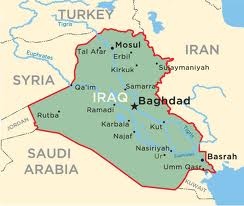
US Special Forces Deployed in Iraq, Again


Despite the official US military withdrawal last December, American special forces “recently” returned to Iraq on a counter-terrorism mission, according to an American general in charge of weapons sales there. The mission was reported by the New York Times, in the fifteenth paragraph of a story about deepening sectarian divides.

The irony is that the US is protecting a pro-Iran Shiite regime in Baghdad against a Sunni-based insurgency while at the same time supporting a Sunni-led movement against the Iran-backed dictatorship in Syria. The Sunni rebellions are occurring in the vast Sunni region between northwestern Iraq and southern Syria where borders are porous.

During the Iraq War, many Iraqi insurgents from Anbar and Diyala provinces took sanctuary in Sunni areas of Syria. Now they are turning their weapons on two targets, the al-Malaki government in Baghdad and the Assad regime in Damascus.

The US is caught in the contradictions of proxy wars, favoring Iran’s ally in Iraq while trying to displace Iran’s proxy in Syria.

The lethal complication of the US Iraq policy is a military withdrawal that was propelled by political pressure from public opinion in the US even as the war could not be won on the battlefield. Military “redeployment”, as the scenario is described, is a general’s nightmare. In the case of Vietnam, a “decent interval” was supposedly arranged by the Nixon administration to create the appearance of an orderly American withdrawal. During the same “interval”, Nixon massively escalated his bombing campaign to no avail. Two years after the 1973 Paris peace accords, Saigon collapsed.

It is unlikely that the Maliki regime will fall to Sunni insurgents in Iraq, if only because the Sunni population is approximately twenty percent of the population. However, the return of US Special Forces is not likely to restore Iraqi stability, and they may become trapped in crossfire as the sectarian tensions deepen. The real lesson may be for Afghanistan, where another unwinnable, unaffordable war in support of an unpopular regime is stumbling towards 2014.

Παρασκευή 10 Φεβρουαρίου 2012

«Σίριαλ κίλερ» στο Ιράκ

Επισήμως, ο πεζοναύτης Κρις Κάιλ σκότωσε 160 ανθρώπους στη διάρκεια της θητείας του στο Ιράκ - τους περισσότερους που έχει σκοτώσει ποτέ ελεύθερος σκοπευτής στην ιστορία των αμερικανικών Ενόπλων Δυνάμεων. Ανεπισήμως, πιστεύεται ότι έχει σκοτώσει περισσότερους από 250. Δεν έχει την παραμικρή τύψη - το αντίθετο μάλιστα: «Ηταν οι καλύτερες στιγμές της ζωής μου» δηλώνει. Και για να μοιραστεί αυτές τις στιγμές, έγραψε ένα βιβλίο που κυκλοφόρησε πρόσφατα στις ΗΠΑ με τίτλο «American Sniper», «Αμερικανός ελεύθερος σκοπευτής».

Οι εξεγερμένοι ήταν γι' αυτόν «ζώα», «άγριοι», «απάνθρωποι» φανατικοί. Επειτα από δέκα χρόνια θητείας στις Ενοπλες Δυνάμεις, λέει πως δεν μετανιώνει ούτε για έναν πυροβολισμό, πως καθένας απ' αυτούς τους ανθρώπους, τους οποίους είδε για πρώτη και τελευταία φορά από το σκόπευτρο ενός 300 Winchester Magnum, «άξιζε να πεθάνει». «Σκοτώνεις ξανά και ξανά μέχρι να μην υπάρχει πια κανείς για να σκοτώσεις» γράφει. Μπορεί να σχηματίζει κανείς την εικόνα ενός τέρατος, ενός φονιά εν ψυχρώ και κατά συρροή, όμως ο στρατός βλέπει τα πράγματα διαφορετικά. Ο Κάιλ, που φέτος κλείνει τα 38, έχει γεμίσει τιμές και παράσημα, είναι ένας αμερικανός ήρωας.
Το 2007, στη διάρκεια της αιματηρής μάχης στο Ραμάντι, βρέθηκε στην καλύτερη φόρμα του. Τις πρώτες ώρες της μάχης, σκότωσε 24 Ιρακινούς. «Επεφταν ο ένας μετά τον άλλο. Κάθε φορά που περνούσαν από το σκόπευτρό μου, πατούσα τη σκανδάλη» γράφει στεγνά και νηφάλια. Οι εξεγερμένοι τον επονόμασαν «διάβολο του Ραμάντι» και τον επικήρυξαν για 20.000 δολάρια.

Είναι υπερήφανος γι' αυτή την επικήρυξη, διότι «ήταν η απόδειξη πως έκανα καλή δουλειά», όμως είχε εκνευριστεί επειδή πλήρωναν περισσότερα για να δουν νεκρό έναν επίλεκτο σκοπευτή αντίπαλου τάγματος... «Ασφαλώς και ήθελα να είμαι ο καλύτερος» υπογραμμίζει καθώς, στη διάρκεια του πολέμου στο Ιράκ, οι αμερικανοί κομάντος είχαν κάνει τους φόνους ένα είδος σπορ στο οποίο ανταγωνίζονταν.

Ο Κρις Κάιλ μεγάλωσε σ' ένα ράντσο του Τέξας και μικρός ήθελε να γίνει καουμπόης - όμως άλλαξε προσανατολισμό όταν τραυματίσθηκε σοβαρά σ' ένα ροντέο. Εγκατέλειψε το σχολείο και κατατάχθηκε στις Ενοπλες Δυνάμεις. Αραγε σήμερα δεν τον στοιχειώνει το αίμα όλων αυτών των ανθρώπων που έχυσε στο Ιράκ, τους οποίους μάλιστα έβλεπε πολύ καθαρά μέσα από το σκόπευτρό του και, σε μερικές περιπτώσεις, τους παρακολουθούσε επί ώρες; Ο ίδιος δεν θέλει ούτε να ακούσει για μετατραυματικό στρες, όμως η γυναίκα του και μητέρα των δύο παιδιών του λέει πως πετάγεται συχνά από τον ύπνο του τις νύκτες• και πως μια φορά παραλίγο να της σπάσει το χέρι όντας ακόμη κοιμισμένος. Εστω κι αν δεν το παραδέχεται, φαίνεται πως του είναι δύσκολο να αφήσει εντελώς πίσω του το παρελθόν του ως «σίριαλ κίλερ» στο Ιράκ.

Πηγή

Τετάρτη 1 Φεβρουαρίου 2012

What Has the Army Learned From Iraq and Afghanistan?

Over at Tom Rick’s Best Defense there is an interesting discussion regarding “what the Army has learned from the wars of 9-11?” I have posted a very long comment to his original blog post; I would recommend you read the blog and the comments and then come back and read my comments which are posted here at OP-FOR.
Tom,
Your question “what has the Army learned over the last ten years of war?” is very perceptive.

Since I first read the question yesterday I have been giving it a lot of thought. I read through some of the comments today and found some great insights and others that merely repeated oft heard commentary.

Brian Linn in his book Echo of Battle identified the three cultures within the Army; one of which is the Guardians. This culture guards what they believe are the historic ethos of the nation. Today the Guardians are the dominant culture in the Army; as the wars in Iraq and Afghanistan wind down, they are determined to ensure they restore the Army they are comfortable with, the Army that focuses on winning the grand wars and to avoid fighting wars of stability. They are the culture that plays up the future threat of China and Iraq, and seek to define the need for the Army within the traditional boundaries understood since the end of World War II. But in order to dominate the culture of the Army they will have to work hand in hand with the Manager culture. The Managers are the ones who adhere to the rigid proprieties of the system—in some ways these two sub-cultures complement each other. The last sub culture with the Army is that of the Heroic. These are the ones who understand how to fight wars, where it be grand wars or insurgencies. They will be losers and will find it hard to deal with the bullshit of the Guardians and Managers.

I mentioned Linn for one reason; because few in the Army understand it roles and responsibilities. One of your commentators stated, “The failure in the use of analytics to make effective core decisions in how the US Army leads, plans, and executes its military operations and its Title X operations (train & equip) ultimately is a failure of basic leadership.[,]” highlighted one of the greatest failure of those in the Army, they Army does not plan or execute Operations. When I speak of the Army—of course I am referring to HQDA and the Institutional Army. Rather they support Joint Operations by providing trained, ready, and equipped forces to the Joint Commander. (Let me also be a little snarky—I am tired of seeing it written as Title X, whenever I do see it written this way it means the individual has never picked up a copy of Title 10.) But the author of that comment highlighted a fundamental problem with the Army over the last ten years—it has not adjusted it processes to support the war. Most of the Army’s uniformed Senior leaders do not understand what Title 10 means or how it effects the Army. Just like the commentator many believe they have a say in Operational matters, unless a Joint Task Force Commander their only role is to support.

Some of the failures of Army processes:
Procurement; why did the Army continue to procure Up-Armored HMMWV when it was evident in 2004 that they were death traps when hit by an IEDs, that they were overweight, top heavy, and underpowered because of all the additional weight. It took Secretary Gates to push the Army and USMC out of their comfort zone in order to procure the MRAP. He literally had to circumvent the overly bureaucratic service procurement processes.
Promotions; the Army has not adjusted it promotion guidelines to fast track those who have demonstrated ability to execute and fight the wars in Iraq and Afghanistan.
The Army failed to cull the deadwood. One of the great things George Marshall did at the beginning of World War II was to cull the deadwood within the officer corps.
While the Army instituted Operational Needs Statements (ONS) early in the conflicts, it allowed the system to become “Toys for Boys” where every Battalion Commander, when influenced by contractors, got what he or she considered to be the latest greatest toy. The end result was the Army bought a lot of kit that ultimately turned out to be crap.
The Army Combat Uniform. Enough said.
Rather than flattening command levels, the Army maintained the status quo and allowed the Headquarters to become too large. (Army HQs 1000+; Corps 800+; Division 700+; Brigade 200+). The larger the Headquarters makes harder it becomes to get the important information to the leaders.
Rotating General Officer forward through positions so they can get the coveted right sleeve patch.

In short, as much as possible the Army has maintained the “Status Quo Ante Bellum.”

Now we see the Guardians and Managers throwing around the buzzwords of a bureaucracy seeking to recreate the Army they grew up in:
Realigning Division to Corps, and Brigades to Divisions; we have suddenly determine that a Brigade Commander must be on the same post as a two star division commander in order to be properly supervised.
Realigning Combat Aviation Brigades with Corps and Divisions—remember the whole point of modularity was to make Brigade self-contained elements that could deploy with any type of Headquarters.
Realigning Fires Brigades with Division Headquarters.
While it has been articulated yet look for us to align Expeditionary Sustainment Commands with Corps, and Sustainment Brigades with Divisions.
There is concern within the Senior Leadership we have a whole generation who doesn’t know how to operate in garrison. True they do have to learn something about how to maintain and account for their kit, how to conduct their own training. But I have a startling thought for the Senior leaders, most of our junior leaders are pretty smart and will figure it out. An ass chewing from the Brigade Commander for shoddy maintenance or a Report of Survey or whatever we are calling it today will get a leaders attention on accounting for property. Sure they will need some mentoring. What I am afraid is the code word for how to operate in garrison means unnecessary meeting and formations; CSM deciding the rocks need painting white etc. All the bullshit the Army is famous.
The Sergeant Major of the Army talking about overweight soldiers, standards, getting rid of the bad apples I can see it now the soldier who has served four, five, or six tours in either Iraq or Afghanistan is going to be thrown out because he is overweight but can pass his PT test! There is no question there are bad apples we need to get rid of, but the Army being the Army we will mange to throw the baby out with the bath water.
Can starching uniforms be far behind—walking around the Pentagon I am amazed at the number who have their ACUs starched!
The Army as a Profession—while a needed discussion I worry is about getting rid of those who don’t fit our Senior leader mold of what a “professional is or should be.”
The Army says it needs to keep mid-grade leaders for expansibility—but based on the latest O6 board results, not so much. There was a 34% selection rate—including a number of former battalion commanders who had 2 or more 1 block OERs. This is a direct result of a number of factors—grade plate review, MTO&E changes, etc which when institute the second and third order effect were not considered or were ignored by the Colonels who developed the plans. (Remember a hog don’t slaughter itself!) Of course if the Army choose to get cull the herd of Colonels and Lieutenant Colonels who have no promotion potential and who are essentially robbing oxygen until they hit their mandatory retirement date.

The Guardian-Managers are going to make the rules and will make life hard for those who rightly belong to the Heroic sub-culture.

One of the points you touched on was why the Army can’t seem to develop Strategic leaders. Very simply it does not tolerate intellectuals. Yes there have been a few in recent years; I will name the ones I think fit that mold during my time in the Army (1976-2009): Bernard Rogers, Shy Meyer, John Galvin, Colin Powell, Max Thurman, Donn Starry, Eric Shinseki, David Petraeus, Gary Luck, Martin Dempsey and Dan Bolger. Rogers, Meyer, Galvin, Thurman, and Starry were a product of an era where being smart was not necessarily a sin. Powell because of his assignments developed into a Strategic thinker. The others developed their ability because of education, assignments, and mentorship. Because of their mentors they able to overcome the prejudice against smart people.

In recent years the Army created a functional area “Strategic Plans and Policy.” Many of those in this functional area have come be believe they are “Strategists.” While smart few of them are Strategists. (In fact the career field is misnamed it should be Operations, Plans, and Policy; with some being selected based on their performance to be a select core of Strategists.) The Army seems to believe that if you recreate the education experience of David Petraeus you will create the next generation of strategists. Unfortunately before someone can be a Strategist they must first be a creative thinker.

Most officers entering the Army are not creative thinkers. Either they are graduates of academically deficient institutions or they major in a discipline that was the path of least resistance. In short by and large the Officer Corps is intellectually deficient. Someone who has the potential to be a strategist must first be intellectually curious, a creative thinker, and willing to take on the status quo. Lastly the Army’s educational system does not encourage either creative thinking or intellectually curiosity. As they use to say at Command and General Staff College, “it is only reading if you read it.”

Back to your original question will the Army learn anything from the last ten years. Probably not. . .certainly the Center for Military History is not interested in what has happened in the last years. The Combat Studies Institute at Leavenworth is studying some areas of what has happened in the last ten years. But if we really want to know what the Army has learned or how it has changed it is going to be the work of someone outside the Army.

Πηγή
Σάββατο 24 Δεκεμβρίου 2011

Δευτέρα 31 Οκτωβρίου 2011

With the P.K.K. in Iraq’s Qandil Mountains


MaryShiho Fukada for The New York TimesBig Brother: Painted on flat stones laid on a hillside, one of many portraits of the P.K.K. founder Abdullah Ocalan stares down from a hillside in the Qandil Mountains of northern Iraq. The remote and sparsely populated mountain range near the Iranian and Turkish borders provides a haven for the leftist Kurdish separatist group, also known as the Kurdistan Workers’ Party.
QANDIL, Iraq — It is not easy to visit the mountainous borderlands of northern Iraq where the Kurdistan Workers’ Party operates, but it is not impossible either.
Such is the peculiar position of a group of committed insurgents against Turkish rule in Kurdish lands — even as Turkey and Iraq seek deeper and deeper ties, through diplomacy and trade, especially with Iraq’s semiautonomous Kurdish region.
Turkey’s ambitious desire to wield influence in Iraq — an assertion of soft power through culture, education and business — has done more perhaps than any military operation to isolate the party and its fighters, known as the P.K.K. and designated as terrorists by the United States and the European Union.
MaryShiho Fukada for The New York TimesSarya Agiri, 22, at a P.K.K. sewing factory where she works in the Qandil Mountains. She is from Maku, Iran, and has been with the P.K.K. for four years. She is a guerrilla fighter and carries her own gun. Although there is a picture of the Virgin Mary on a wall of the factory beside one of Mr. Ocalan, none of the women working there are Christian. They say they chose the image because it is a symbol of a strong woman.
FilmerShiho Fukada for The New York TimesDiler Hewram, 24, sitting for a portrait during the filming of a movie about the P.K.K. He joined the organization three years ago.
At the same time, the warming of relations could also provide the framework at least for the end of a conflict that has lasted more than a quarter of a century and cost at least 40,000 lives in Turkey.
The P.K.K.’s commander, Murat Karayilan,suggested in a recent interview here in Qandil that the group was prepared to end its fight and seek a political accommodation not unlike what Kurds now have in Iraq. His tone, while still blustery, reflected a tempering of the movement’s demands.
“They have murdered tens of thousands of our people,” he said of the Turkish state. “They have imposed sanctions on us for years. They have tried every possible means, but we are still here and we want a democratic solution.”
SewShiho Fukada for The New York TimesNecbir Botan, 28, a P.K.K. volunteer from Syria, makes uniforms at the movement’s sewing factory. She has been with the P.K.K. in Qandil for four years.
In northern Iraq, the contrast could not be starker. In the Kurdish regional capital, Erbil, a Turkish-built shopping mall offers a temple of consumer prosperity. A few hours’ drive away, the P.K.K.’s fighters live a spartan existence in the mountains where Iraq’s borders with Iran and Turkey meet.

Officially, the Kurdish regional government in northern Iraq denies providing safe haven for the rebels and restricts access to the areas where they operate, but not particularly vigorously. Two separate visits by The New York Times — negotiated over several weeks — involved bouncing, surreptitious journeys over dirt roads that evaded the last official checkpoints of the Iraqi state.
Once in the area surrounding Qandil, the party’s presence was indisputable. In the case of a massive hillside portrait of the party’s imprisoned founder, Abdullah Ocalan, it seemed taunting.
The party’s uniformed fighters, men and women, control checkpoints or patrol the roads and tracks that wind through the harsh, craggy terrain. The party has a sewing factory to make its uniforms, a clinic to treat its wounded and a cemetery to bury its dead.
GunShiho Fukada for The New York TimesRengin Ararat, 31, from Syria, blowing dust off her Kalashnikov assault rifle outside the sewing factory. She has been with the P.K.K. for 12 years.
A German doctor, Medya Avyan, now works at the hospital. She has no Kurdish roots, but volunteered to help the Kurdish cause after learning of it from friends in the 1990s. Her name is a Kurdish one she assumed after moving to northern Iraq in 1993. (She declined to give her original German name, saying only that she was from Celle in Lower Saxony and had studied medicine in Hamburg.)
On a bookshelf in behind her in the hospital was Mr. Ocalan’s photograph, a volume on Hippocrates and a history of the P.K.K. Asked how she reconciled treating people in a hospital operated by an organization accused of killing thousands, she replied with remarks that many in Turkey would dispute.
“The P.K.K. don’t kill any civilians,” she said. “That’s very important. They are killing those who kill them. They defend themselves, nothing else.”
All of the party’s members — its leaders, its fighters, its volunteers — defended their fight and their cause with a romanticism that makes it difficult to imagine their laying down arms and returning to peaceful civilian life. Many have been in the mountains for years.
FilmersShiho Fukada for The New York TimesThe P.K.K. movie crew, from left to right: Dersim Zerevan, 29, videographer; Jinda Baran, 32, director; and Zozan Agiro, 32, videographer. They have been shooting a film about P.K.K. couriers during the guerrilla struggle with Turkey.
“I have been a guerrilla for 18 years,” Gorse Mereto, 32, a uniformed fighter, said during a break in the improbable shooting of a propaganda film. (The set was a campfire at night, illuminated by stage lights hanging from trees.) “I have seen many difficulties. In all the situations in which I myself was present, no civilian was killed, but soldiers were.”
FilmShiho Fukada for The New York TimesZozan Agiro, 32, a P.K.K. member and videographer. The P.K.K. movie was shot around the Qandil Mountains with P.K.K. actors, some of whom have fought in the campaign.
He had his own rationale, a history, viewed through Kurdish eyes, of Turkish oppression. It suggested a cycle of violence that would take time to break. “They have destroyed a lot of villages,” he said. “They have killed innocent civilians. They have killed many of our men.”
He continued, “Anybody, even an animal, defends itself.”
DanceShiho Fukada for The New York TimesP.K.K. actors/guerrillas dancing in a scene from the movie, enacting celebrations around a campfire.
BeltShiho Fukada for The New York TimesA P.K.K. actor taking part in the movie.
Read Sebnem Arsu from Istanbul in the Times: ‘Step by Step, Gulf Between Turkey and Kurds Narrows’:

It is highly unlikely that Mr. Erdogan would consider autonomy for the Kurds, but analysts expect him to at least entertain notions like restructuring election laws to allow minority parties to have greater access to Parliament and allowing wider use of ethnic languages like Kurdish…
Publicly, the ruling party refuses to negotiate with the P.K.K., which is listed as a terror organization by the European Union and the United States. But behind the scenes, it has been reaching out to Kurdish activists to find common ground on which to build a viable solution.”


Τρίτη 11 Οκτωβρίου 2011

Anxiety Hovers Over Iraqi Commandos


BAGHDAD — A photographer and I recently embedded with an Army Special Forces unit that operates from a corner of Camp Victory, the United States military’s vast complex near the airport. Such embeds are extremely rare and this one took many months to secure — while the regular Army welcomes reporters with nearly unimpeded access, the Special Forces are leery of journalists. This was underscored by the long list of ground rules they require reporters to adhere to in order to protect operational secrecy.

One rule states, rather oddly, that photographers will not capture images of soldiers “with bearded faces.” Neither the public affairs officer, nor the cleanshaven Special Forces soldier standing by as we signed the document, could explain that one, except to speculate that it might be a remnant of the early days of the Afghanistan campaign, when commandos grew beards to fit in with the local population.

For the three days that the embed lasted, the soldiers kept a measured distance from their observers, always polite but guarded in their statements.

“We try to stay quiet professionals, low key,” said one Special Forces soldier, a chief warrant officer. (As part of the ground rules, the soldiers could be identified only by rank.)

Readily apparent were the stark differences in the culture the Green Berets have nurtured compared with the goofy bonhomie that pervades regular military units I have spent time with.

The soldiers here lived like vampires, sleeping all day and waking in the late afternoon. They wear civilian clothes until they gear up for missions at night, wearing the same black fatigues their Iraqi counterparts wear. Very few smoke, and they don’t salute their superiors. They aren’t required to wear hats outdoors.

Meanwhile, they carried on an easy camaraderie with the Iraqi unit that they train and plan and execute missions with. They don’t live together, but they do socialize in off hours. An American major said the Iraqis often stopped by their base to partake in soldierly customs: “lift weights; wear baseball caps; drink protein, Red Bulls.”

On an evening when there was no mission because many of the Iraqi soldiers were at a memorial service for a comrade killed in a car accident, a large group of Iraqis and Americans sat outside the barracks drinking tea and reflecting on the long war in which the American role is winding down.

These units have worked together since 2003, and so a certain anxiety about what comes next for Iraq — and for their relationships — hung over the conversation. In the early days, the Iraqis sometimes rode out on missions in commandeered bread trucks. Back then, classes of recruits would show up to training camp dressed in soccer uniforms because some political leaders had told them they would be trying out for the Iraqi national soccer team. (“They wanted to be on the Olympic soccer team and be a soldier,” recalled an American Special Forces sergeant.)

“Most of the people don’t want the Americans to leave,” said one Iraqi commander, offering his analysis of public opinion here.

His worry is that the country’s political class is keeping sectarianism alive, and using the regular Iraqi military to do so. “The average people can live together peacefully,” he said. The Iraqi Army, he said, “is not helping Iraq in the security situation.”

He had harsh words for Moktada al-Sadr, the anti-American cleric who has threatened renewed violence in the country if an element of American forces stays behind this year to keep training Iraqi security forces. He noted that Mr. Sadr had spent years in Iran, and used an expletive to describe the cleric’s role in Iraq.

He said Mr. Sadr’s Mahdi Army is “full of cowards” who “don’t have the guts to fight.”

There were lighter touches to the conversation, as one Iraqi soldier recalled learning American culture by watching the Oprah Winfrey Show with an American captain four years ago in Nasiriyah.

The next morning the Americans set up targets — one was a cardboard cutout of Saddam Hussein — for an indoor shooting exercise. “Identify the threat, and if he doesn’t have a weapon, we don’t shoot him,” one of the American advisers barked at the group of Iraqi soldiers. “Just like when we go on mission. If the guy doesn’t have a weapon, we don’t shoot him.”

That night, on a mission in a neighborhood not far from the airport, the Americans watched as the Iraqis secured and searched a building they believed to be a hide-out for two members of Al Qaeda in Iraq. No weapons were fired, and the bad guys nowhere to be found, just a big family woken up in the middle of the night.

The Americans will leave soon, but the fighting will continue.

“These people are fighting a war in their own country,” said one of the soon-to-depart Americans.

Παρασκευή 8 Ιουλίου 2011

Special forces training in Iraq

jsociraq550.jpg
An American Special Forces soldier waits outside a target house in western Baghdad during an operation conducted by Iraqi commandos and American Special Forces soldiers last month. Photo by Joseph Sywenkyj for The New York Times.
The Times features a full slideshow ("Teamwork and Training in Iraq") that accompanies an article on the close relationships and ongoing partnership between US and Iraqi special forces.

Πηγή