Εμφάνιση αναρτήσεων με ετικέτα ΗΠΑ. Εμφάνιση όλων των αναρτήσεων

Τρίτη 4 Δεκεμβρίου 2012

Goodbye GPS, Hello NAVSOP

BAE Systems has unveiled its latest research on an advanced positioning system that exploits existing transmissions such as Wi-Fi, TV, radio and mobile phone signals, to calculate the user’s location to within a few metres. 

Military platforms commonly use Global Positioning Systems (GPS) to find their position and navigate. GPS rely upon a specific and relatively weak satellite signal that is vulnerable to disruption . Known as Navigation via Signals of Opportunity (NAVSOP), BAE Systems’ new system is able to calculate its position by making use of the hundreds of different signals that are all around us.

By exploiting such a wide range of signals, NAVSOP is resistant to hostile interference such as jamming (a particular weakness of GPS) and spoofing, where a bogus signal tricks a device into misidentifying its location. The new system can learn from signals that are initially unidentified to build an ever more accurate and reliable fix on its location. Even the signals from GPS jammers can be exploited by the device to aid navigation under certain conditions. 
The real beauty of NAVSOP is that the infrastructure required to make it work is already in place. There is no need to build costly networks of transmitters and the hardware behind the system is already commercially available. Another benefit is that it can be integrated into existing positioning devices to provide superior performance to GPS.

A major advantage of the system is its ability to function in places where GPS is unable to reach, such as dense urban areas and deep inside buildings. It is also able to work in the most remote parts of the world, such as the Arctic, by picking up signals that include Low-Earth-Orbit satellites and other civilian signals.
From aiding soldiers operating in remote or dense urban areas to providing improved security for Unmanned Aerial Vehicles (UAVs), which could face attempts to disrupt their guidance systems, NAVSOP has a wide range of potential military applications. 
Among those pioneering this area of research is Dr Ramsey Faragher, a Principal Scientist from BAE Systems Advanced Technology Centre, who recently led a team that received a prestigious award from the Institute of Navigation for a ground-breaking paper on how aspects of the technology work indoors. 

Dr Faragher said: “The potential applications of this technology are already generating huge excitement in both civilian and military circles. This research is a great example of BAE Systems working closely with potential customers to not only improve the performance of existing technology, but also tackle their weaknesses head on and find innovative ways to reduce or eliminate them.” 

James Baker, Managing Director at BAE Systems Advanced Technology Centre, said: “At a time when the need to be innovative and resourceful is more important than ever, this capability represents truly outside-the-box thinking by providing a cost effective system with a wide variety of different applications. This technology is a real game changer when it comes to navigation, which builds upon the rich heritage that both BAE Systems and the UK have in radio engineering.”
This research is generating interest in both defence and civilian domains where its uses could include helping fire and rescue services find their way through smoke filled buildings and enhancing the safety of lone workers and security staff.

Source

Δευτέρα 3 Δεκεμβρίου 2012

Pelvic Protection System


Pelvic Protection System

The introduction of the Pelvic Protection System provides a valuable new level of protection for the dismounted soldier. Dismounted Soldiers who encountered buried mines or improvised explosive devises (IEDs) were suffering significant injuries, not only to their feet and lower legs, but to their upper thighs and groin areas. These resulted in above the knee and even high hip amputations.
 
“There were a lot of significant injuries, and very traumatic injuries occurring to Soldiers in the lower extremity area,” said LTC Frank Lozano, Product Manager Soldier Protective Equipment. “It’s very traumatic, very heartbreaking, when Soldiers go through those types of events, and they are very young, and then they come home and they are not able to have children.” 

The Army developed the Pelvic Protection System. The system includes two layers of protection for Soldiers, including the Tier I protective under-garment, called the “PUG,” and the Tier II protective outer-garment, called the “POG.” The PUG is worn under a Soldier’s ACU pants in place of, or over the Soldier’s underwear. 

It resembles typical bicycle shorts, and is made out of a breathable, moisture-wicking material on the outer thighs with a tougher Kevlar mesh to provide added protection to the inner thighs and the femoral artery. The groin also receives additional protection. 

There are other benefits to wearing the PUGs. The material stops infectious debris such as dirt and manure from penetrating the skin when the Soldier is hit by an IED explosion. Even after many medical procedures some of this material can remain and cause infections that result in further amputations. 

The outer garment, the POG, provides even more protection for Soldiers, and is made of ballistic material similar to the soft panels in the improved outer tactical vest (IOTV). 

LTC Lozano recommends that Soldiers wear both garments. The Tier II has more ballistic protection but is a little more rigid. The undergarment is not only softer, it helps prevent the POG from chafing the Soldier. 

The Army first fielded the pelvic protection system in June 2011. To date, the POGs and PUGs have been fielded to approximately 15,000 Soldiers. The typical issue includes three PUGs and one POG. Fielding is happening now for Soldiers in theater and for Soldiers stateside.

Κυριακή 2 Δεκεμβρίου 2012

Daytime Gunships Galore

The U.S. Air Force is equipping its four engine AC-130 gunships with more powerful sensors and missiles that enable these four-engine propeller driven aircraft to fly high enough (6,500 meters/20,000 feet) to avoid ground fire and operate during the day. This is a major change in the way these gunships have long operated. These gunships are owned by SOCOM (Special Operations Command) although they support all combat troops, not just the Special Forces and SEALs. While SOCOM operators prefer to operate at night, they are often out during daylight, when the presence of a gunship overhead can be a real lifesaver. This use of missiles, instead of cannon, is a recent development and the success of this technique has changed the basic design of these gunships and how they are used. 

The current AC-130H gunship (nicknamed Spooky) is a 69 ton, four engine aircraft originally armed with two 20mm machine-guns, a 40mm autocannon, and a 105mm howitzer. While the aircraft can stay in the air for six hours (or more, if it refuels in the air), what really makes a difference is how well the weapons operate. Flying low (often under 10,000 feet) and at night, the gunship relies on night vision devices and well trained gunners to take out targets that are giving the troops on the ground a hard time. Four decades of continuous improvements have made the gunships increasingly lethal. But the troops have found that missiles can be just as effective as cannon fire and the AC-130 can launch missiles from higher altitudes (beyond the range of enemy anti-aircraft guns or missiles). 

The recently ordered AC-130J gunships will be equipped with more powerful sensors, armed with a single 30mm autocannon, and multiple launchers for Viper Strike and SDB glide bombs, as well as Hellfire and Griffin guided missiles. Viper Strike is a 90cm (36 inch) long unpowered glider. The 130mm diameter (with the wings folded) weapon weighs 20 kg (44 pounds). Because the Viper Strike comes straight down, it is better suited for urban warfare. Its warhead weighs only 1.8 kg (four pounds) and less than half of that is explosives. This means less damage to nearby civilians but still powerful and accurate enough to destroy its target. A laser designator makes the Viper Strike accurate enough to hit an automobile or a foxhole. 

The Griffin is a 15.6 kg (34.5 pound) guided missile with a 5.9 kg (13 pound) warhead which is larger than that carried by the larger (47 kg) Hellfire missile. To achieve this Griffin has a shorter range (4 kilometers), which is adequate for a gunship, which is designed to go after targets just below it, not far away. 

Hellfire weighs 48.2 kg (106 pounds), carries a 9 kg (20 pound) warhead, and has a range of 8,000 meters. The 130 kg (285 pound) Small Diameter Bomb (SDB, also known as the GBU-39/B) has a shape which is more like that of a missile than a bomb (nearly two meters, as in 70 inches, long and 190mm in diameter), with the guidance system built in. The smaller blast from the SDB resulted in fewer civilian casualties. The SDB carries only 17 kg (38 pounds) of explosives and can be dropped from high altitude, using laser guidance to hit very small targets below. 

Existing gunships are using all these missiles already. Equipping existing gunships to carry and fire all these missiles is neither difficult nor expensive. U.S. SOCOM (Special Operations Command) has also adopted a U.S. Marine Corps idea to provide an "instant gunship" system, which enables weapons and sensors to be quickly rolled into a C-130 transport and hooked up. This takes a few hours and turns the C-130 into a gunship armed with a 30mm autocannon and Viper Strike and Griffin missiles. 

Because of their vulnerability to ground fire, the AC-130s have long only operated at night. The last time an AC-130 was lost was at Khafji, Saudi Arabia during the 1991 Persian Gulf War. The aircraft was leaving the combat zone at sunrise and was visible to Iraqi gunners in the area. But in the last two years, more and more AC-130s have been out in daylight, flying high enough to avoid hostile fire and using their powerful sensors to get a close look at what’s down there and use their missiles on anything that looks hostile.

Σάββατο 1 Δεκεμβρίου 2012

Special Operations Command Seeks Bigger Role in Conflict Prevention


U.S. special operations forces are the nation’s most celebrated terrorist killers. But they also have underutilized skills that could help prevent wars, officials said. 

The war against al-Qaida and other Islamic extremist groups has become more complex since the 9/11 attacks, said Army Lt. Gen. John Mulholland, deputy commander of U.S. Special Operations Command. Navy SEAL raids and precision drone strikes alone will not be enough to defeat these enemies, he said.

“We have known for a long time that we are not going to kill our way to victory,” Mulholland said Nov. 28 at a Defense Strategies Institute conference, in Alexandria, Va.

What is needed, he said, are “preemptive efforts before the fight starts.”

Counterterrorism is “much broader than direct action,” he said. SOCOM Commander Adm. William McRaven is a strong believer in indirect methods of fighting terrorist groups, Mulholland said. 

McRaven would like to see special operations forces take on a larger role in the training of foreign allies — an activity known in military-speak as “building partner capacity.” Strengthening the internal security of friendly countries where al-Qaida and its affiliates are recruiting members would help counter these groups’ influence, and possibly prevent a wider conflict, SOCOM leaders believe. 

Army Special Forces, or Green Berets, have been deployed in these capacity-building roles for decades, but a more sustained effort is needed, said Mulholland. SOCOM’s skills and resources should help the United States stay “to the left of problems,” he said, instead of having to intervene later and put U.S. military forces in harm’s way.

Since McRaven took charge of SOCOM in 2011, he has sought to expand the command’s authorities in several areas, one of which is building partners’ capacity. The current process is “suboptimal,” Mulholland said, because it is rooted in the Cold War, when the world was bipolar. “We don’t believe it gives us what we need today to build capacity in areas of the world that matter,” he said. SOCOM would like more flexibility to establish long-term relationships with partners that are facing threats from al-Qaida and its affiliates, he said. “We lack the ability to deliver a program to a country that needs help. We’re looking for authorities to get at that challenge more meaningfully.”

Africa, particularly, is an area “where we should invest,” he said. Weak internal security in several African nations is raising concerns about these countries becoming safe havens for terrorist groups, Mulholland noted. A case in point is Mali, where al-Qaida's North African wing has taken over significant portions of the country.

SOCOM sees Mali as a cautionary tale. “We know what needs to be done with partners,” said Mulholland. “But we don’t have the tools.” 

SOCOM’s request for broader powers to fight terrorism has stirred controversy inside the Pentagon and on Capitol Hill. It was the topic of a House Armed Services Committee emerging threats subcommittee hearing in July. Linda Robinson, a senior fellow at the Council on Foreign Relations and an expert on special operations forces, told the panel that SOCOM’s proposal had merit.

SOF units that currently are training partner militaries are “not properly resourced, organized or supported to fully maximize their potential,” she said. “Successful employment of the indirect approach requires both proactive involvement and patience for the effort to produce results.”

SOCOM officials recognize that Congress tends to be skeptical of open-ended efforts, and that their plan might be a tough sell.

“It requires placing SOF teams out in troubled regions for extended periods so they can gain familiarity, knowledge and relationships and then begin to execute solutions with the resident partners,” said Robinson. “This runs counter to a common tendency to wait until crises are full blown and action is imperative.”

She cited Colombia and The Philippines as examples of successful preemptive actions by SOF. In Colombia, more than a decade of “sustained, small footprint advisory assistance helped that country to greatly weaken the narco-terrorist insurgency known as the FARC,” Robinson said. “The Philippines is another case worthy of study to build a template for successful application of the indirect approach and achievement of enduring results.”

SOCOM’s desire for enhanced authority to deploy training teams in vulnerable countries is only one piece of a sweeping transformation that McRaven is seeking in how SOF units are employed worldwide.

The admiral raised hackles in Washington last year when he asked for direct control over the so-called theater special operations commands. TSOCs currently report to the geographic combatant commanders. But McRaven has argued that the TSOCs should be overseen directly by SOCOM to ensure they are sufficiently staffed and resourced to provide meaningful help to regional commanders. 

Robinson said TSOCs have “chronically lacked adequate staff and resources” and are considered “career-ending assignments.” TSOCs should, instead, be the place where SOF skills and regional expertise should come together, said Robinson.

McRaven has proposed that TSOCs become sub-unified commands of U.S. SOCOM. He has argued that this is not a power grab by the command, but rather an attempt to better support geographic commanders. “It does create for the first time a coherent connection between TSOC and mother SOCOM,” Mulholland said. He insisted that McRaven’s plan will allow SOF to respond to crises in a timely manner. When the U.S. Consulate in Benghazi was attacked Sept. 11, a SOF company assigned to U.S. Africa Command — known as “cinc in-extremis” force — was located at the U.S. Naval Air Station in Sigonella, Italy. 

“Those forces worked as advertised. They were in position,” Mulholland said. But they were physically too far from the action to be able to intervene quickly enough. Mulholland declined to discuss the particulars of the events in Benghazi but he did suggest that if SOCOM were given more discretion to move forces around based on anticipated threats, SOF quick-reaction units could be far more effective. “To be relevant in this security environment, you have to be ahead of the crisis,” he said.

If a geographic commander needs SOF assistance today, he has to submit a request for forces to the Joint Staff at the Pentagon. “That takes time,” said Mulholland. McRaven wants to be able to short-circuit that process and provide immediate help. If necessary, he would move forces horizontally from one theater to another.

Mulholland noted that only 6 percent of SOF are assigned to theaters. The majority of the 66,000-strong command is based in the United States and reports directly to SOCOM headquarters, in Tampa, Fla.

“Today McRaven doesn’t have a formal relationship with TSOCs. It’s bizarre,” Mulholland said.

McRaven’s proposed reorganization requires a revision to the Unified Command Plan. The president must approve any changes to the UCP, which was last updated in April 2011. "The current review process is still underway, but I don't have an estimate for its completion," Pentagon spokesman Lt. Col. James O. Gregory told National Defense.

“We think it’s going well,” said Mulholland. But he cautioned against counting chickens before they hatch. “We think it will be successful. COCOMs [combatant commanders] support it.”

SOCOM is seeking expanded responsibilities at a time when the command is busier and bigger than ever. With 66,000 members — including both military personnel and civilians — SOCOM has doubled since 2001. Its budget of $10.5 billion is more than twice its 2001 inflation-adjusted budget of $4.2 billion.

“SOF operators have never been held in higher regard by our nation, by the public, by our international partners and, more importantly, by our adversaries,” said Garry Reid, principal deputy assistant secretary of defense for special operations and low-intensity conflict.

SOCOM will grow to 71,000 members by 2018, Reid told the Defense Strategies Institute conference. 

Reid endorsed McRaven’s plan to bolster theater-based forces. “We need to regain some regional specialization,” he said. Before 9/11, SOF were spread around the world. But during the past decade, 85 percent of SOF has been deployed in Iraq and Afghanistan, in support of U.S. Central Command. “That comes at a price,” said Reid. “We want to get back to understanding other areas and languages.”

Even as current wars wind down, the demand for SOF will no subside, said Reid. In addition to traditional SOF assignments, “there’s an increased appetite for SOF ‘liaisons’” at embassies and across U.S. and foreign government agencies, he said. “That’s a lot of 04s and 05s [field grade officers] that come out of the operational force,” said Reid. “We have a bulge of requirements.”

Κυριακή 14 Οκτωβρίου 2012

Jordan: US Forces Plan Shield Against Syria


RUSSEIFEH, Jordan -- From the edge of a steep mountain overlooking a desert compound built into an old rock quarry, machine gunfire echoes just outside hangars where U.S. special operations forces aretraining Jordanian commandos.

The Americans, who arrived in the kingdom a few weeks ago at the request of the Jordanians, are helping them develop techniques to protect civilians in case of a chemical attack from neighboring Syria, according to Jordanian officials.

On the Syrian border farther north, British military officers recently assessed the dangers of rockets constantly falling on the kingdom and ways to shield the Jordanian population and Syrian refugees as President Bashar Assad widens his military offensive against rebel enclaves in the vicinity, according to Jordan-based Western diplomats.

Jordan's King Abdullah II has repeatedly discussed plans for reinforcing security along the Syrian border and expressed concern over Syria's chemical stockpiles in meetings with visiting Western allies, according to the two diplomats, who monitor Syria from their base.

They said it is believed that Abdullah has also been shopping around for an anti-missile defense system to shield his densely populated capital, Amman -- home to nearly half of Jordan's population.

There is also talk of contingency plans for a quick pre-emptive strike if Assad loses control over his stock of chemical weapons in the civil war. The fear is that those weapons might otherwise fall into the hands of al-Qaida or Lebanon's Islamic militant group Hezbollah.

"There are dangers involved, and we have to ensure the safety of our country and the well-being of our citizens," a senior government official said in the first public Jordanian confirmation of the presence of foreign military personnel here. "We are benefiting from the experience of our allies as we prepare for the worst scenarios."

The presence of some 150 Americans at the King Abdullah II Special Operations Training Center northeast of the capital is a clear message to Assad that Jordan's longtime Western allies stand ready to defend the country if it is dragged into the 19-month Syria conflict.

Assad's regime, which is believed to have one of the world's largest chemical weapons programs, has said it might use them against external threats but not against Syrians.

But the Jordanians worry that Assad may use his chemical weapons against his neighbors, or his countrymen, if he felt that his days in power were numbered.

In May, the U.S. held joint exercises with Jordan, nicknamed the "Eager Lion," which focused on the ways to deal with a chemical weapons attack.

On Wednesday, U.S. Defense Secretary Leon Panetta said at a NATO conference of defense ministers in Brussels that the U.S. has been working with Jordan to monitor chemical and biological weapons sites in Syria and was helping Jordan deal with refugees pouring over the border.

Although the senior government official insisted that the Americans were "advisers, not troops," two senior U.S. defense officials said most were Army special operations forces. The U.S. officials spoke on condition of anonymity because they were not authorized to comment publicly about the mission.

The troops are operating out of a military center near Amman and have moved back and forth to the Syrian border. Their work involves gathering intelligence and planning joint Jordanian-U.S. military maneuvers, one U.S. official said.

The revelation of U.S. military personnel so close to the Syrian conflict suggests an escalation in theAmerican involvement, even as the Obama administration pushes back on any suggestion of a direct intervention in Syria.

The Jordanian official insisted that the kingdom was "capable of shielding itself from Syrian attack," but London-based Mideast analyst Rosemary Hollis disagreed.

"For Jordan, the more unstable Syria becomes, the deeper the crisis proceeds, the more likely Jordan will suffer from all kinds of spillover, but they are incapable of doing anything to intervene to try to turn the conflict in one direction rather than another unless they have the ballast, cover and involvement of serious international forces, which is the Americans," Hollis said.

She also saw the American military presence as a step toward possible future military operations to secure Syria's chemical stockpiles.

Torbjorn Soltvedt, a senior analyst with the Britain-based Maplecroft risk analysis group, said he saw the current situation as a "monitoring and training stage."

"Given the degree to which Syria's chemical weapons stockpiles have been dispersed across the country, an operation to secure them would be extensive and require significant numbers of troops," he said. "The Pentagon has estimated that an operation to secure Syria's chemical weapons stockpiles could require as much as 75,000 troops given the presence of several chemical agent manufacturing plants and many more storage sites throughout the country."

Panetta said that while the U.S. believes the weapons are still secure, intelligence suggests the regime might have moved some to protect them.

Steven Bucci, an expert in chemical weapons at the Heritage Foundation, has told Congress there might be as many as 50 chemical weapons sites in Syria. He said in an interview Wednesday that Syria's stockpile is potentially "like a gift from God" for militants since they don't have the know-how to assemble such weapons, while some of Syria's chemical agents are believed to have already been fitted into missile warheads.

At the desert facility, stretching 25 kilometers (16 miles) on the edge of this predominantly Palestinian suburb, Jordanian soldiers guard the walled compound, where Iraqi and Libyan special forces once received training. They refused to allow reporters in.

Jordanian officials were eager to downplay the U.S. role, concerned about the possibility of raising tensions with Syria and giving the kingdom's largely conservative population the impression that they were allowing foreigners to use Jordan as a potential launching pad for a pre-emptive attack against another Arab country.

The senior government official and two others who discussed the American military role all spoke on condition of anonymity, citing possible diplomatic sensitivities with Syria. Assad is thought to have sleeper cells scattered across the kingdom and plotting attacks on Syrian opposition and Jordanian figures.

Information Minister Sameeh Maaytah, the only official who spoke on the record, said the U.S. presence was part of "routine training exercises."

"Jordan and U.S. forces exchange visits regularly, and the presence of tens of their forces here is part of efforts to expand cooperation, exchange capabilities and protect regional stability," he said in an interview. He declined to elaborate or comment on any link to the Syrian crisis.

Amman has long had bumpy relations with Damascus because of its alliance with the United States -- Jordan's largest donor of economic and military aid -- and its 1994 peace treaty with Israel.

Jordan would like to see the Syrian regime toppled because of growing concern that Assad's key ally, Iran, is trying to spark Shiite uprisings in Arab countries ruled by members of the rival Sunni sect. Assad's ruling Alawite minority is an offshoot of Shiite Islam.

Abdullah was the first Arab leader to warn in 2004 of the sweep of Iran's "Shiite crescent," stretching from Lebanon through Syria and Iraq.

Jordanian officials have advocated a buffer zone inside the Syrian border to protect civilians fleeing bombardment. There is mounting speculation that Jordan would dispatch highly skilled special forces to secure such a zone when Assad's regime falls to prevent chaos on its border.

In the past six weeks, more than 20 Syrian rockets have fallen on Jordanian villages near the border. At least two people were wounded, including a 4-year-old Jordanian girl.

The two Western diplomats said the Britons, about a half-dozen officers specialized in intelligence gathering and special operations techniques, visited Jordan a few times over the past three months. The diplomats insisted on anonymity, saying that public comment may hamper their information gathering on Syria.

The Jordanian army already has an extensive presence on the border and has been assisting waves of Syrian refugees, who are straining the country's meager resources, mainly health care, water and utilities.

Jordan hosts some 200,000 Syrian refugees, more than any other neighboring country. Some come under constant firing from their army as they cross into the kingdom. Jordanian border guards have been wounded and a 6-year-old Syrian boy was killed in July.

Jordanian men also are moving the other way across the border, joining what intelligence officials have estimated to be about 2,000 foreigners fighting alongside Syrian rebels trying to topple Assad

Σάββατο 13 Οκτωβρίου 2012

Under cover, underwater: Special forces in Canada, U.S. eyeing mini-su


OTTAWA - Special forces in both Canada and the United States are taking a close look at Canadian-made mini-submarines for the murky world of covert operations.

The cutting-edge subs, some of which are built in Canada, are seen by some in the U.S. Special Forces community as essential for specialized top-secret operations against threats such as al-Qaida in coastal countries.

One defence source in Washington, who spoke on background, said the U.S. Navy has been impressed with the submarine rescue system it purchased a few years ago from B.C.-based OceanWorks International, which also sells 7.6 metre submersibles capable of carrying a handful of soldiers.

The elite, secretive U.S. Special Forces is interested and also believes the subs would "be an ideal fit" for their Canadian counterparts, said the source, who was not authorized to speak publicly.

No program has been requested or planned, however, said Brig.-Gen. Denis Thompson, the commander of Canada's special forces.

"It is an area of interest," Thompson said in an interview with The Canadian Press. "It is potentially another tool for the toolbox."

Domestic concerns and the safety of the highly trained soldiers were some of the reasons Thompson asked staff to examine the boats in the spring of last year.

Rather than operating in waters far from home, the military is concerned about missions in the three cold oceans that border Canada.

"Given the condition of the sea water that surrounds Canada, once you put a diver in the water, he really can, depending on the temperature of the water, only be effective for so long," said Thompson.

"It's all about stealth and extending the time you can leave a guy submerged — and by submerged, I mean hidden, depending on what the mission set is."

In Canada, the ultra-secret special-forces commandos known as Joint Task Force 2 have been paying particular attention to the country's coastlines.

Last year, it was revealed JTF-2 had turned to the private sector for help in early warning of possible terror threats coming from the sea. The organization tapped into an existing fisheries surveillance contract with Provincial Airlines Ltd., a subsidiary of Provincial Aerospace Ltd. of St. John’s, N.L., to monitor the movements of vessels of interest off the country's coastline.

At a rare public appearance last summer during the military's annual northern exercise, JTF-2 commandos stormed a mock "vessel of interest" at sea while the prime minister, the defence minister and the media looked on.

The subs aren't cheap: each one — some of them currently operate as underwater tour boats with up to 20 available seats — carries a price tag of $5 million.

Sea Urchin Submersibles and Nuytco Research Ltd., a subsidiary of Can-Dive Construction Ltd., are the two other Vancouver companies with underwater technology that has caught the attention of the special forces community.

Nuytco offers one-man and two-man deep sea diving suits. Can-Dive markets small diesel-electric submarines, but does not build them.

Over the last 40 years, Vancouver has become a centre of excellence in deep-diving research and technology, said a May 4, 2011 briefing note prepared for Thompson.

Note to readers: This is a corrected story. An earlier version incorrectly said the U.S. Navy had purchased a submarine-rescue system from B.C.-based International Submarine Engineering. In fact, the Vancouver company was a sub-contractor on the project, which was awarded to OceanWorks International.

Παρασκευή 5 Οκτωβρίου 2012

Tracking The Tiny Terrors

The U.S. Air Force is spending nearly $4 billion to build a S-Band radar on Kwajalein Island in the Pacific. This will make it easier and cheaper to find and track small (down to 10mm/.4 inch) objects in orbit around the planet. Such small objects are a growing threat and Space Fence will make it possible to track some 300,000 10mm and larger objects in orbit.

Getting hit by an object 100mm (4 inch wide), if it’s coming from the opposite direction in orbit, results in an explosion equivalent to 20 kg (66 pounds) of TNT. That's all because of the high speed (7 kilometers a second, versus one kilometers a second for high-powered rifles) of objects in orbit. Even a 10mm object hits with the impact of 50-60 g (2 ounces) of explosives. In the last 16 years eight space satellites have been destroyed by collisions with one of the 300,000 lethal (10mm or larger) bits of space junk that are in orbit. As more satellites are launched more bits of space junk are left in orbit. Based on that, and past experience, it's predicted that ten more satellites will be destroyed by space junk in the next five years. Manned space missions are at risk as well. 

Three years ago a U.S. Space Shuttle mission to fix the Hubble space telescope faced a one in 229 chance of getting hit with space junk (that would have likely damaged the shuttle and required a backup shuttle be sent up to rescue the crew). Smaller, more numerous, bits of space junk are more of a danger to astronauts (in space suits) working outside. The shuttle crew working outside to repair the Hubble satellite had a much lower chance of being killed by space junk because a man in a space suit is much smaller and the space suits are designed to help the person inside survive a strike by a microscopic piece of space junk.

The U.S. is spending nearly a billion dollars a year in an attempt to better identify, and track, the larger, more lethal bits of space junk. Two years ago the U.S. Air Force put a special Space Based Space Surveillance system (SBSS) satellite into orbit. This $830 million system uses a satellite that contains a digital camera to take pictures of space debris and make it easier to count and track the growing quantity of space junk. Getting a better and timelier look at space junk has become a priority.

The U.S. has proposed using a space based laser to destroy much of the space junk. The laser either vaporizes debris or damages the larger bits so that its orbit "decays" and the junk moves down into the atmosphere and burns up. Many nations object to this proposal, as such a laser system could also be used as an anti-satellite weapon. However, if the growing swarm of space junk destroys a lot more satellites, that attitude may change.

After over half a century of humans putting objects into orbit there is a lot of junk circling the planet. There are nearly 18,000 objects 100mm (4 inches) or larger. These can do some catastrophic damage to satellites or spacecraft. There are millions of objects smaller than 10mm, and these are responsible for many satellites failing early because of cumulative damage from getting hit by a lot of these micro objects.

SBBS has a military purpose, to spot and track hostile KillSats sent up to destroy American satellites. If the initial SBBS continues to be successful more will be launched, to provide real time surveillance of orbital space. But most of the time SBBS will serve to make space safer from catastrophic accidental collisions. The two or three ground based Space Fence radars will complement the satellites in finding and tracking dangerous space junk.

Source

Πέμπτη 4 Οκτωβρίου 2012

"Αμερικανικά μεταγωγικά αεροσκάφη στη Σούδα". Τι σενάριο "παίζει"


Ένα σκηνικό προετοιμασίας στρατιωτικών επιχειρήσεων στον Κόλπο, αλλά και στη Βόρεια Αφρική περιγράφει σε ανάλυσή του το Stratfor. Η ανάπτυξη αμερικανικών και γαλλικών δυνάμεων δεν περνά απαρατήρητη και σ΄ αυτή εμπλέκεται και η Σούδα.

Δώδεκα αεροσκάφη MC-130H, HC-130N, HC-130P και AC-130 Υ και ελικόπτερα διέσχισαν τον Ατλαντικό Ωκεανό στις 13 Σεπτεμβρίου και προσγειώθηκαν ,σύμφωνα με δημοσίευμα του Stratfor στη Σούδα. 

Το Stratfor χαρακτηρίζει με νόημα “ενδιαφέρουσα” αυτή τη “μαζική” αποστολή αεροσκαφών τα οποία συνδέει με αποστολές Ειδικών Δυνάμεων.

Στις 24 Σεπτεμβρίου ,επισημαίνει το Stratfor αεροσκάφη F/A-18 προσγειώθηκαν στην αεροπορική βάση Moron στην Ισπανία. Οι πληροφορίες θέλουν τα αεροσκάφη αυτά να κατευθύνονται προς τον Περσικό Κόλπο.

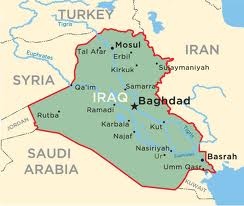
Την ίδια ημέρα οι New York Times δημοσίευσαν ένα άρθρο ,σύμφωνα με το οποίο μετά από συμφωνία με το Ιράκ, αμερικανικές ειδικές δυνάμεις θα επιστρέψουν στη χώρα.

Το Stratfor επισημαίνει και την αυξημένη κινητικότητα των Γαλλικών Ενόπλων Δυνάμεων στη βόρεια Αφρική ,όπου το Παρίσι ανέπτυξε ειδικές δυνάμεις στη νότια Σαχάρα και στο βόρειο Μάλι. Αμερικανικές δυνάμεις έχουν εντοπιστεί στη Λιβύη.

Όπως σωστά επισημαίνουν οι Αμερικανοί αναλυτές κανείς δεν μπορεί να αγνοήσει την ανάπτυξη αυτών των δυνάμεων και να μην την συνδέσει με όσα γίνονται στη Συρία,το Αφγανιστάν,αλλά και στη βόρεια Αφρική.

Τρίτη 2 Οκτωβρίου 2012

US Special Forces Deployed in Iraq, Again


Despite the official US military withdrawal last December, American special forces “recently” returned to Iraq on a counter-terrorism mission, according to an American general in charge of weapons sales there. The mission was reported by the New York Times, in the fifteenth paragraph of a story about deepening sectarian divides.

The irony is that the US is protecting a pro-Iran Shiite regime in Baghdad against a Sunni-based insurgency while at the same time supporting a Sunni-led movement against the Iran-backed dictatorship in Syria. The Sunni rebellions are occurring in the vast Sunni region between northwestern Iraq and southern Syria where borders are porous.

During the Iraq War, many Iraqi insurgents from Anbar and Diyala provinces took sanctuary in Sunni areas of Syria. Now they are turning their weapons on two targets, the al-Malaki government in Baghdad and the Assad regime in Damascus.

The US is caught in the contradictions of proxy wars, favoring Iran’s ally in Iraq while trying to displace Iran’s proxy in Syria.

The lethal complication of the US Iraq policy is a military withdrawal that was propelled by political pressure from public opinion in the US even as the war could not be won on the battlefield. Military “redeployment”, as the scenario is described, is a general’s nightmare. In the case of Vietnam, a “decent interval” was supposedly arranged by the Nixon administration to create the appearance of an orderly American withdrawal. During the same “interval”, Nixon massively escalated his bombing campaign to no avail. Two years after the 1973 Paris peace accords, Saigon collapsed.

It is unlikely that the Maliki regime will fall to Sunni insurgents in Iraq, if only because the Sunni population is approximately twenty percent of the population. However, the return of US Special Forces is not likely to restore Iraqi stability, and they may become trapped in crossfire as the sectarian tensions deepen. The real lesson may be for Afghanistan, where another unwinnable, unaffordable war in support of an unpopular regime is stumbling towards 2014.

Δευτέρα 1 Οκτωβρίου 2012

US Special Forces involved in Syria


An analyst says Western countries stoke violence in Syria, supporting death squads who ravage the local population, as well as undermine the functioning government.

The United States has announced that it will be providing an additional USD 45 million to the insurgents fighting against Syrian President Bashar al-Assad’s government. 

The US has already provided some USD 25 million to the armed groups. 

Some European and Arab countries have also provided weapons to the insurgents fighting against the Syrian government. 

Press TV has conducted an interview with Stephen Lendman, a writer and radio host from Chicago, to further discuss the issue. The following is a rough transcription of the interview. 

Press TV: Why is Turkey doing this to itself? Let’s start off with the “why” of this to begin with, why is Ankara even involved in trying to overthrow a neighboring country? 

Lendman: Well, in a word, Turkey is involved because Turkey is a NATO country; 28 countries; every country is obligated to the other 27. 

Washington leads NATO. Washington gives the orders. The conflict in Syria, it’s a proxy war; it’s a Western proxy war. 

One correction on what Johnny Miller said, it is not a civil war. There is nothing civil about what’s going on. It’s an invasion. It’s a Western-generated invasion. 


The militants that are in Syria, they are death squads, the same type of death squads that ravaged Nicaragua in the 1980s. They are killers. They are hired paramilitaries; they are hired to kill local people, to stoke terror, to stoke fear.
They can keep coming. There are many of them who, I guess, can be recruited for a buck, for ideology, whatever reason they may have. 

I can’t imagine what Turkey can gain out of this except staying on Washington’s good side. 

But aside from the expense internally in Turkey, and the internal opposition from its own people, what on earth does Turkey want to get involved with a country that over many years it had good relations with and it kept the PKK from stirring up too much trouble? 

Well, exactly the opposite is going on now. 

Everybody is losing on this. The Turkish people are losing. The Syrian people are losing. 

The opposition in Syria, most of the internal opposition is non-violent. You never hear that reported in the major media. 

There is opposition in every country. There is plenty of opposition in America. They don’t go out on the streets, shooting people and blowing up buildings. The people doing that are the Western-recruited death squads brought in from the outside. They’re responsible for the massacres, for the killing. 

Press TV: I saw you shaking your head when our previous guest [John Hajjar] was talking. Your take on what he was saying, that basically the focus of attention is not what we’re calling these armed infiltrators in Syria but on the government itself, and that Turkey is actually not a secular government as many of us have believed, but an Islamic one. Your take, Stephen Lendman. 

Lendman: Your guest from Boston, my home city, he sounds more like a propagandist who appears on Fox News in America. He simply doesn’t know what he’s talking about. 

Number one, Turkey is a secular government. It’s not an Islamist government. It’s run pretty much by the military. It has civilian heads but the military is the ultimate power in Turkey, and it certainly is a secular government. It has been that way for a long time. 


As far as Assad, Assad is doing what any responsible leader would do. Syria was invaded from the outside by killers. These death squads have been imported from surrounding countries; they’re coming from Libya; they’re coming from Iraq; they’re coming from Jordan; Israel is very much involved.
America is supplying all kinds of things by proxy. The so-called humanitarian money that’s being donated, that’s a cover. That’s a cover. There are American weapons being used. These people are being supplied; they’re being directed. The CIA is involved. US Special Forces are being involved. 

British intelligence have been involved. They’ve been involved since last year. These are the facts that are going on in the country. 

Any government would do exactly what Assad has done. He is fighting these killer invaders that have come into his country. 

If they came into Chicago, the Chicago police would do the same thing. If they couldn’t handle it, the National Guard would do the same thing. They’d come out with guns, with tanks. 

If they couldn’t handle it, the US Marines would come in, and they would come in with F-16s, and they would get rid of these people; they would route them; they would kill them. 

If I was Assad, I would do exactly what he is doing, and I am absolutely non-violent. If the Syrian people don’t have Assad to protect them, who do they have? They’re aligned with him. 

They are not war crimes. They are not war crimes. War crimes are committed by the mercenaries.

Τετάρτη 19 Σεπτεμβρίου 2012

Sudan rejects US bid to send special forces: official


Smoke billows from the US embassy in the Sudanese capital Khartoum. By (AFP/File)
Sudan has rejected a US request to send special forces to protect its Khartoum embassy after violent protests against an American-made video mocking Islam, the official SUNA news agency said.

Sudanese Foreign Minister Ali Karti said Sudan was capable of "protecting its guests in diplomatic representations," SUNA quoted a ministry official as saying.

The United States had made the request to send special forces Friday.

US officials said Saturday that they were still monitoring the situation and that Sudan has "recommitted itself both publicly and privately to continue to protect our mission."

"We have requested additional security precautions as a result of yesterday's damage to our embassy. We are continuing to monitor the situation closely to ensure we have what we need to protect our people and facility," State Department spokeswoman Victoria Nuland said in a statement.

The Pentagon has indicated that it is examining the possibility of sending Marines to Sudan after deploying them in Yemen and Libya, where ambassador Chris Stevens was among four Americans killed in an attack on a US consulate on Tuesday.

The violence broke out during protests against an amateur Internet film produced on US soil that denigrates Islam and its Prophet Mohammed.

Τρίτη 11 Σεπτεμβρίου 2012

A SEAL’s Most Daring Mission


Navy SEALS are taught to practice OPSEC, elaborate operational security tactics to preserve the element of surprise in carrying out missions. Former commando Matt Bissonnette seems to have put that training to good use in the publication of his controversial tell-all book about the assault that killed Osama bin Laden. Bissonnette, who was a member of the SEAL team that snuffed out the terrorist mastermind, and his publisher went to unusual lengths to conceal the existence of the project until the publisher announced it last month.


noeasy-day-nb10-klaidman
The SEALS train hard and stay quiet. But a new tell-all by a member involved in the bin Laden raid is testing the group’s code of silence. (Clockwise fom left: no credit; Lance Iversen / San Francisco Chronicle-Corbis; Aamir Qureshi / AFP-Getty Images)

For the Pentagon it was tantamount to a sneak attack. Officials were taken by complete surprise when details of the sensational account began appearing in the media. Adding to the pressure was the fact that Bissonnette’s account of the bin Laden raid was at odds with the Obama White House’s version in some key respects, notably whether the terrorist mastermind represented a genuine threat to the commandos when they killed him. Last week officials scrambled to get a copy of the book to see whether Bissonnette’s account, No Easy Day (written under the pseudonym Mark Owen), revealed classified information. But by the time government vetters got their hands on it, thousands of copies had already been shipped to stores and the title stood atop Amazon’s sales list.

“We were caught completely off guard,” conceded one senior Pentagon official, who says national-security personnel are obligated to submit manuscripts containing sensitive information for prepublication review (Bissonnette’s lawyer says the regs merely “invite” authors to show vetters but don’t require it). Late last week, Defense Department general counsel Jeh Johnson sent a letter to Bissonnette in a last-ditch bid to minimize the damage. The threat of legal action was aimed at pressuring Bissonnette and his publisher, Dutton, to submit to the Pentagon’s demands for prepublication review. In the past, the DOD has succeeded in halting distribution of books, even in some cases pulping printed copies. But in the case of No Easy Day, it is likely too late to prevent the book from receiving wide public exposure. “At this point the onus is on the SEAL and his publisher to put the genie back in the bottle,” says one senior Pentagon official, declining to explain how that would be possible.

The Pentagon has not disclosed whether it believes No Easy Day divulges classified secrets, though one official told Newsweek “you can bet we wouldn’t have sent the letter if we didn’t think there were serious security breaches.”

Making the situation all the more awkward: the administration itself may have opened the door. The White House has drawn fire for putting out its own cinematic version of the bin Laden raid. The move rankled critics, who say it smacks of end-zone dancing and could compromise future missions. Several SEALS were motivated to back a super-PAC ad faulting Obama’s leadership. All the attention would seem at odds with the culture of the SEALS, who pride themselves on a code of omertà. But if the organization hates the spotlight, you wouldn’t know it from their recent behavior. This spring, they helped produce a wide-release movie called Act of Valor—no Oscar threat, but a good way to recruit successors to Matt Bissonnette.

Δευτέρα 10 Σεπτεμβρίου 2012

The Navy SEALS’ Dying Words

The CH-47 was shot down a year ago 


Monday, August 6 marks the first anniversary of the Afghan crash of a U.S. military CH-47 Chinook helicopter that killed 30 Americans, including 17 Navy SEALS. It was the worst single loss-of-life day for the U.S. in the war in Afghanistan. It was also the worst in the history of Naval Special Warfare.

Just six weeks before the crash, I spent several days meeting with members of the Navy’s elite SEAL Team SIX, talking to them about the loss of one of their teammates, Adam Brown, who had been killed in action during an especially complex raid on a compound in Afghanistan.

I met with two of them in a crowded bar in a remote Alaskan village. The salmon run had just begun so the place was packed with fishermen, one of whom approached our group with a tray of shot glasses overflowing with whiskey. It was also a place that SEALs would come to before heading for training exercises in the surrounding mountains.

The man offered to buy a round. “I’d be honored if we could have a drink together, to thank you all for your service. And for taking care of business in Pakistan,” he said. Tom Ratzlaff, one of the SEALs I was with, took two shots and handed one to me. “This is for Adam,” he clicked his glass against mine, I nodded, and we threw them back together.

Tom, who was better known as “Rat,” and Chris Campbell shared memories of their teammate, but as they talked about his life and the circumstances surrounding his death, they alluded to the fact that they were keenly aware death might be just around the corner, quite literally, for them too. They were about to be redeployed, and with the loss of Adam weighing heavily on their minds, there was some urgency to have a chance to talk and honor their brother-in-arms.

Kevin Houston, one of the SEALs I met with in Virginia Beach the following week acknowledged, “I could end up getting killed on my next mission I go on, but until that happens, for me, business will continue to be conducted.”

One of things I was most interested in understanding from these men was how they managed moving so fluidly between their family lives and their work as highly-trained warriors. Frequently, they were deployed, came home, and then were suddenly redeployed.

In some cases they developed rituals. Tom shared that whenever he boarded a helicopter for a mission, he said the Lord’s Prayer silently, once he got seated, and then prayed for protection. “I don’t ask for protection myself because that’s in his hands. I ask him to look after my wife and kids. Then I ask him to protect all my buddies and forgive them of all their sins and me of my sins. Then I move straight into thinking about what I’m about to do-the target, the map study, making sure I know which way’s north so I can call out things correctly on the target.”

During my interview with Heath Robinson, another teammate of Adam Brown’s, I asked “How do you do it?” referring to how they transition from lethal missions—shooting and killing people—and then coming back home, sometimes just hours later. Heath answered using his friend’s horses as an analogy. “His wife and daughter have horses,” said Heath. “Nothing makes [them] happier. Well, horses are dirty animals, every weekend he puts on his waders, goes in the barn, and shovels the manure…the dirty hay…their piss. It’s not a good job, it’s miserable, but somebody has to shovel the shit so the family can enjoy what they have.”

Kelley Brown, Adam’s wife, recalled the one time she saw “that side” of her husband. He had just returned home and was relaxing in a bubble bath when a very unlucky burglar attempted to break into their house. Adam, naked but covered in bubbles, flew out of the tub and the look in his eyes was someone she did not recognize. Moments later, the intruder bolted in fear and Adam returned to being her loving husband and the adoring father of their two young children.

The SEALs were also circumspect about death in a way that only those confronted with it regularly can be.

“I either want to die in combat, doing my job right now, or live till I’m 98 years old and see my great, great grand kids,” one of them told me. “I don’t want anything in between. None of us do. A warrior’s death, you can’t get any higher than that. It’s horrible for the family, they don’t want to hear that, but for us, the guys at our command, we’re okay with it. That is our duty, the highest calling. And if that happens to you, you hope you are in the right frame of mind that you are okay with it. I have seen a lot of people go, not well. Had they been able to do another take on it, they would probably want it to go better. I remember everything else about Adam also, but I will always remember the end. You know, your first impression lasts a relationship, and your last impression is with you forever. Adam died well.”

Six weeks after my last interview, I was returning to civilization from my version of being off the grid: camping with my family. My own happy grubby kids were in the back seat of our car when my cell phone indicated I had voicemail.

I called in and listened to one message after another and I learned that all seven of the men I had interviewed — John, Kevin, Brian, Heath, Matt, Tom, and Chris — had been killed in action the day before.

The team had been on a mission in the Wardak Province of Afghanistan, part of an operation intended to capture or kill leaders from an insurgent cell that was holed up in the region. The Chinook carrying them, along with 23 other Americans, and eight Afghan troops, had crashed and exploded after a single rocket propelled grenade struck its aft rotor blade.

Questions surrounded the crash: Why were so many from our most elite military unit on one helo? The most credible view is that it was a lucky shot, but some speculated that it might have somehow been retaliation at the same unit that had only a couple months earlier taken out Bin Laden.

As of today, some family members remain unsatisfied with the investigation. A few days after the crash, I attended Kevin Houston’s funeral, then began transcribing the interviews, haunted as I listened to their voices and read their reflections on life and on death.

As they had talked about Adam Brown, they had unknowingly defined themselves: humble, selfless, and fearless.

With the one-year anniversary of that tragedy upon us, I think of them, and their families, often.

My mind wanders to the inside of that helicopter, envisioning their final moments. It’s a dark place filled with questions — mainly the questions I didn’t ask when I interviewed each of them just weeks before they were killed — but the one thing I know for certain is that they died honorably: serving their country, doing what they believed in.

I have no doubt that they died well.


Eric Blehm is the author of FEARLESS: The Undaunted Courage and Ultimate Sacrifice of SEAL Team SIX Operator Adam Brown, which is dedicated to the memory of the men who were killed on August 6, 2011. See www.fearlessnavyseal.com

Παρασκευή 17 Αυγούστου 2012

The Makin Island Raid

Makin Island as seen from the periscope of USS Nautilus during the raid of August 17-18, 1942.
The Makin Island Raid (occurred on 17–18 August 1942) was an attack by the United States Marine Corps on Japanese military forces on Makin Island (now known as Butaritari Island) in the Pacific Ocean. The aim was to destroy Japanese installations, take prisoners, gain intelligence on the Gilbert Islands area, and divert Japanese attention and reinforcements from the Allied landings on Guadalcanal and Tulagi.

The raid was among the first American offensive ground combat operations of World War II. The force was drawn from the 2nd Raider Battalion and comprised a small battalion command group and two of the Battalion's six rifle companies. Because of space limitations aboard ship, each company embarked without one of its rifle sections. Battalion headquarters, A Company and 18 men from B Company—totaling 121 troops—were embarked aboard the submarine Argonaut and the remainder of B Company—totaling 90 men—aboard Nautilus. The raiding force was designated Task Group 7.15 (TG 7.15).

The Makin Atoll garrison consisted of the Japanese seaplane base led by Sgt. Major Kanemitsu with 73 naval air force personnel with light weapons.
 
Execution of the raid 
 
The Marines were launched in LCRLrubber boats powered by small, 6 hp(4.5 kW) outboard motors shortly after 00:00 (midnight) on 17 August. At 05:13, Companies A and B of the 2nd Raider Battalion—commanded by Lt. Col. Evans Carlson—successfully landed on Butaritari. The landing had been very difficult due to rough seas, high surf, and the failure of many of the outboard motors. Lt. Col. Carlson decided to land all his men on one beach, rather than two beaches as originally planned. At 05:15, Lt. Oscar Peatross and a 12-man squad landed on Butaritari. In the confusion of the landing, they did not get word of Carlson's decision to change plans and land all the Raiders on one beach. Thus, Peatross and his men landed where they originally planned. It turned out to be a fortunate error. Undaunted by the lack of support, Peatross led his men inland.

At 07:00, with Company A leading, the Raiders advanced from the beach across the island to its north shore before attacking southwestward. Strong resistance from Japanese snipers and machine guns stalled the advance and inflicted casualties. The Japanese then launched two banzai charges that were wiped out by the Raiders, thus killing most of the Japanese on the island. At 09:00, Lt. Peatross and his 12 men found themselves behind the Japanese who were fighting the rest of the Raiders to the east. Peatross's unit killed eight Japanese and the garrison commander Sgt. Major Kanemitsu, knocked out a machinegun and destroyed the enemy radios; but suffered three dead and two wounded. Failing to contact Carlson, they withdrew to the subs at dusk as planned.

At 13:30, 12 Japanese planes—including two flying boats—arrived over Butaritari. The flying boats—carrying reinforcements for the Japanese garrison—attempted to land in the lagoon, but were met with machinegun, rifle and Boys anti-tank rifle fire from the Raiders. One plane crashed; the other burst into flames. The remaining planes bombed and strafed but inflicted no U.S. casualties.


Σάββατο 11 Αυγούστου 2012

The History of the 10th Special Forces Group


YouTube user MH6M posted a video explaining the long and prestigious history of the 10th Special Forces Group (Airborne). Oh, you’ve never heard of them? They’re only the first ever special forces group in the US Army. No big deal. 

The origin of the unit can be traced back to the Lodge-Philbin Act of 1950, which allowed the US military to recruit foreign nationals. Half of the members of the 10SFG would be American, and the other half would be anti-communist foreign nationals. In theory, this diversity would give the group an edge if they ever needed to conduct partisan warfare behind Soviet lines. 

Luckily, the Cold War remained cold, but the 10SFG persisted as the US military’s most elite group of soldiers. They continued training both at home and abroad, exchanging unconventional combat tactics with allies such as the UK, Germany, France, Greece, Italy, Spain, and Norway. 

In the ‘60s, they saw action as they evacuated civilians from the newly-independent Congo, safely moving 239 civilians without a single casualty in just nine days. From there, individual soldiers worked alongside other special forces groups in the Vietnam War.

Budget cuts hit the military after the Vietnam War ended, but that didn’t slow down the 10SFG one bit. They continued to train abroad with NATO allies, and they deployed 17 mobile training teams to support the Lebanese Army. They’re also credited by General John Galvin as saving half a million Kurdish people from death at the hands of Saddam Hussein. 

In 1995, members of the 10SFG were among the first US soldiers to cross the border into Bosnia. Shortly after that, they provided reconnaissance and completed search-and-rescue missions for seven years in Kosovo. As you might expect, they also has a powerful presence in Iraq -- they were the first to enter Iraq prior to the invasion. Under the exceptional leadership of Col. Charles Cleveland, they executed Operation Viking Hammer, overcoming a lack of surveillance and a shortage of vehicles to accomplish the mission without a single loss of us service member. 

Are you impressed by their extensive resumé, yet? That’s barely the half of it. Watch the video for a complete run-down of this incredible special forces unit. The motto of the 10th Special Forces Group (Airborne) is simply, “The Best.” Yeah, we’d have to agree.


Παρασκευή 10 Αυγούστου 2012

Special Operations forces risk being overused, misused, former chief says


The use of military Special Operations Forces has been a proven success in Iraq, Afghanistan and - with last year's raid on Osama bin Laden's compound - in Pakistan, but that success has some people concerned. Will the forces become the tool of choice for a president?

The former head of the U.S. Special Operations Command told the Aspen Security Forum Thursday he fears there could be a misuse of the highly trained specialists.

"It's a real danger," retired Adm. Eric Olson said. "They come to be thought of as a utility infielder, sometimes a utility infielder with guns, and they may be asked to solve problems that are not necessarily special operations problems."

Olson cited cases of Special Operations Forces being asked to provide security for individuals overseas.

The high demand has strained the elite forces. Last year, Olson warned the units were "beginning to show some fraying around the edges."

With the opposition gaining some ground in Syria in its battle to overthrow the Assad regime, some members of Congress are pressing the Obama administration to do more to help the insurgents, who are still not united or well-organized.

In a quick interview with CNN's Security Clearance on the sidelines of the security forum, Michael Sheehan, the assistant secretary of defense for special operations, said the potential use of Special Operations Forces in Syria is not a focus of his right now.

Sheehan also said there are no U.S. Special Operations Forces in Mali, where internal strife has left the northern part of the country ungoverned and where al Qaeda sympathizers have moved in, a development Sheehan called very troubling.

He said the United States is considering options, but no decisions have been made.

Special Operations Forces are at work around the world, Olson's successor, Adm. William McRaven, told CNN's Wolf Blitzer on Wednesday.


McRaven said Special Operations Forces are in 79 countries, with the largest contingent in Afghanistan. Sixty-six thousand people are part of Special Operations Command, half of them active forces. Approximately 10,000 to 12,000 are deployed at any given time, with 7,000 currently in Afghanistan and more than 3,000 elsewhere, he said.

Sheehan said the forces can operate anywhere and the numbers can range from just one or two in a country to dozens or several hundreds. The goal is to help the host nations handle their own security operations.

Πέμπτη 9 Αυγούστου 2012

Stabilizing the wild southwest of Afghanistan

A Marine assigned to the 1st Marine Special Operations Battalion from Camp Pendleton works with the local Afghan Local Police in Puzeh.


Marine special operations forces realized the security situation had changed dramatically in their stretch of the upper Sangin river valley this summer when village boys started playing policeman instead of Taliban insurgent.

Matt, leader of the team from Camp Pendleton’s 1st Marine Special Operations Battalion now stationed in Puzeh, compared it to the old days of the American West.

Back then, “it wasn’t cool to be a sheriff. It was cool to be a bank robber until Wyatt Earp came along and started making a name for himself and for lawmen. That’s kind of what we saw here,” said the team leader, who couldn’t be fully identified because of the sensitive nature of his mission. “You see kids running around now trying to play ALP (Afghan Local Police). So it’s catching on.”

Puzeh flanks a dirt road cutting through desert hills in what might be described as the wild southwest of Afghanistan. The district it’s in, Sangin, has been among the bloodiest of the war for U.S. and British forces. Yet Puzeh is the successful poster child, at the moment at least, for a unique, bottom-up approach to stabilizing the hinterlands that U.S. military commanders describe as probably their most important endeavor.

At its heart is recruitment of Afghan Local Police — villagers armed and paid to protect their hometowns — but the overarching “Village Stability Operations” spearheaded by special operations forces throughout Afghanistan have broader ambitions.

After recruiting the sons and brothers of tribal leaders to serve as local police, the special operators also aim to strengthen governance and economic development by linking them to regular police forces and local councils planning for community needs like roads or wells.

Amid the special operations forces’ more well-known missions — such as raids like the one that killed Osama bin Laden and mentoring of national security forces — the elite troops started opening “platforms” for village stability operations throughout Afghanistan about two years ago.

Lt. Col. Michael Brooks, a Camp Pendleton Marine commander in charge of Special Operations Task Force-West, said the first time he visited Puzeh early in its development, special operations forces were getting shot at by rocket-propelled grenades. The task force oversees special operators from all branches of the armed services stationed in six provinces of Afghanistan.

Several factors contributed to Puzeh’s newfound calm and the strength of its local police program, including tribal dynamics and geography, but the most important was developing strong relationships with the people, he said.

“If they’re just dealing with you and following your routine and your agenda, when you leave it’s going to revert back to what it was before you got there. But if you establish a relationship and they understand what’s going on and they see the opportunity in front of them, they truly do mobilize,” Brooks said.

The special operations forces do that by living among the Afghans, growing beards like the locals and sometimes even fasting during the day in respect for the Muslim holy month of Ramadan that started in late July.

But no matter how closely they work with the villagers, the program has little chance of success in areas where there is no connection to the central government, Brooks said. For instance, after special operations forces stepped back from one of their sites established in 2010 in Badghis province, dozens of local police surrendered last month to the Taliban.

The joint special operations command has not shied away, however, from village stability operations in the most violent areas of the country. Although the chances of success may be better when they are invited by a community, commanders said, they also have fought their way into areas appearing to be unrelenting insurgent strongholds.

One of their newest sites is in Nahr-e Saraj district — the most violent in all Afghanistan. In late June, about 800 troops, including British and U.S. infantry, tankers, engineers and both American and Afghan special operations forces, moved into the Qala-e Gaz area of the upper Gereshk valley in Nahr-e Saraj to establish a new base for village stability operations and local police. Several Marines were killed during the operation, which included the 1st Battalion, 7th Marine Regiment out of Twentynine Palms.

The idea is to eliminate irreconcilable insurgents, convince the half-hearted that there’s another way and help the Afghan government arm the rest against Taliban attacks and infiltration.

Maj. Gen. David Berger, the commanding general overseeing conventional Marine ground forces in southwestern Afghanistan, said the local police are critical to rehabilitating the country’s most war-torn areas. They are more effective at spotting signs an American might overlook, like the Pakistani sandals on a militant’s feet, he said, and they have more credibility than coalition or even Afghan national forces who usually hail from other areas of the country and don’t speak the same language as the villagers.

“What probably was a tight-woven fabric has been broken apart. Where that fabric has frayed, some of the glue is the local police. Because if the three of us are nominating our sons, we have some skin in the game,” Berger said. He cautioned, however: “It’s not a quick process. People want to wake up tomorrow and have nirvana, but it takes many months.”

New ones are still being established, but many of the existing programs are reaching maturity, commanders said, and are being transferred to Afghan control as the local police are put on the Ministry of the Interior payroll.

Critics deride the local police as militias susceptible to human rights abuses and warlordism of the kind that spawned the Taliban takeover. But Marine commanders say this approach may be the best hope for long-term peace in a country with a weak central government and strong history of tribalism.

About a year and a half after the forces moved into Puzeh, the area has about 120 local police, a functioning community council that interacts with the district, a refurbished school and a mosque under construction. Three civilians were injured by insurgent bombs in the last couple months — historically a low number for the area — and the main road is regularly trafficked and long since cleared of explosives.

Insurgents remain an active threat on the outskirts, as the memorial under construction last month in Puzeh to seven local policemen killed in action attests. But the program helping the village secure itself is virtually on auto pilot now, with U.S. special operations forces remaining on site as a quick reaction force and Afghan troops handling most recruit training to replace ones fired by local elders.

Puzeh is so calm that Matt and his Afghan counterpart, a 27-year-old special forces commander named Qurbaan, don’t wear body armor when they roll in their all-terrain vehicle out the metal gates of their compound to take the pulse and chat with villagers.

Qurbaan stands on the road wearing rubber slippers, bouncing a baby girl on his hip as he grips hands and grins and fobs off pleas for gasoline. “My daughter,” he jokes in English, with perfect political pitch.

The Puzeh local police scored two of their biggest victories this summer. In June they repelled an attack by upwards of 75 insurgents. Then in mid-July they tracked several Taliban commanders and pinned them against a cliff with gunfire until a coalition air strike finished them off.

One of the insurgents, a 30-something named Zahid easily recognized by the metal brace on his leg, had terrorized the village. After being wounded 11 times, “he had kind of taken on a boogie man persona,” said Ryan, the Marine special operations team chief.

When the Afghan local police paraded his body through town on a donkey, hundreds of people thronged the road. Afghan men approached the gates of the special operations forces compound with tears in their eyes and fired guns in celebration.

“The boogie man was dead,” Ryan said, and it wasn’t the Americans who found him. “It was Afghan Local Police.”