Στις μέρες μας, περισσότερο από ποτέ, μεγάλη ποσότητα στρατηγικά ευαίσθητων πληροφοριών ανταλλάσσονται καθημερινά, χωρίς προστασία, μέσω συμβατικών τηλεφωνικών γραμμών, κινητών τηλεφώνων ή κατά τη διάρκεια προσωπικών συναντήσεων στο γραφείο, στο σπίτι, στο αυτοκίνητο κλπ. Τέτοιου είδους πληροφορίες, οι οποίες υποπίπτουν στα χέρια κάποιου αντιπάλου ή ανταγωνιστή θα μπορούσαν να αποβούν μοιραίες για εσάς, την επιχείρηση σας ή τον οργανισμό σας. Τι συσκευές υπάρχουν στην αγορά; Πώς μπορεί κανείς να συλλέξει πληροφορίες για τον ανταγωνισμό; Τι τρόποι προστασίας υπάρχουν; Ας ξεκινήσουμε το ταξίδι στο χώρο του electrinic surveillance με τους κλασσικούς "κοριούς". Look who's talking Σύμφωνα με τις εκτιμήσεις ειδικών, οι συσκευές υποκλοπής που είναι εγκατεστημένες σε όλο τον κόσμο, ανέρχονται σε αρκετά εκατομμύρια. Οι εφημερίδες, τα ειδικά περιοδικά και το Internet είναι γεμάτα από μικρές αγγελίες και διαφημίσεις και η προμήθειά τους είναι εύκολη υπόθεση. Οποιοσδήποτε ηλεκτρονικός μπορεί να κατασκευάσει έναν πομπό τηλεφώνου μέσα σε μισή ώρα, συναρμολογώντας δέκα βασικά ηλεκτρονικά εξαρτήματα που βρίσκονται σε αφθονία στην αγορά. Η εγκατάσταση είναι εξίσου εύκολη (ανοίγετε το τηλέφωνο, κόβετε το ένα από τα δύο καλώδια της γραμμής και παρεμβάλλετε σε σειρά τον κοριό). Για τους λιγότερο τολμηρούς, ειδικά γραφεία αναλαμβάνουν να "τελειώσουν" τη δουλειά για λογαριασμό τους. Οι "κοριοί" που χρησιμοποιούνται σήμερα διακρίνονται σε δύο μεγάλες κατηγορίες. Συσκευές παγίδευσης τηλεφωνικών γραμμών Στην αγορά διατίθεται μεγάλη ποικιλία ηλεκτρονικών συσκευών παγίδευσης τηλεφωνικών γραμμών, οι οποίες, λόγω των ιδιαίτερα μικρών διαστάσεών τους (μικρότερες και από ένα γραμματόσημο), μπορούν να συνδεθούν σε σειρά, παράλληλα ή και επαγωγικά, σχεδόν οπουδήποτε στις τηλεφωνικές γραμμές, εσωτερικά στα ΚΑΦΑΟ, ακόμη και μέσα στην ίδια την τηλεφωνική συσκευή, χωρίς να γίνουν αντιληπτές από το χρήστη. Συσκευές παγίδευσης χώρου Και εδώ διατίθεται μεγάλη ποικιλία συσκευών με μικρές διαστάσεις που μπορούν να τοποθετηθούν εύκολα οπουδήποτε μέσα στο γραφείο, το δωμάτιο, το σκάφος, το αυτοκίνητο για να κατασκοπεύσουν ή να καταγράψουν τις επαγγελματικές και προσωπικές σας συναντήσεις. Οι συσκευές παγίδευσης χώρου μπορούν να τοποθετηθούν σε οποιαδήποτε συσκευή ή αντικείμενο που βρίσκεται στο χώρο σας (ρολόι, σταχτοδοχείο, press papier κ.ά) ή ακόμη και μέσα στην πρίζα των 220V. Οι τεχνικές και οι συσκευές που χρησιμοποιούνται για την υποκλοπή ποικίλλουν και εξαρτώνται σε μεγάλο βαθμό από το αν πρόκειται για επαγγελματικές ή ερασιτεχνικές.  Υπάρχουν οκτώ βασικοί τρόποι υποκλοπής: 1. Ενσύρματα Μικρόφωνα  Η εγκατάσταση ενσύρματων μικροφώνων είναι μια από τις πιο κλασικές τεχνικές υποκλοπής και, εφόσον υλοποιηθεί σωστά, είναι σχεδόν αδύνατο να εντοπιστεί. Αποτελείται από ένα μικρόφωνο εγκατεστημένο στο χώρο "στόχο" με το καλώδιο σύνδεσής του να απλώνεται μέχρι το σημείο ακρόασης. Επειδή το καλώδιο του μικροφώνου μπορεί να οδηγήσει στην αποκάλυψη του σημείου ακρόασης και του υποκλοπέα, συνήθως τοποθετείται στο σημείο ακρόασης πομπός μετάδοσης μέσω R.F. 2. Πομποί μετόδοσης ηλεκτρομαγνητικής ακτινοβολίας R.F. Η κατηγορία αυτή συνήθως αναφέρεται ως "κοριοί" (bugs) ή μεταδότες ανοιχτού χώρου (Free space transmitters). Κυκλοφορούν σε πολύ μικρό μέγεθος στο οποίο περιλαμβάνεται το κύκλωμα του πομπού, το μικρόφωνο και η κεραία. Τροφοδοτούνται συνήθως από μπαταρία αλλά μπορούν να συνδεθούν και σε γραμμή τροφοδοσίας συνεχούς ή εναλλασσόμενου ρεύματος. Οι περισσότερες συσκευές της κατηγορίας εκπέμπουν σήμα R.F. με το φέρον διαμορφωμένο αναλογικά κατά ΑΜ ή FM. Λειτουργούν όπως οι συμβατικοί ραδιοφωνικοί σταθμοί μετάδοσης, με τη διαφορά ότι μεταδίδουν σε συχνότητες που δεν μπορούν να ληφθούν από κοινούς ραδιοφωνικούς δέκτες. Πριν την έλευση της ιδιωτικής ραδιοφωνίας, χρησιμοποιείτο κατά κόρον η μπάντα των FM. Τώρα, οι απαιτήσεις αλλά και οι συχνότητες έχουν ανέβει στην περιοχή πάνω από τους 108 ΜΗΖ ή και πιο ψηλά όπου χρησιμοποιούνται συσκευές με ΡLL ή με κρύσταλλο. Υψηλότερης κλάσης μεταδότες που χρησιμοποιούνται από επαγγελματίες κάνουν χρήση ψηφιακών τεχνικών διαμόρφωσης όπως PCM, phase modulation, spread spectrum, frequency hopping, προσφέροντας καλύτερα αποτελέσματα ενώ, παράλληλα, ελαχιστοποιείται η πιθανότητα εντοπισμού τους. 3. Πομποί μετάδοσης μέσω γρομμών ρεύμοτος  Οι μεταδότες αυτής της κατηγορίας (carrier current transceivers) χρησιμοποιούν ως μέσο μετάδοσης τις γραμμές του εναλλασσόμενου ρεύματος A.C ή τις τηλεφωνικές γραμμές αντί του ελεύθερου χώρου. Η μετάδοση γίνεται συνήθως σε χαμηλές συχνότητες και η ισχύς εκπομπής είναι πολύ μικρή. Η τεχνική αυτή αναπτύχθηκε ως εναλλακτική της ασύρματης παρακολούθησης και, αν κάποιος μετασχηματιστής δε διακόπτει την ωμική συνέχεια του δικτύου, το σήμα μπορεί να φτάσει πολύ μακριά. Στην ίδια τεχνική βασίζονται τα συστήματα ενδοεπικοινωνίας ή επιτήρησης βρεφών που κυκλοφορούν σε αφθονία στην αγορά! Μία άλλη μέθοδος είναι η τοποθέτηση πομπού χώρου μέσα στην πρίζα. Με τον τρόπο αυτό εξασφαλίζεται τροφοδοσία -και ως εκ τούτου επιτήρηση του χώρου- σε 24ωρη βάση. 'Ετσι, λύνεται ένα από τα μεγαλύτερα προβλήματα των πομπών χώρου, αυτό της τροφοδοσίας αφού όντας τοποθετημένοι σε... εχθρικό περιβάλλον η πρόσβαση σε αυτούς για αλλαγή της μπαταρίας δεν είναι πάντα εύκολη. 4. Κατασκευαστικές ατέλειες  Οι τοίχοι έχουν αυτιά! Αρκετά κτίρια λόγω σχεδίασης και κατασκευής παρουσιάζουν σε ορισμένα σημεία ατέλειες, κάνοντας εύκολη τη ζωή των ωτακουστών.Οι ακουστικές συχνότητες μεταδίδονται από τα εν λόγω σημεία σε παρακείμενους χώρους με αποτέλεσμα να καθίσταται δυνατή η παρακολούθηση. Κατασκευαστικές ατέλειες, λεπτοί τοίχοι, αγωγοί κλιματισμού, καμινάδες, πατώματα, κλπ. μπορούν να μεταφέρουν ηχητική πληροφορία από το ένα σημείο στο άλλο. Στην αγορά κυκλοφορούν ειδικές συσκευές με ευαίσθητα μικρόφωνα "τοίχου" που πολλαπλασιάζουν το... ηχητικό αποτέλεσμα. 5. Απευθείος οκρόοση Οι ακουστικές συχνότητες μπορούν να υποκλαπούν από απόσταση, με τη χρήση "βιονικών" κατευθυντικών μικροφώνων, μέσα από ανοιχτά παράθυρα κτιρίων ή εξωτερικούς χώρους. Η τεχνική αυτή απαιτεί την οπτική επαφή του μικροφώνου και της περιοχής που υποκλέπτεται ενώ περιβαλλοντικοί θόρυβοι επιδρούν αρνητικά επηρεάζοντας το αποτέλεσμα.  'Ενας άλλος ηλεκτρονικός τρόπος, που βασίζεται επίσης στη φυσική, είναι οι παθητικοί συντονιζόμενοι ανακλαστές μικροκυματικής ακτινοβολίας. Λίγο -πολύ είναι γνωστή η ιστορία της παρακολούθησης της αμερικάνικης πρεσβείας στη Μόσχα. Κατά τη διάρκεια μίας επιχείρησης "απολύμανσης", βρέθηκε στον αμερικάνικο θυρεό που διακοσμούσε το γραφείο του πρεσβευτή μία συσκευή που ανταποκρινόταν σε σήματα 1800ΜΗz εκπέμποντας ένα αδιαμόρφωτο σήμα. Μετά από έρευνες -και με τη συνεργασία του MΙ5- αποκαλύφθηκε ότι το σύστημα συντονιζόταν μηχανικά στην ανθρώπινη ομιλία. Όταν δεχόταν μικροκυματική ακτινοβολία κατάλληλης συχνότητας -πολλαπλάσια της συχνότητας συντονισμού- η μηχανική ταλάντωση διαμόρφωνε την ακτινοβολία μεταβάλλοντας τη φάση. Το μόνο που απέμενε ήταν η ανίχνευση της διαφοράς φάσεως και η αποδιαμόρφωση του σήματος! 6. Συσκευές μαγνητοφώνησης Οι συσκευές μαγνητοφώνησης μπορούν να χρησιμοποιηθούν ως συσκευές υποκλοπής. Το εξαιρετικά μικρό μέγεθος ορισμένων από αυτές τις καθιστά ιδανικές για απόκρυψη σε χαρτοφύλακες, τσάντες, ντοσιέ, κλπ. Σε αυτές τις περιπτώσεις ο υποκλοπέας μαγνητοφωνεί τις συνομιλίες, χωρίς να γίνεται αντιληπτός από τους συνομιλητές του. Επίσης με τη χρήση κατάλληλων κυκλωμάτων προσαρμογής μπορούν εύκολα να τοποθετηθούν στην τηλεφωνική γραμμή καταγράφοντας τις τηλεφωνικές συνδιαλέξεις (tapping). 7. Συστήματα Laser Τα συστήματα αυτά κατευθύνουν μια δέσμη Laser στο παράθυρο του κτιρίου που πρόκειται να γίνει η υποκλοπή. Κάθε ήχος από το . δωμάτιο προκαλεί δονήσεις στο τζάμι του παραθύρου, αντίστοιχες του πλάτους και της συχνότητας του ήχου που τις προκάλεσε. Η δέσμη Laser διαμορφώνεται από τις δονήσεις και ανακλάται πίσω στο δέκτη, όπου και αποδιαμορφώνεται. Τα συστήματα Laser απαιτούν οπτική επαφή και καλές καιρικές συνθήκες για να λειτουργήσουν ικανοποιητικά. Το σύστημα αυτό αντικατέστησε σε μεγάλο βαθμό τους συντονιζόμενους παθητικούς ανακλαστές, δεδομένου ότι η εξέλιξη της τεχνολογίας κατέστησε ιδιαίτερα εύκολη την ανίχνευση των μικροκυμάτων. 8. Τηλέφωνα Τα τηλέφωνα είναι οι περισσότερο ευπαθείς συσκευές σε ένα δωμάτιο, από την πλευρά της ασφάλειας, ειδικά όταν πρόκειται για τη νέα γενιά ηλεκτρονικών τηλεφωνικών συσκευών. Οι τηλεφωνικές συσκευές μπορούν είτε να παγιδευτούν μέσω των τηλεφωνικών γραμμών είτε να παγιδεύσουν το χώρο που είναι τοποθετημένες (infinity transmitter). Καταρχήν, για να χρησιμοποιηθεί ένα τηλέφωνο σαν συσκευή υποκλοπής χώρου, ο υποκλοπέας πρέπει συχνά -ανάλογα με τη συσκευή που θα χρησιμοποιηθεί- να τροποποιήσει το κύκλωμα που σχετίζεται με το διακόπτη αγκίστρου και το μικρόφωνο του ακουστικού. Σε αυτή την περίπτωση το τηλέφωνο μεταδίδει τους ήχους που προέρχονται από το χώρο που βρίσκεται εγκατεστημένο, ακόμα και με το ακουστικό κατεβασμένο. Οι πομποί απεριόριστης δράσης, μελωδικοί κοριοί ή infinity transmitters (διαλέγετε όποια ορολογία σάς αρέσει) εφευρέθηκαν πριν από αρκετές δεκαετίες από το FBI για να χρησιμοποιηθούν κατά της Μαφίας. Μετά την τοποθέτηση της συσκευής, ο υποκλοπέας καλεί τον συγκεκριμένο αριθμό, ζητάει κάποιο τυχαίο όνομα, δηλώνει ότι έκανε λάθος και ζητάει συγνώμη. Παράλληλα όμως έχει φροντίσει να αποστείλει ένα ηχητικό σήμα που ενεργοποιεί το σύστημα. 'Ετσι, η γραμμή δεν κλείνει αλλά περιέρχεται στον έλεγχό του, δίνοντάς του τη δυνατότητα να ελέγχει ακουστικά τον παρακολουθούμενο χώρο. Πρόβλημα τροφοδοσίας δεν υπάρχει, δεδομένου ότι η συσκευή λειτουργεί με το ρεύμα της τηλεφωνικής γραμμής. Για να παγιδευτεί η τηλεφωνική γραμμή και αντίστοιχα η τηλεφωνική συσκευή που συνδέεται με αυτή, υπάρχουν αρκετοί τρόποι. Οι δύο πιο κοινοί είναι εκείνοι της τοποθέτησης σε σειρά, παράλληλα ή επαγωγικά στην γραμμή του ΟΤΕ είτε πομπών R.F, είτε ειδικών κυκλωμάτων (line interfaces) προσαρμογής της τηλεφωνικής γραμμής με συσκευές καταγραφής τηλεφωνικών συνδιαλέξεων. Οι περισσότερες από τις συσκευές που προαναφέραμε δεν απαιτούν τροφοδοσία αλλά λειτουργούν με το ρεύμα της γραμμής. Το μέγεθός τους και το καμουφλάρισμά τους ποικίλλει. Παλιότερα που υπήρχαν τηλέφωνα με κάψες, οι... παρακολουθούντες άνοιγαν την κάψα και τοποθετούσαν τον πομπό μέσα. Σήμερα, που οι κοινότεροι πομποί έχουν μέγεθος φακής μπορούν να τοποθετηθούν οπουδήποτε, ακόμη και μέσα στο jack της τηλεφωνικής συσκευής. Το μειονέκτημα των περισσότερων συσκευών του είδους είναι ότι, απορροφώντας ρεύμα από τη γραμμή, μεταβάλλουν τα χαρακτηριστικά της και μπορούν να γίνουν εύκολα αντιληπτοί ακόμη και από αντιπαρακολουθητικές συσκευές που κοστίζουν ελάχιστα χρήματα. Τελευταία, έχουν κάνει την εμφάνιση τους στην αγορά επαγωγικά κυκλώματα προσαρμογής (Iine interfaces) τα οποία εντοπίζονται πολύ δύσκολα αφού δεν προκαλούν καμιά μεταβολή των ηλεκτρικών χαρακτηριστικών της γραμμής. Υπάρχουν, βέβαια, ακόμα πιο επαγγελματικοί τρόποι παρακολούθησης. Το σύστημα που έφερε πραγματική επανάσταση στο χώρο ήταν μία σχεδίαση του Peter Wright, ειδικού επιστήμονα του ΜΙ5 (της αγγλικής αντικατασκοπίας). Όλα τα συστήματα μέχρι τότε απαιτούσαν πρόσβαση στον προς παρακολούθηση χώρο, προκειμένου να τοποθετηθεί ο κοριός ή οποιαδήποτε άλλη συσκευή παρακολούθησης. Ο Wright διοχέτευσε ηλεκτρομαγνητική ακτινοβολία υψηλής συχνότητας στη γραμμή η οποία μπορούσε να διαπεράσει το άγκιστρο, ώστε να ενεργοποιήσει το μικρόφωνο που μετέδιδε όλα όσα συνέβαιναν σε ακτίνα 4 μέτρων. Fax 'Οσον αφορά την παρακολούθηση fax, μπορεί να μην είναι τόσο εύκολη όσο η υποκλοπή τηλεφωνημάτων αλλά... τίποτα δεν είναι αδύνατο στα ηλεκτρονικά. Δεν μπορούμε π.χ. να συνδέσουμε ένα τρίτο fax παράλληλα στη γραμμή προκειμένου να λάβουμε και εμείς αντίγραφο, δεδομένου ότι τα fax ανταλλάσσουν αρχικά κάποιο πρωτόκολλο επικοινωνίας (handshaking) με σκοπό το συντονισμό τους και συνεχίζουν να ανταλλάσσουν πληροφορίες σε κάθε αλλαγή σελίδας. Στην αγορά υπάρχουν ειδικές συσκευές υποκλοπής fax -φημίζονται ιδιαίτερα όσες είναι κατασκευασμένες στο Ισραήλ- αλλά ο απλούστερος τρόπος είναι να ηχογραφήσετε π.χ. σε μία συσκευή DΑΤ (Digital Audio Tape) στο ένα κανάλι το ηχητικό σήμα που παράγεται από τις συσκευές fax και στο άλλο, ένα σταθερό τετραγωνικό σήμα συγχρονισμού 1000Hz. Κατά την αναπαραγωγή είναι απαραίτητο ένα fax/modem encoder. Είναι προφανές, από όλα όσα προαναφέραμε, ότι το τηλέφωνο είναι ένας αδύνατος κρίκος στην αλυσίδα της ασφάλειας μίας επιχείρησης. Στην αγορά υπάρχουν συσκευές εντοπισμού πομπών, ενώ πολύ καλή δουλειά θα έκανε και ένα spectrum analyzer. Στην πράξη, καλό θα ήταν να απομακρύνετε το τηλέφωνο από την αίθουσα συσκέψεων (στην ανάγκη βγάλτε το από την πρίζα), ενώ ένα άλλο αντίμετρο είναι η τοποθέτηση ενός πυκνωτή 0,01μF παράλληλα στην τηλεφωνική γραμμή στο σημείο σύνδεσης με το τηλέφωνο. Τέλος, θα μπορούσατε να χρησιμοποιήσετε κωδικοποιητές -scramblers- που θα διασφάλιζαν σε κάποιο βαθμό την επικοινωνία π.χ. των κεντρικών γραφείων της εταιρείας με το υποκαταστημα της. Κινητή τηλεφωνία Όσο η τεχνολογία στις τηλεπικοινωνίες εξελίσσεται, άλλο τόσο, αντίστοιχα, εξελίσσονται οι τεχνικές και οι συσκευές υποκλοπής. Συχνά, βλέπουμε στον τύπο αναφορές για υποκλοπές κινητών τηλεφώνων, οι οποίες ωστόσο αναφέρονται κατά κανόνα σε χώρες που χρησιμοποιούν αναλογικά συστήματα. Τα συστήματα αυτά ευνοούν την ηλεκτρονική απάτη -με την κατασκευή κλώνων- η οποία στην Αμερική ξεπέρασε το1994 τα 500 εκατομμύρια δολάρια!  Το 1988, ένας υποκλοπέας κινητών τηλεφώνων υπέκλεψε συνομιλία του προέδρου της εταιρείας Popeye's Fried chicken. Στη συνομιλία ο πρόεδρος της εταιρείας συζητούσε τα σχέδια ανάληψης εμπορικού ελέγχου έναντι της ανταγωνίστριας εταιρείας Church's Fried chicken. Είναι προφανές ότι ο υποκλοπέας είχε -εκ των έσω- στοιχεία για τα σχέδια της εταιρείας, τα οποία θα μπορούσε να πουλήσει στον ανταγωνιστή. Ακόμη και υψηλού επιπέδου κυβερνητικά στελέχη δεν εξαιρούνται από τις υποκλοπές των κινητών τηλεφώνων τους. Το 1990, ο πρόεδρος των Ηνωμένων Πολιτειών George Bush είχε μια τηλεφωνική επικοινωνία, μέσω κινητού τηλεφώνου, με τον Robert Byrd σχετικά με τον πόλεμο στον κόλπο. Η συνομιλία υπεκλάπη "κατά λάθος" όπως ανακοινώθηκε εκ των υστέρων- από ένα δημοσιογράφο των Daily Times στο Glouster της Massachusetts, ο οποίος αργότερα δημοσίευσε τη σχετική ιστορία Στην Ελλάδα, όπως είναι γνωστό, έχει υιοθετηθεί το GSM (Global Mobile System), μία από τις βασικές παραμέτρους σχεδίασης του οποίου είναι η ασφάλεια των τηλεπικοινωνιών. Η μέθοδος κρυπτογράφησης που χρησιμοποιείται βασίζεται στη χρήση συμμετρικού αλγορίθμου κρυπτογράφησης ροής (stream cipher) Προκειμένου να επιτευχθεί το maximum της ασφάλειας για την κρυπτογράφηση -αποκρυπτογράφηση απαιτούνται τα εξής: Οι μοναδικές κλείδες ασφαλείας -Κί- που υπάρχουν για κάθε συνδρομητή. Οι τυχαίοι αριθμοί -R- που παράγει το δίκτυο Η δημιουργία, με τη βοήθεια του Κί και του R, του απαντητικού αριθμού SRES (Signed RESpOnse) Οι αλγόριθμοι κρυπτογράφησης Α3 (αλγόριθμος πιστοποίησης), Α5 (αλγόριθμος κρυπτογράφησης φωνής) και Α8 (αλγόριθμος παραγωγής του κλειδιού Kc). Η μοναδικότητα των κλειδιών και η συμμετοχή των τυχαίων αριθμών R εγγυώνται -κάθε φορά- τη μοναδικότητα του κωδικού. (Σε προσεχές άρθρο θα αναφερθούμε αναλυτικά στον τρόπο κρυπτογράφησης που χρησιμοποιείται στο GSM) Είναι λοιπόν απόλυτα ασφαλές το κινητό τηλέφωνο; Στην ουσία ναι! Θεωρητικά θα μπορούσε κάποιος να παρακολουθήσει, όχι τα κινητά τηλέφωνα, αλλά τις μικροκυματικές ζεύξεις μεταξύ των σταθμών βάσεως και του κεντρικού συστήματος. Οι υψηλές συχνότητες (23 ή 38 GHz), η μεγάλη κατευθυντικότητα των συγκεκριμένων μεταδόσεων και αρκετές άλλες τεχνικές λεπτομέρειες καθιστούν πρακτικά αδύνατο το συγκεκριμένο τρόπο παρακολούθησης, δεδομένου ότι απαιτείταί εξοπλισμός πολλών εκατομμυρίων για αμφίβολα αποτελέσματα. Γι ' . αυτό, άλλωστε, σε περιπτώσεις θεμάτων εθνικής ασφάλειας ή δίωξης κοινού εγκλήματος (όπως η περίπτωση του αλβανού απαγωγέα), ακόμη και οι κρατικές υπηρεσίες καταφεύγουν στα δίκτυα για βοήθεια.  Του λόγου -που μεταδίδεται απο κινητό τηλέφωνο- το... ασφαλές επιβεβαιώνεται και από το πόρισμα της Εθνικής Επιτροπής Προστασίας του Απορρήτου των Επικοινωνιών που συνέρχεται βάσει του νόμου 2225/1994. Το πόρισμα επισημαίνει ότι "η παρακολούθηση τηλεφωνικών συνδιαλέξεων από κινητό σε κινητό είναι δύσκολη έως αδύνατη". Όλα τα παραπάνω αφορούν κοινές περιπτώσεις απλής βιομηχανικής κατασκοπίας ή κρεβατοκάμαρας, διότι, αν αποφασίσει π.χ. να ασχοληθεί μαζί σας η NSA (National Security Agency), το πράγμα είναι τελειωμένο. Ο "παγκόσμιος κοριός" της που αποτελείται από 52 δορυφόρους και 25 επίγειες βάσεις μπορεί και επεξεργάζεται με λέξεις "κλειδιά" και χρήση computerized voice recognition systems εκατομμύρια συνδιαλέξεις καθημερινά! Στο πόρισμα της Επιτροπής αναφέρεται: "η χρήση ασυρμάτων τηλεπικοινωνιών έχει καταστήσει εφικτή την καταγραφή μη κρυπτογραφημένων επικοινωνιών ανά τον πλανήτη από παγκόσμια συστήματα ανίχνευσης και υποκλοπής". Αν πιστεύετε ότι ο μεγάλος αδερφός της NSA δεν έχει λόγο να ασχοληθεί μαζί σας και ότι αυτά που συζητάτε στο τηλέφωνο δεν τον αφορούν, τότε μπορείτε σχεδόν άφοβα να μιλάτε από κινητό σε κινητό, αφού είναι ο ασφαλέστερος τρόπος συνομιλίας σήμερα. Παραμένει βέβαια σε εκκρεμότητα η περίπτωση συνομιλίας από κινητό σε σταθερό. Εκεί καλό θα είναι να προσέχετε τι λέτε δεδομένου ότι το μεν κινητό μπορεί να παρέχει ασφάλεια, αλλά για το σταθερό ισχύουν όλα όσα είπαμε παραπάνω... Video Παρακολούθηση  Σε αρκετές περιπτώσεις είναι δυνατή η παρακολούθηση και καταγραφή όχι μόνο του ήχου αλλά και της εικόνας. Σήμερα, υπάρχουν στην ελληνική αγορά βιντεοκάμερες μεγέθους σπιρτόκουτου, ενώ ανάλογο μέγεθος έχει και ένας πομπός. Αυτά βέβαια για τους "ερασιτέχνες" γιατί οι επαγγελματίες του είδους έχουν προχωρήσει πολύ. Είναι γνωστή η περίπτωση μυστικής υπηρεσίας που είχε τοποθετήσει την κάμερα στην κεραία ενός αυτοκινήτου. Η αστυνομία γειτονικής χώρας είχε τοποθετήσει τηλεχειριζόμενη κάμερα στον καθρέφτη ενός αυτοκινήτου. Οι αστυνομικοί βρίσκονταν στο κέντρο επιχειρήσεων, 500 χιλιόμετρα μακριά και με τη βοήθεια αναμεταδοτών έλεγχαν όχι μόνο τη γωνία λήψεως αλλά και το zoom! Προσοχή λοιπόν στα αυτοκίνητα που έχουν παρκάρει επί μέρες έξω από το σπίτι ή το γραφείο σας. Μιλώντας για αυτοκίνητα καλό θα ήταν να επισημάνουμε ότι δεν υπάρχει, ίσως, συναγερμός που να μπορεί να αντισταθεί στη σύγχρονη... διαρρηκτική τεχνολογία. Είναι περιττό να επισημάνουμε τι θα μπορούσε να τοποθετήσει κανείς ανοίγοντας το αυτοκίνητο σας. Από απλούς πομπούς μετάδοσης φωνής μέχρι κάμερες και συσκευές εντοπισμού. Οι δαιμόνιοι κατασκευαστές τοποθετούν κάμερες παντού. Σε γυαλιά, καρφίτσες γραβάτας, καρφίτσες πέτου, beeper, κινητά τηλέφωνα, ρολόγια τοίχου, τσαντάκια μπανάνα που μπαίνουν στη μέση κ.ά. Προσοχή λοιπόν στα δώρα που σας φέρνουν για το γραφείο σας. Φοβού τους Δαναούς και δώρα φέροντας! Μπορεί αυτός που σας το προσφέρει να σας "αγαπά" τόσο πολύ που να επιθυμεί μία απευθείας τηλεοπτική σύνδεση μαζί σας. Είναι προφανές, με όλα όσα αναφέραμε, ότι δεν υπάρχει απόλυτη ασφάλεια στις επικοινωνίες, δεδομένου ότι κάθε σήμα που μεταδίδεται ασύρματα ή ενσύρματα μπορεί να ληφθεί παράλληλα και από κάθε... ενδιαφερόμενο επίδοξο James Bond. Ο βασικότερος κανόνας προστασίας είναι να προσέχετε τι λέτε. Στο άρθρο σάς προτείναμε και μερικούς επιπλέον τρόπους προστασίας. Εφαρμόζοντάς τους θα είστε καλυμμένοι από το 90% των περιπτώσεων παρακολούθησης. Για το υπόλοιπο 10% υπάρχουν και οι ειδικοί... |
Κυριακή 6 Νοεμβρίου 2011
ΗΛΕΚΤΡΟΝΙΚΗ ΚΑΤΑΣΚΟΠΙΑ


Σάββατο 5 Νοεμβρίου 2011
New stealth boat touted as ideal for special ops

A new kind of boat is designed to move quickly and stealthily through water by generating a layer of gas around its underwater surfaces.
The design reduces friction by a factor of 900, according to the New Hampshire company that produced the boat. Its smooth speed makes it ideal for special operations. It could also revolutionize shipping.
Juliet Marine recently unveiled the Ghost, a ship it says can reach speeds of up to 60 miles per hour. The shape of the craft is similar to earlier attempts at making watercraft less visible to radar — notably the Navy's "Sea Shadow" project of the 1980s.
Gregory Sancoff, president and chief executive officer of Juliet Marine, says this boat is a quantum leap beyond those early designs. "The Sea Shadow was an 11-knot craft," he said. "This is much faster."
Sancoff isn't willing to go into too much technical detail, partly because the U.S. government is interested and the company is working with a defense contractor to build a 150-foot model. He can say that the double-hulled boat generates and surrounds itself with a layer of gas, reducing friction and boosting its speed.
The phenomenon is called supercavitation. Supercavitation occurs when a projectile moving through water generates a low-pressure zone around its surface. Go fast enough and the low-pressure zone becomes a layer of gas. In that respect the Ghost is similar to a Russian-made torpedo (called the "Shkval," or squall), though the underwater portion of the boat's twin hulls are a new design.
The task of making a ship less visible to radar is physically the same as what is done with an airplane — the idea is to make the radar waves bounce off, just not back toward the sender. Jan Brink, an electromagnetic compatibility specialist at Kockums, a Swedish company that designed and built the Visby-class stealth ships for that country's navy, says the shape of a ship has to account for radar coming from above, whereas an airplane has to deal with radar from below.
"For us on a ship looking to reduce radar cross section, it's a radar beam from another ship or radar from a missile," he said.
The Ghost is designed for missions close to coasts, such as getting special operations teams into and out of areas quickly. Another possible mission would be dealing with pirates and "swarm" attacks on aircraft carriers and destroyers. Sancoff says the speed of the Ghost makes it useful against smaller boats that can outrun and outmaneuver larger ones. Contrary to popular belief, aircraft carriers and destroyers carry little in the way of defensive guns.
The 2000 suicide attack on the USS Cole in Yemen was accomplished with a small boat that simply ran into its side.
"Right now we have thousands of sailors whose only defense against high-speed craft is a .50 caliber machine gun from World War II," Sancoff said.
Eric Wertheim, analyst at the U.S. Naval Institute, says the big issue for a boat like the Ghost will be identifying its niche within the military.
"This is a tough budget time to be introducing any technology that isn't being specifically called for by the Navy," he said. "For the last 100 years the stealth boat has been the submarine," he said. Submarines can do special ops missions too, as demonstrated by the fact that smugglers have recently made good use of them. "You have to answer the question of what is the need not being met," he said.
Sancoff counters that the Navy does need a way to transport special operations units. The Navy announced it would try to develop a "Joint Multi Mission Submersible" in 2009, but at the time it estimated it wouldn't deploy until 2016. He adds that there has been interest from the Coast Guard as well, for drug interdiction efforts.
Beyond the military applications, there is shipping. Sancoff says the technology can be scaled up to larger vessels, and if it were widely adopted it would save fuel and increase speeds. Shipping is one of the bigger industrial users of fossil fuels.
Παρασκευή 4 Νοεμβρίου 2011
CIA involved into military operations in Asia

Gennady Yevstafyev, retired Lieutenant-General of Russia's Foreign Intelligence Service:
The CIA is a highly sophisticated agency because they possess fantastic number of technological instruments, starting from satellites, eavesdropping equipment and all kinds of gadgets and now they are concentrating on cyber attacks and especially in their operations on disinformation.
In Afghanistan they have special operation units which started the operation against Taliban movement and even now they operate on the territory of Pakistan.
Every day there are about 1500 American Special Forces belonging to CIA operate on the territory of Pakistan, trying to find the leaders of Taliban and they operate numerous unmanned air vehicles (UAV) which they use for attacking particular targets.Their collateral damage is tremendous ‑ huge number of peaceful people - while trying to pursue their targets on the territory of Afghanistan and Pakistan.
ONLF Military Communique

Ethiopian Army’s aggression intended to pave the Way for Chinese exploitation of Ogaden Oil and Gas disrupted
Brigades from the Ethiopian Army in Ba’bili, Jigjiga, Degahmadow and Degahbur have launched a joint attack against ONLF forces on the 30th of August, after the Ogaden National Liberation Army (ONLA) pushed back Elite troops from the Prime Ministers Special Forces who were trying to escort a Chinese team to Obole oil exploration. Casualties from the Ethiopian Army side were 25 soldiers. In Addition, ONLA destroyed three Urals. The Special Forces are composed of a battalion with two companies had set up a temporary base camp in Qabri-bayax, town between Jigjiga and Degahbur. The Chinese team are imbedded with this battalion.
These troops were dislodging farmers from their lands between Degahbur and Qabri-bayah on both sides of Route 30, claiming that seismic lines pass through their farms. Three villagers from the area are missing, Mr Mohamed Abdi Diriye, the acting major of Obole (the mayor was already in prison), Mr Hiis Mohamed Ahmed and Mr Hussein Mohamed. In addition, Mr Farhan Mohamed Qawdan and Abdirahman Mohamed Ahmed were severely beaten and left as dead.
After this initial attempt failed, the Ethiopian army sent new reinforcements from Jigjiga, Babili and Degahbur. The Liberation Army pinned down this Ethiopian Army thrust around Galalshe, Malqaqa, Bodhley, Karinka Soolka between Degahmadow and Degahbur, Higlaley, Obole, Eel-weyne. The Liberation Army inflicted extensive damage to the Ethiopian troops degrading both troops and equipment (See Map). There are also some casualties on the Liberation Army side. The ONLA high Command will issue the final tally in the coming days.
The Chinese are wearing Army camouflages and as such, it is very had to differentiate than from the Ethiopian Army personnel. It is the responsibility of civilians to be clearly distinct when traveling with combat military units in order to safeguard their rights stipulated in the Geneva Convention as unarmed civilians.
Πέμπτη 3 Νοεμβρίου 2011
Death highlights women's role in Special Ops teams
Army 1st Lt. Ashley White died on the front lines in southern Afghanistan last weekend, the first casualty in what the Army says is a new and vital wartime attempt to gain the trust of Afghan women.
White, like other female soldiers working with special operations teams, was brought in to do things that would be awkward or impossible for her male teammates. Frisking burqa-clad women, for example.
Her death, in a bomb explosion in the Taliban heartland of Kandahar, demonstrates the risks of placing women with elite U.S. special operations teams working in remote villages.
Military leaders and other female soldiers in the program say its rewards are great, even as it fuels debate over the roles of women in combat.
"We could do things that the males cannot do, and they are starting to realize that," says Sgt. Christine Baldwin, who like White was among the first groups of women deployed to Afghanistan this year as specially trained "cultural support" troops.
Male soldiers often cannot even speak to an Afghan woman because of the strict cultural norms that separate the sexes and the tradition of women remaining behind closed doors most of the time. Forcing the issue has yielded only resentment, military officials say, and has jeopardized the trust and cooperation of villagers. From the start of the war 10 years ago, Afghans have especially resented the practice of "night raids" in which male foreign soldiers enter and search homes, the traditional sanctum of women.
"We could search the female, find out the other half of the information," Baldwin said in an interview. "If you're missing half of the lay of the land, how effective are you in engaging the populace?"
That question was eight years in the making. It arose from the frustration of U.S. commanders who realized two years ago that as they tried to apply the principles of counterinsurgency _ protect civilians and enlist them to reject insurgents and provide intelligence _ they were not reaching the majority of the Afghanpopulation.
Now, the first female soldiers are serving in commando units. They are trained to ferret out critical information not available to their male team members, to identify insurgents disguised as women and figure out when Afghan women are being used to hide weapons.
U.S. women have been on the front lines in Afghanistan since the war began, and over time they have been used to reach out to the Afghan population through health care initiatives and other programs. They have traveled with Army soldiers and Marines throughout the warfront, often to assist in development projects or as part of psychological operations, which now are called MISO, or military information support operations.
But as elite special operations teams fanned out across the country doing counterinsurgency "stability operations" in the small villages, they complained to their superiors that they were not reaching the women and children who comprise as much as 71 percent of the population.
"We waited too long to get to this," says Command Sgt. Maj. Ledford Stigall. "We had a lot of people focused on the kill and capture, and it really took someone to say, hey it's not about kill, capture, it's about developing a country that can take care of itself."
"Women have a voice," he said. "They can influence the men in their society."
In 2009, under pressure from Gen. Stanley McChrystal, then the top U.S. commander in Afghanistan, and Gen. David Petraeus, then the top U.S. commander in the Middle East, the Army began to develop Cultural Support Teams.
Last November, the first group of women went through a grueling five-day assessment that tested their physical and military skills, their problem-solving and writing abilities and their psychological and mental fitness. Those that passed moved on to a six-week training program.
And in January, the first group of 28 women were deployed to Afghanistan with Army Rangers and Special Forces teams.
They went in two-woman teams as part of larger special operations units, usually numbering about a dozen. And they were designed to go out on patrols and into the villages with the special operators to help build relations with the communities by engaging with the Afghan women.
In the process, they also could glean valuable intelligence about the people in the region, information they might not be able to get from the men.
Capt. Adrienne Bryant was in the first group that deployed.
Down in Helmand Province with a team of Marine special operations forces, Bryant said, the initial response from the population was tepid.
On her first patrol, however, the team introduced her and her CST teammate to a village elder.
"He had been constantly abused by the Taliban, had been kidnapped and returned and he didn't want to work with coalition forces any more because of the fear the Taliban was going to retaliate," Bryant said in an interview.
Bryant and her teammate talked to him about what they could do for the women of his village, including the medical assistance and skills training, like sewing, they could bring. And he was interested.
"Helmand was a pretty conservative area, women aren't really seen out much, they don't shop. So we had to disguise our sewing program; we ran it in conjunction with our clinic," Bryant said. "In case the women were being scrutinized because they were coming to learn a skill from us, they had cover by coming on clinic days."
Baldwin was sent up north with an Army special operations team in Kunduz Province. The women they encountered were hesitant at first.
"We'd go out on patrol and be all kitted up and they were almost fearful, but once we took off that helmet, and put on the scarf, they would recognize that it was a female and the fear would be gone," she said.
Both Baldwin and Bryant said the Afghan women and children at their meetings grew from a few to dozens. Neither said they ever felt they were in immediate danger during their eight-month deployment, although they knew what was possible.
"Any day that they're walking into a village and engaging with the population they are at the same risk as those Special Forces, SEALs, or special operators they're detailed to. So I would say it is not for the weak-kneed," said Michael Lumpkin, principal deputy assistant defense secretary for special operations. "These women are on the front lines in very austere locations."
Ashley White, 24, was among the 34 CST members to go to Afghanistan in the second group, and she was assigned to a Ranger unit. The Ohio native and two Rangers were killed when their assault force triggered a roadside bomb. In a press release Monday, U.S. Army Special Operations Command said White "played a crucial role as a member of a special operations strike force. Her efforts highlight both the importance and necessity of women on the battlefield today."
Lumpkin said that so far commanders agree the program has been a success. The third group of women is about to begin training, and the tentative plan is to have 25 permanent Army CST teams by 2016.
"When 71 percent of the population are women and children, you have to have buy-in from a greater number of people in the villages to really connect with them, and to understand really what's going on. Because of that female-to-female connection, that can be achieved," Lumpkin said.
He added, "We're coming late to the table, but we've recognized the value (of the program), and I think this will transcend beyond Afghanistan. ... I don't see them going away any time soon."
Τετάρτη 2 Νοεμβρίου 2011
For Elite U.S. Troops, War's End Will Only Mean More Fighting

Army Ranger Kristoffer Domeij was killed in Afghanistan recently while on his 14th combat deployment, highlighting a dispiriting fact of life for some of America's warriors: conventional forces are leaving Iraq and Afghanistan in large numbers, but the sky-high demand for special-operations troops like the Rangers won't be changing anytime soon.
The strain on the highly-trained forces will only increase as the Obama administration expands its shadow war against high-ranking militants in countries like Pakistan, Yemen, and Somalia, all of which have been the scene of targeted raids by elite troops in recent months. Senior Pentagon officials have also made clear that Special Operations troops will be used to conduct counter-terror raids in Afghanistan even as overall U.S. troop levels there begin to decline.
Elite forces like the Navy SEALs and the Army's Delta Force don't deploy for as long as conventional Army and Marine units, which usually spend six to 15 months in the war zones per tour of duty. But they deploy far, far more often. Many conventional troops have done four or five deployments to Iraq and Afghanistan. By contrast, Special Operations troops have done 10, 12, and even 14 tours.
"We're getting real close to double-digit deployments across a number of different formations," Lt. Col. Tom Bryant, a spokesman for the Army Special Operations Command, said in an interview. "Those numbers are becoming increasingly common and will be even more the norm down the road."
The Special Operations world is the most secretive and insular component of the military. The Pentagon maintains several units and taskforces whose work - typically hunter-killer missions designed to track and eliminate militants around the globe--is so secretive that Washington won't disclose their names or formally acknowledge their existence.
Despite that customary veil of secrecy, however, the non-stop deployments are raising alarms throughout the Pentagon. Top officials from the U.S. Special Operations Command, which oversee the elite troops, have been increasingly vocal about their concerns that the highly-trained forces are beginning to buckle under the strain of such request-deployments to war zones around the world.
In February, for instance, Adm. Eric Olson, the then-commander of SOCOM, warned that his forces were "beginning to show some fraying around the edges."
"As we have essentially doubled our force over the last nine years [and] tripled our budget over the last nine years, we have quadrupled our overseas deployments over the last nine years," Olson said at the time. "We are doing more with more, but the more we're doing it with doesn't match the more we've been asked to do."
Olson, a longtime Navy SEAL, noted that the "insatiable" demand for Special Operations troops has remained constant even as overall troop levels in Iraq and Afghanistan sharply declined.
"We saw 100,000 American troops come out of Iraq; we only saw about 500 special operations [members] as part of that," he said in the February speech, noting that mid-career operators were beginning to leave the military because of the grueling pace.
Olson's concerns have been echoed by his successor at the helm of SOCOM, Adm. William McRaven, another veteran SEAL. In the run-up to his June confirmation hearing, McRaven told the Senate Armed Services Committee that the "new normal" for elite troops is to be "persistently engaged" around the world.
"The pace of the last 10 years is indicative of what we expect for the next 10 years," he wrote in comments submitted to the panel before the hearing.
In practice, that means there will likely be more troops whose lives mirror those of Domeij, a 29-year-old Ranger who spent virtually his entire career in the special-operations world.
Domeij enlisted in the Army in 2001 and was selected for the 75th Ranger Regiment, one of the Army's most elite forces, the following year. Ranger units have been continuously deployed to Afghanistan since 2001, frequently taking part in ferocious, close-quarters fighting there.The young Ranger survived 13 prior deployments, but his luck ran out on his 14th. He and two other troops--Lt. Ashley White, a 24-year-old from the North Carolina National Guard, and PFC Christopher Horns, a 20-year-old from the 75th Ranger Regiment--died in southern Afghanistan on Oct. 22 when "their assault forces triggered an improvised explosive device," according to a military release.
Col. Mark Odom, the commander of the 75th Ranger Regiment, said Domeiji was the "proto-typical Special Operations" non-commissioned officer whose tactical and technical skills "had the value of an entire strike force on the battleground."
Homs, the other dead Ranger, was on his first overseas deployment; he is survived by his parents and sister. White, who was also on her first tour to either war zone, is survived by her parents, brother, twin sister, and husband, a fellow Army officer. Domeij, the oldest of the three fallen troops, was stationed in Washington state with his wife and two daughters. He's also survived by his mother and brother.
Τρίτη 1 Νοεμβρίου 2011
A day with the Russian 16th Special Forces Brigade
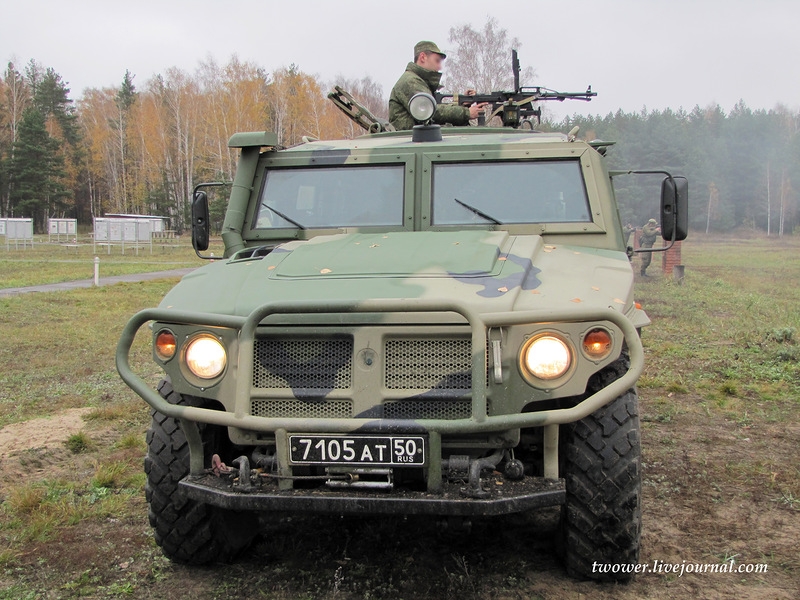
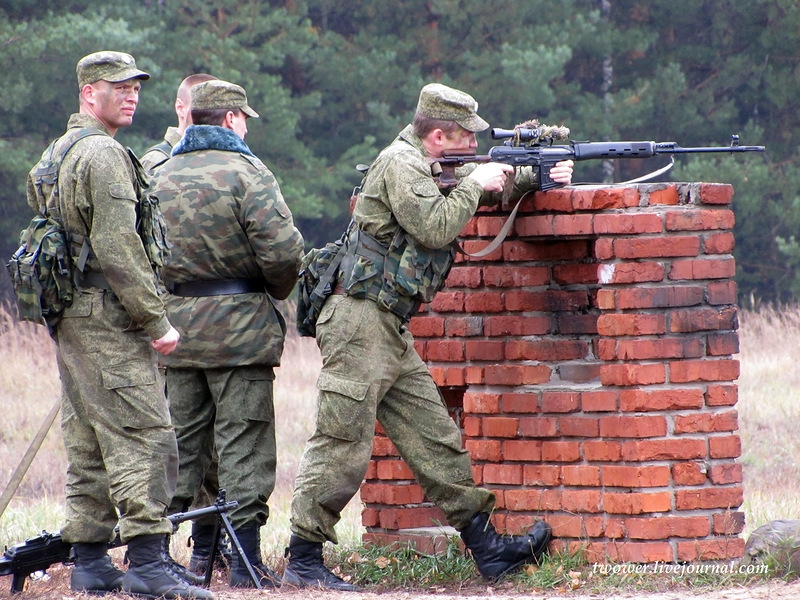
Let’s visit the 16th special forces brigade. Get to know the army life. Have you ever been to the firing ground? We offer you to see how the soldiers of the 16th special forces brigade do their business. Specially for this day, officers arranged a demonstration available to everyone.
The brigade was formed on January 2, 1963 and on April 29, 1969 it was given the Military Banner.
March, 1985 – August, 1988 – a detachment was carrying out missions in Afghanistan.28.09 – 30.11.1992 – 2 deteachments were sent to Tajikistan.
13.01 – 02.05.1995 – special missions in Chechnya.
14.08.1999 – September, 2006 – an independent detachment took part in counter-terrorist operation on the territory of Ciscaucasia. 4 officers were bestowed a title of Hero of Russia.
October, 2001 – May, 2002 – peacekeeping operations in Kosovo.
In 2003 the brigade was dislocated from Chychkovo (Ryazan region) to Tambov.In 2005 and 2006 military delegations from Belarus, Vietnam and Jordan visited the brigade. The brigade also took part in tactical exercises in Jordan.August, 2008 – October, 2009 – peacekeeping operations in Georgia and North Abkhazia.149 soldiers of the brigade were killed in all including 49 in Afghanistan, 50 in the 1st Chechen war and 52 in the 2nd Chechen war.

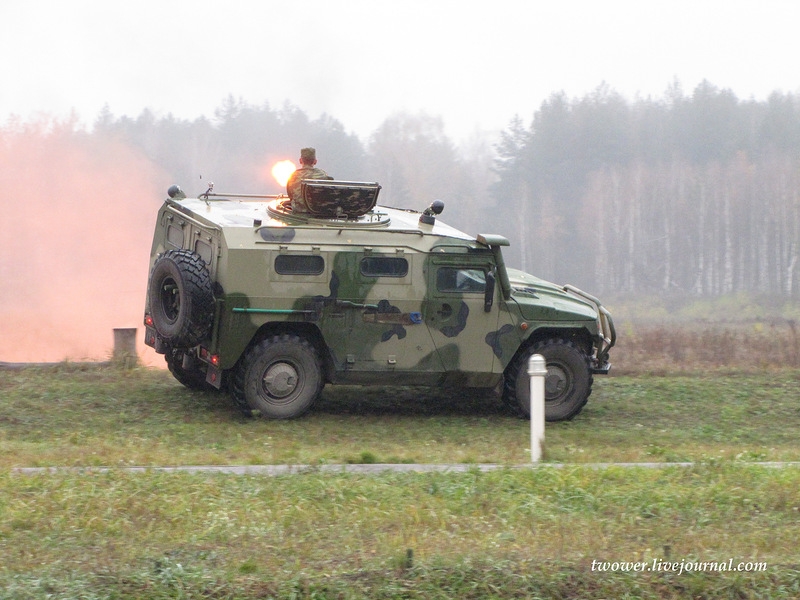
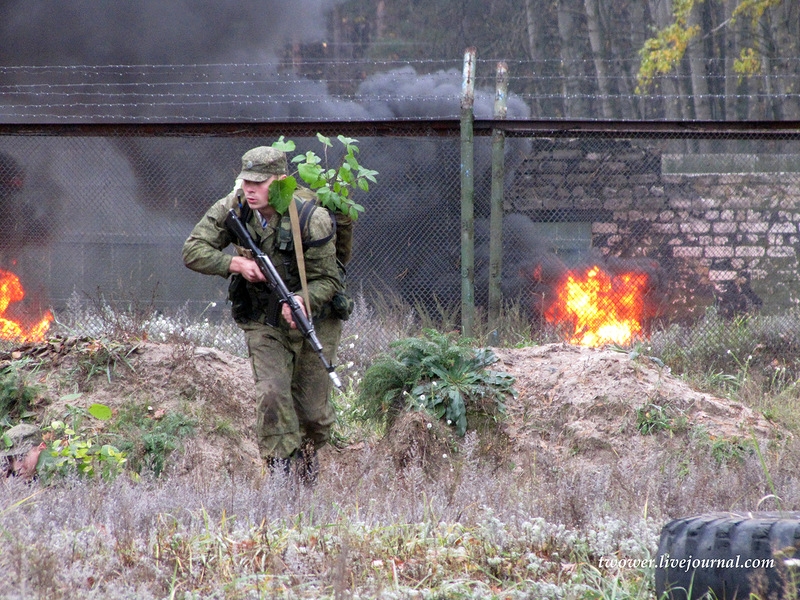
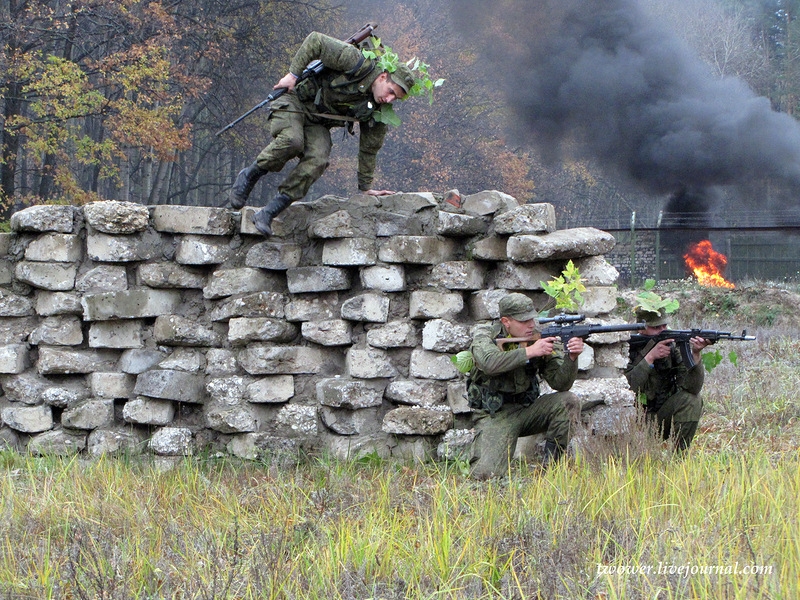
We could observe a demonstration of the battle consisting of several stages – moving-out, detection, destruction of the enemy and falling back under the lee of friendly fire.
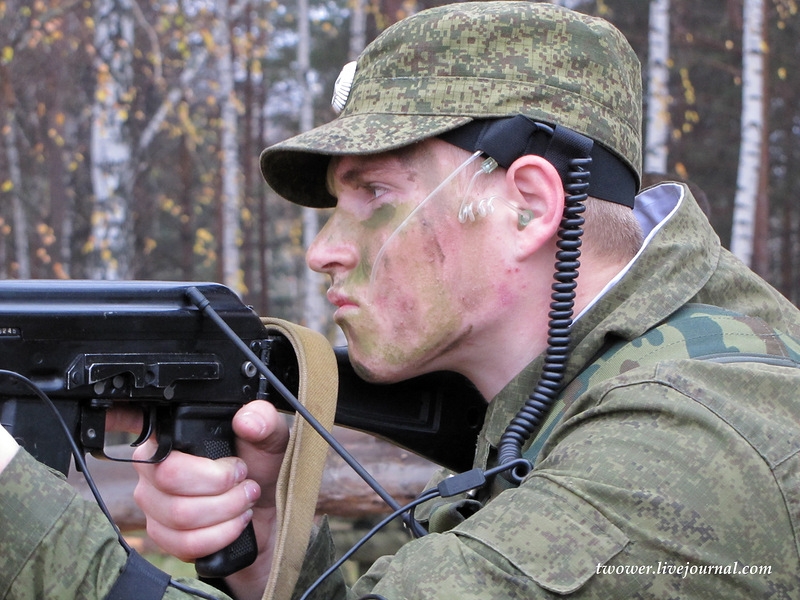
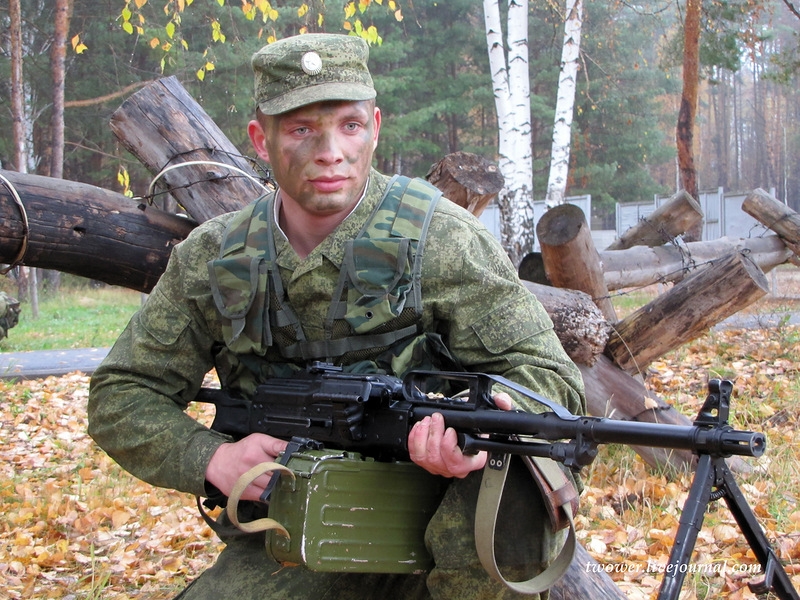
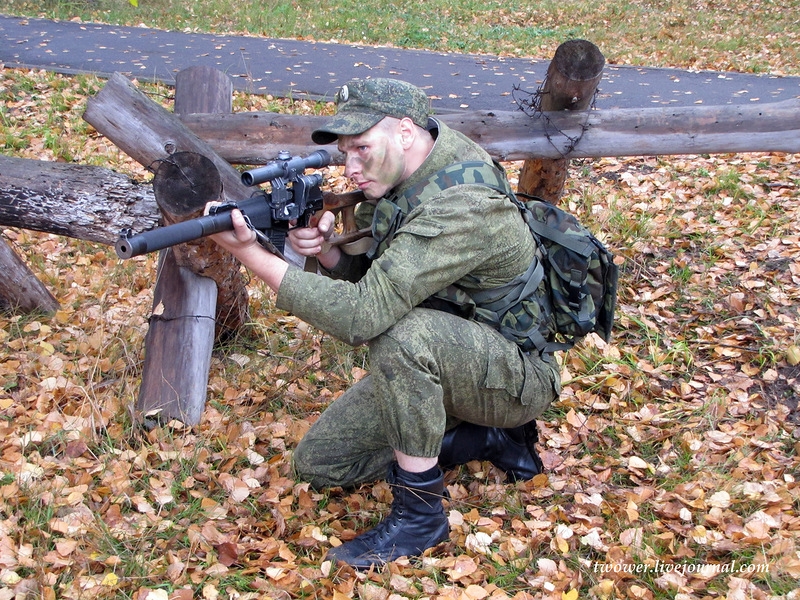
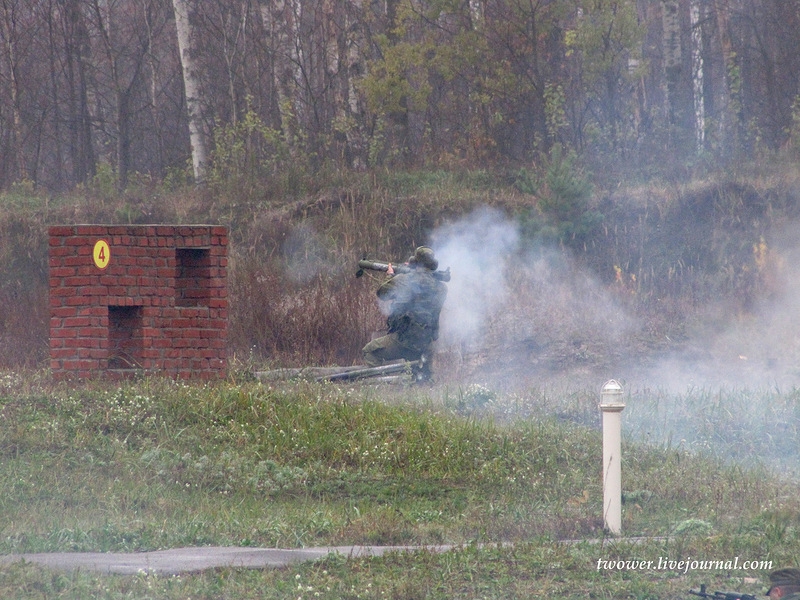
The battle took place at the firing ground Trigulyay. The soldiers used live ammunition so we couldn’t take pictures too close.
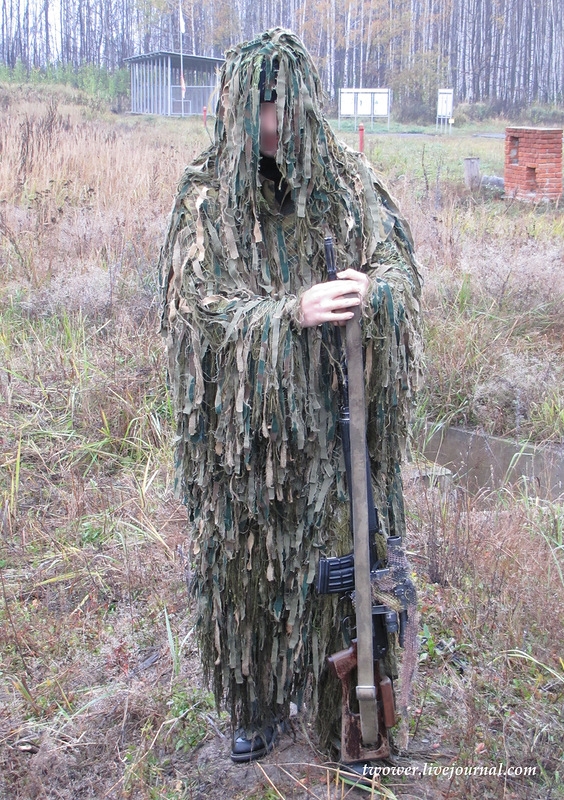
All the snipers hold contracts. They earn 30 000 rubles (1000 USD) per month.
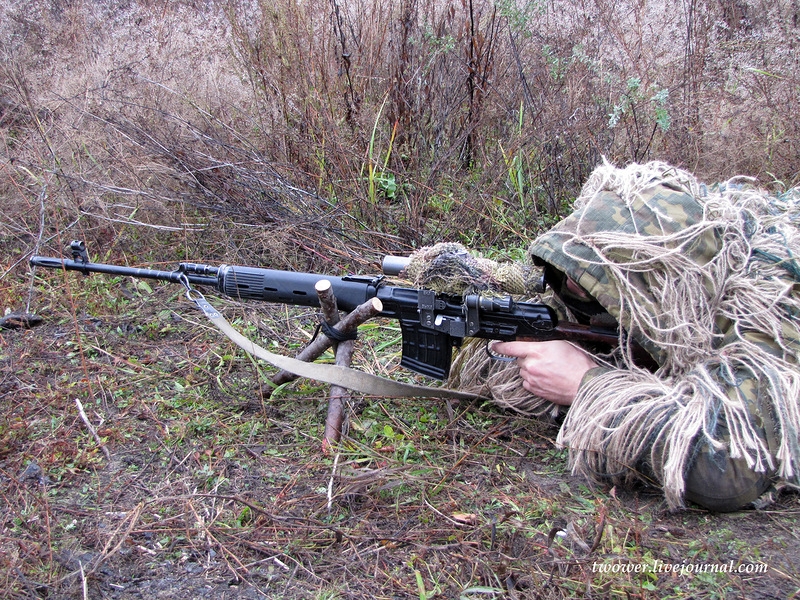
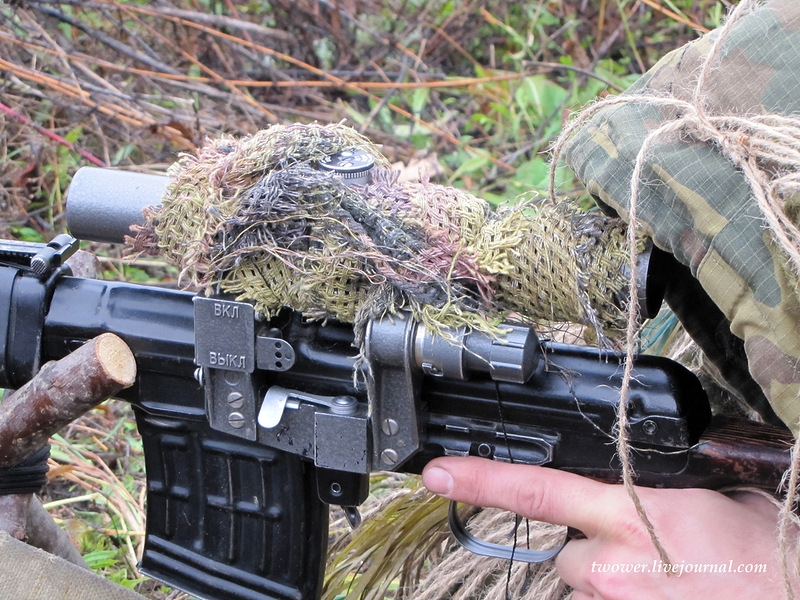
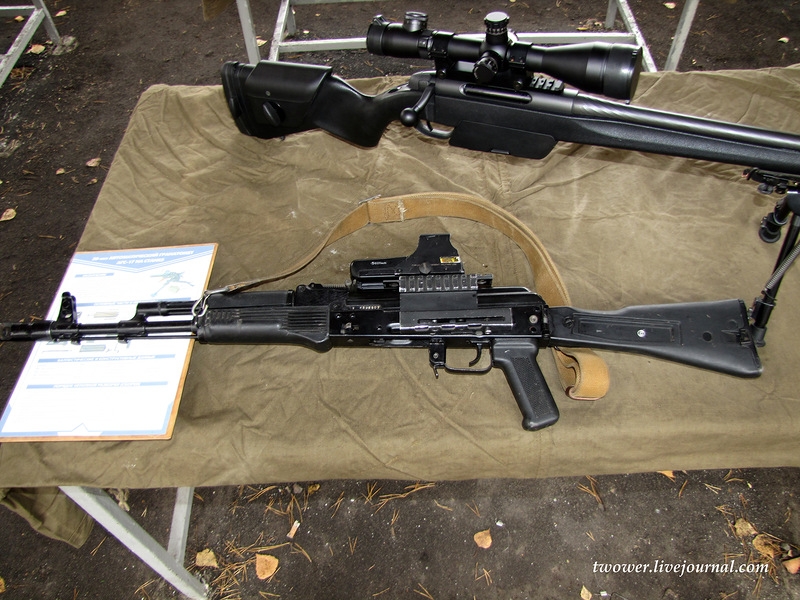
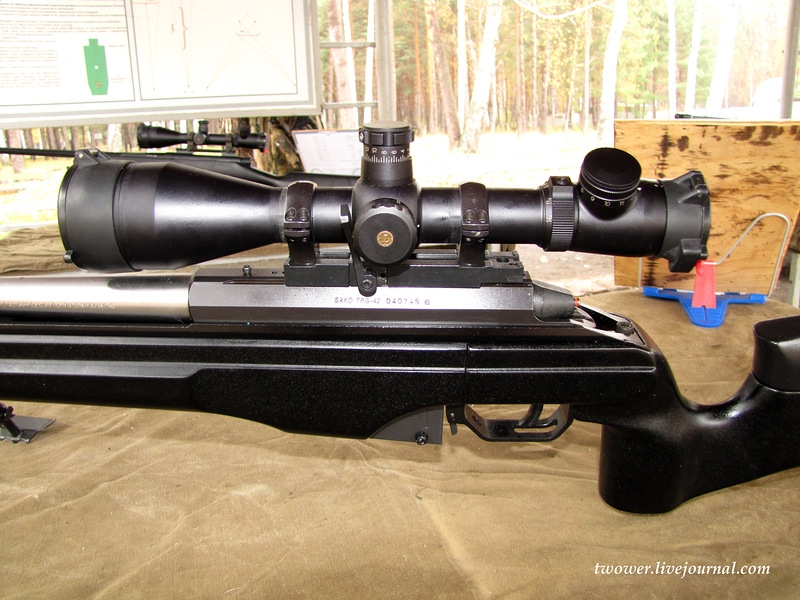
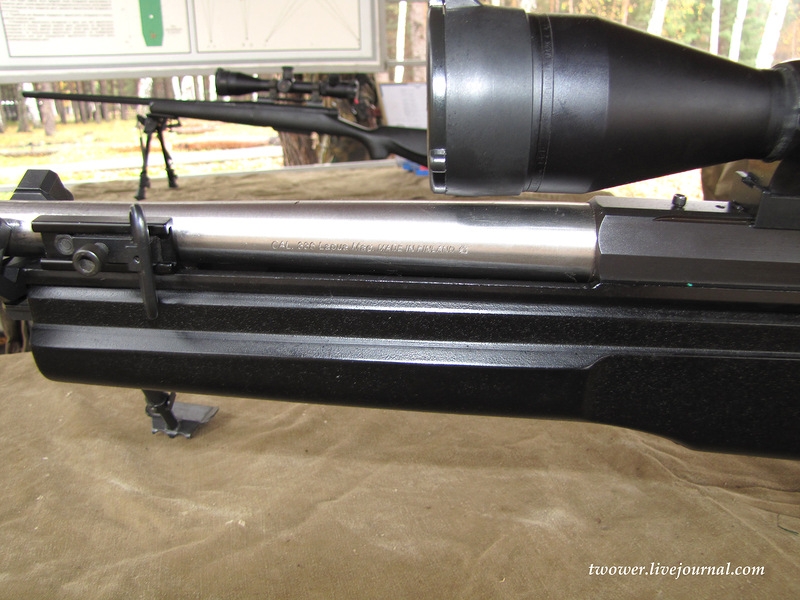
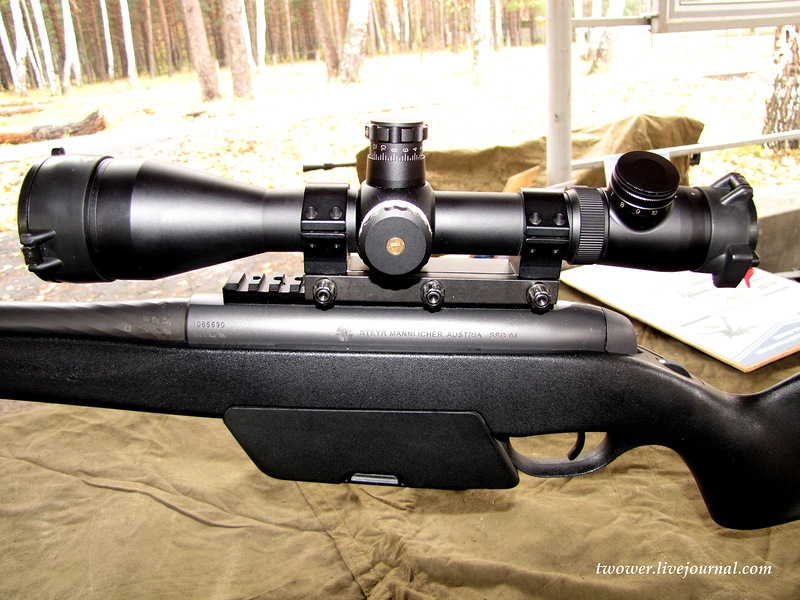
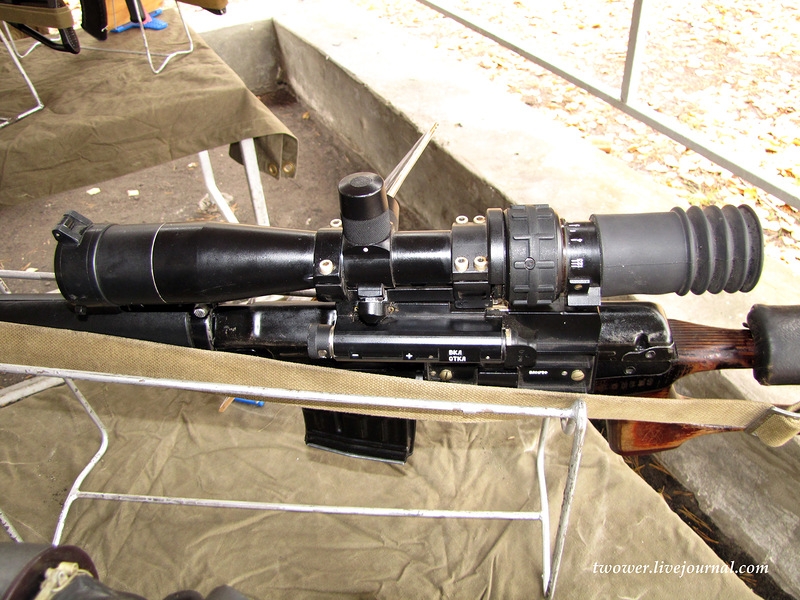
Usually they use Dragunov sniper rifle. Reconnaissance snipers are given VSS Vintorez. And the best of the best snipers use foreign rifles
 |
| Sako TRG-42 |
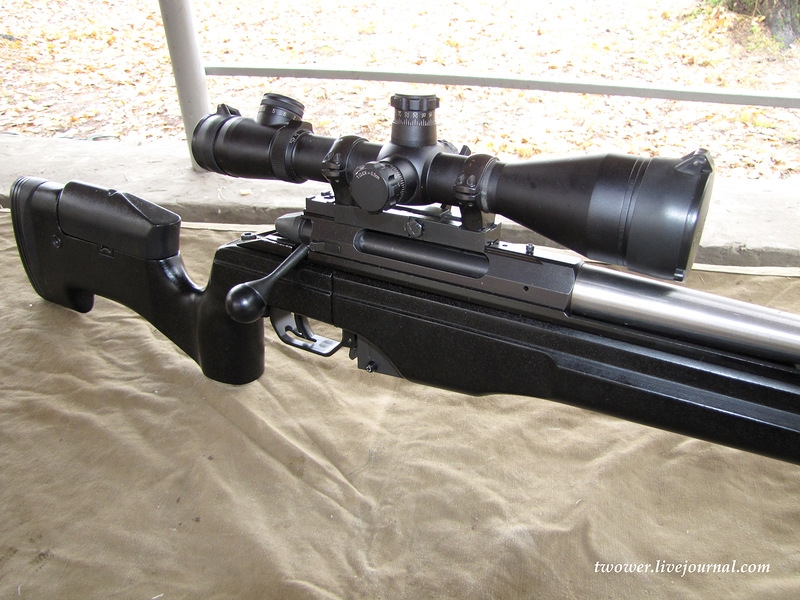
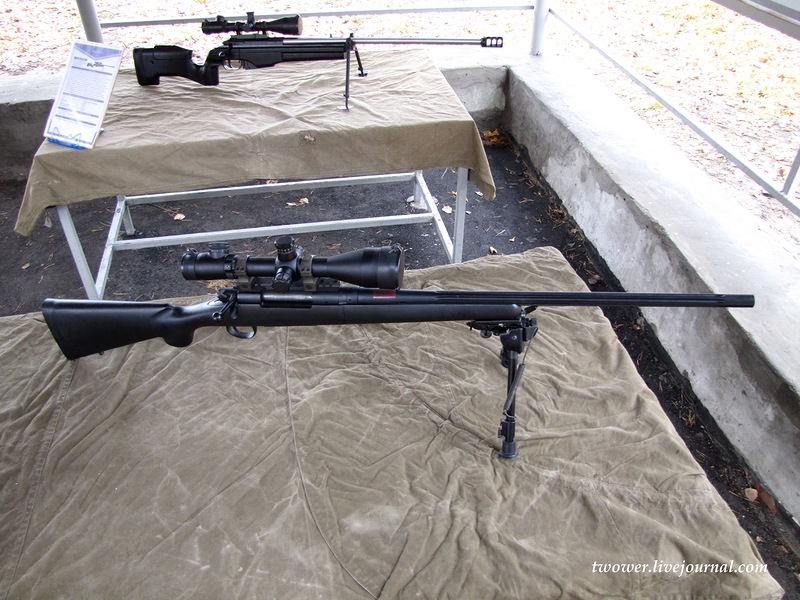 |
| H-S Precision carabine |
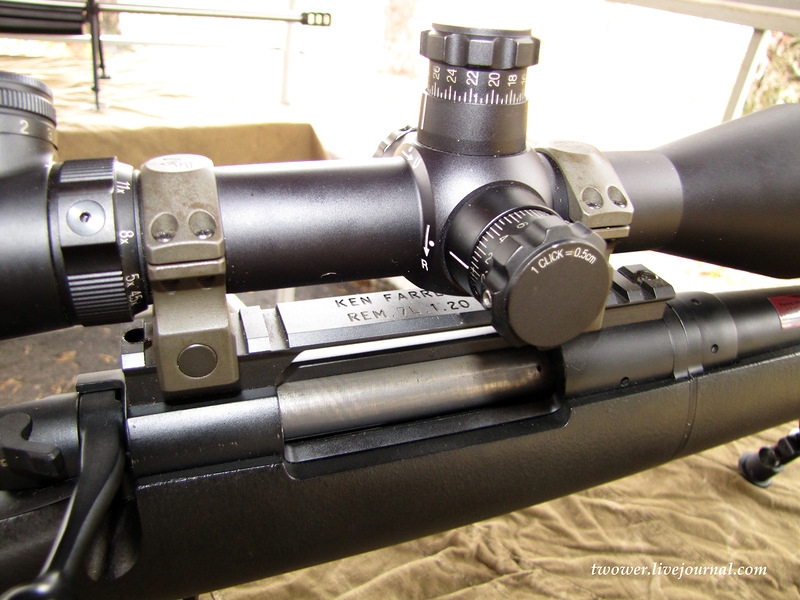

 |
| SSG04 rifle |
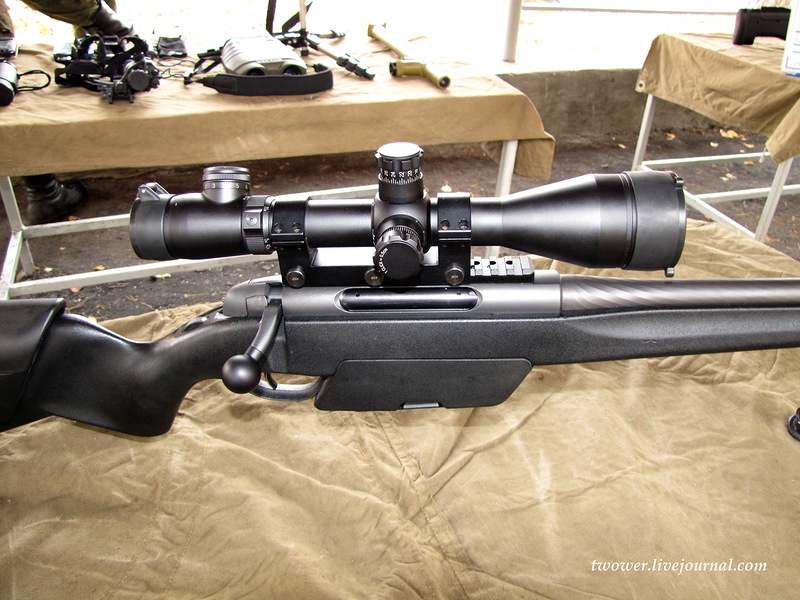
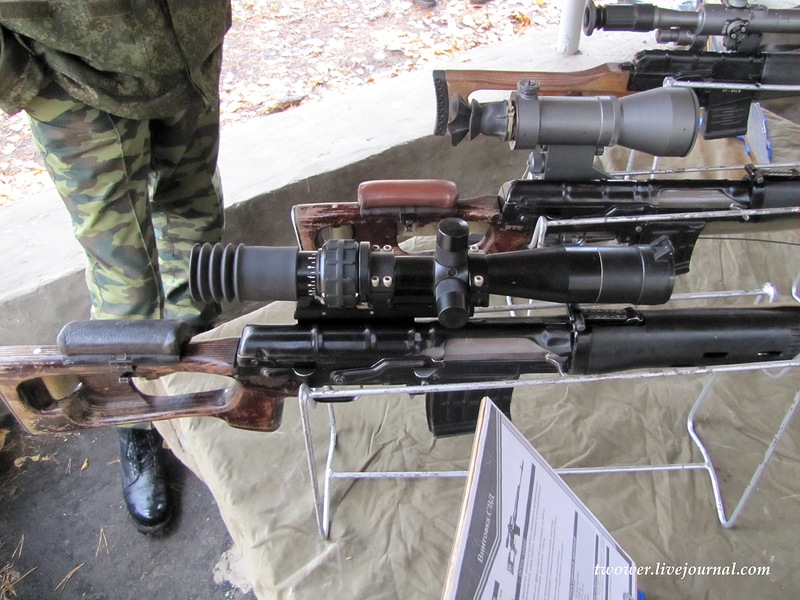 |
| Russian backsight 1P59 “Gimeron” on Dragunov sniper rifle |
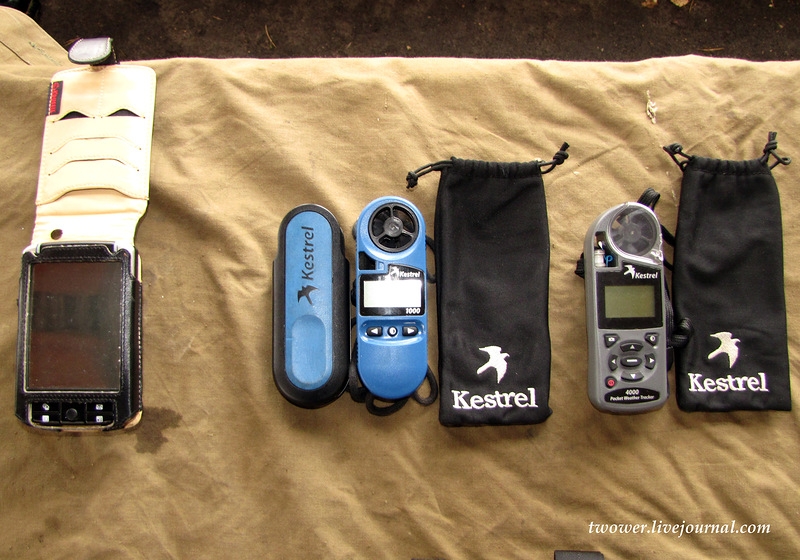 |
| Snipers are given anemometers, pocket weather trackers, night vision equipment, range finders amd other devices. |
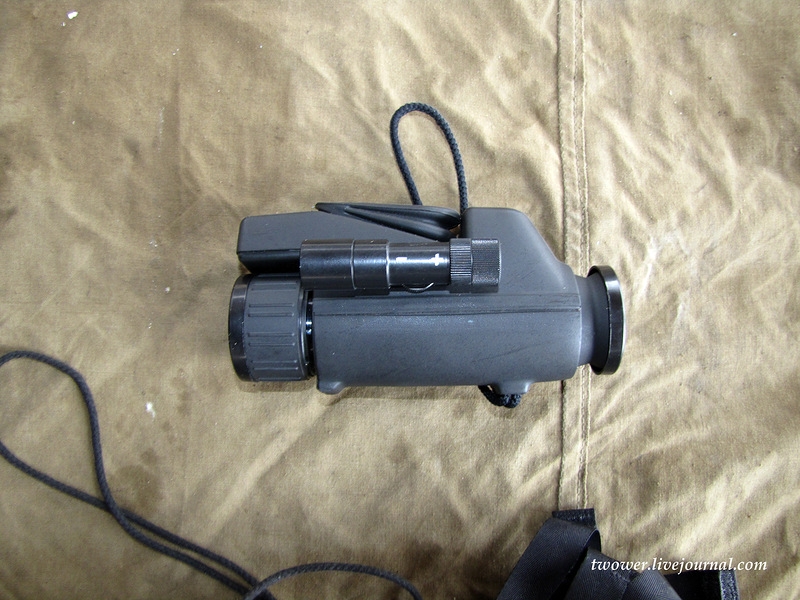 |
| Night vision. |
 |
| PVS-14 |
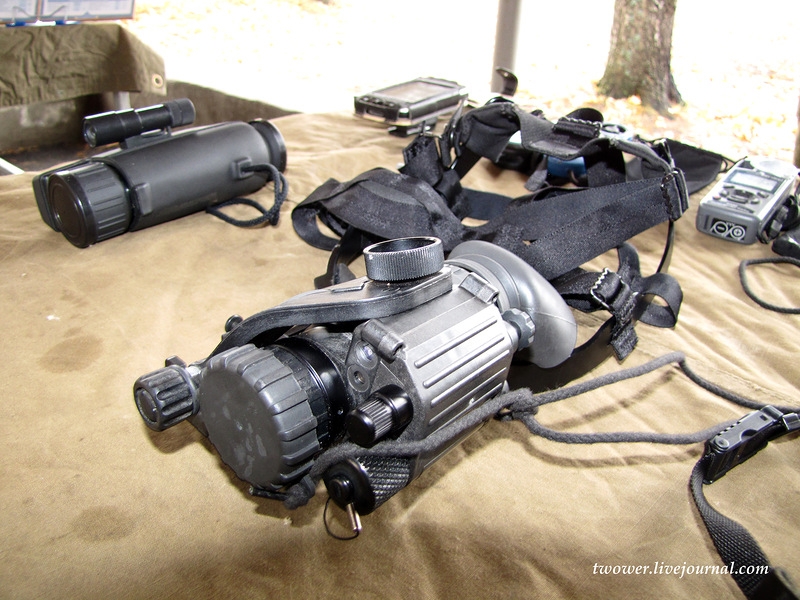
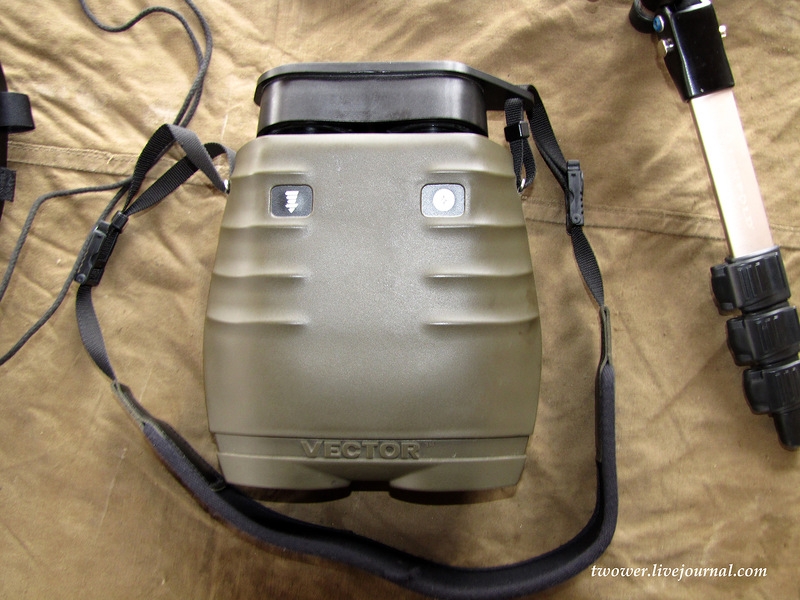 |
| Vector binocular |
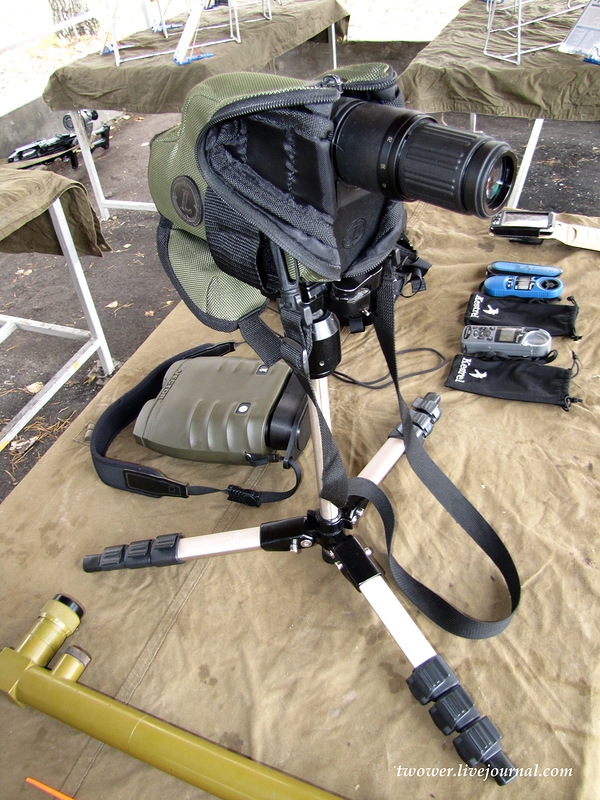 |
| Second sniper use this tool to observe and correct the shooting. |
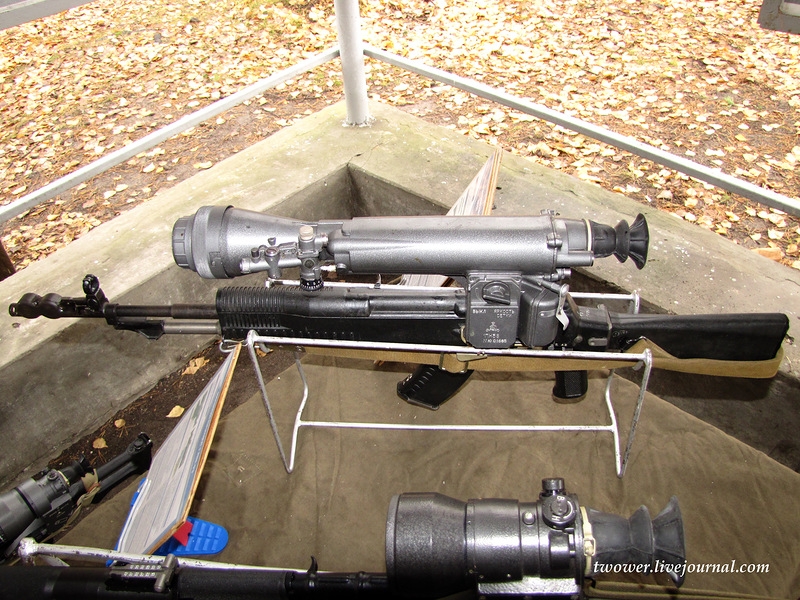 |
| Assault rifle AN-94 “Abakan” |
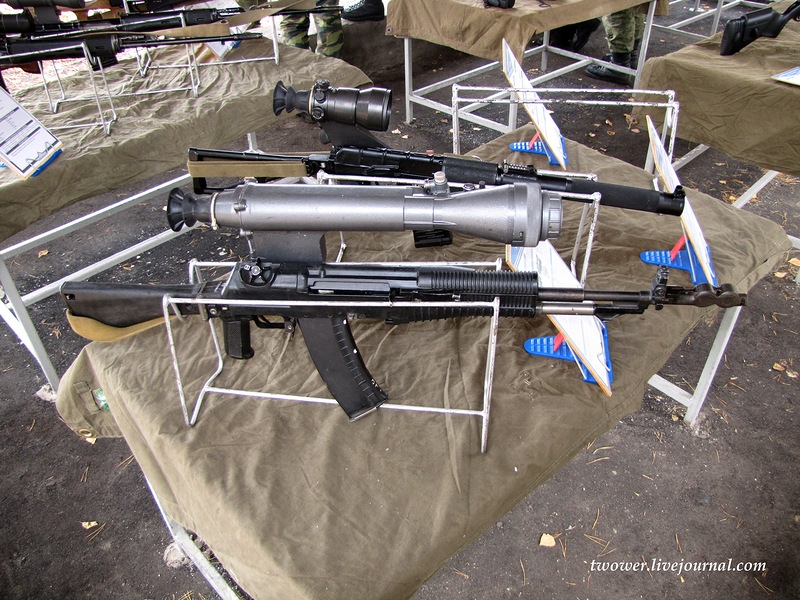 |
| Assault rifle AS “Val” |
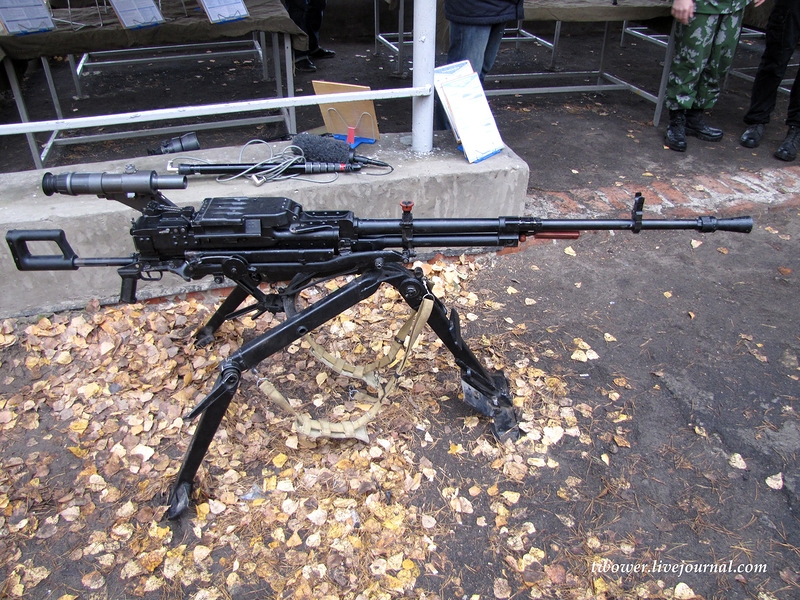 |
| Heavy machine gun NSV “Ytes” |
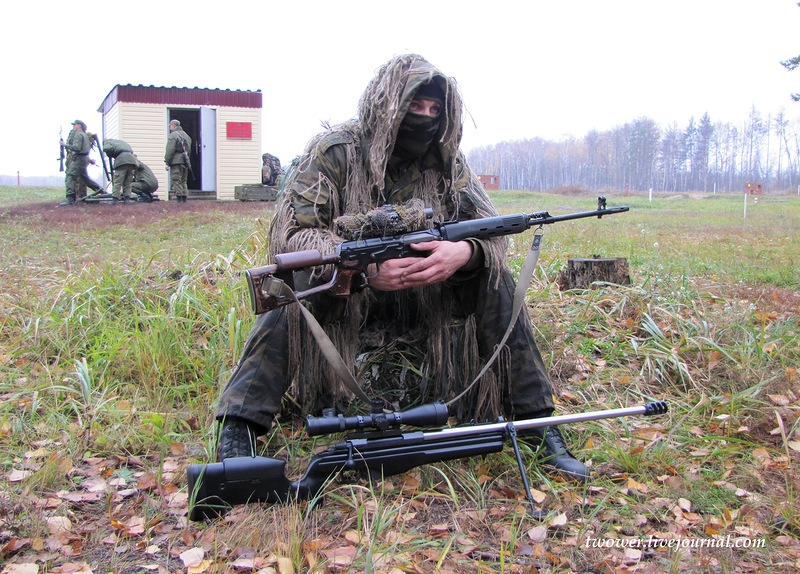 |
| One of the snipers |
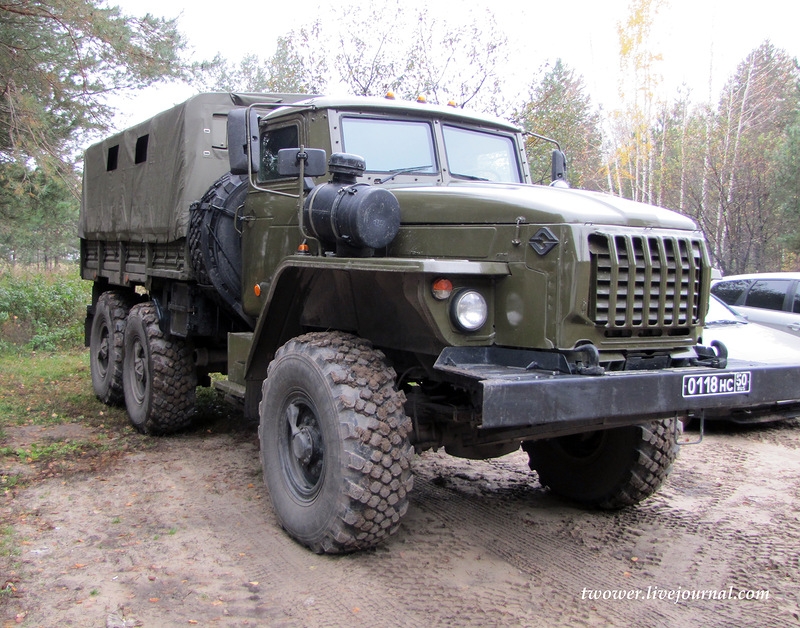 |
| In 2006 old cars were substituted for armoured Urals. |
Source
Εγγραφή σε:
Αναρτήσεις (Atom)