Δευτέρα 10 Σεπτεμβρίου 2012

The Navy SEALS’ Dying Words

The CH-47 was shot down a year ago 


Monday, August 6 marks the first anniversary of the Afghan crash of a U.S. military CH-47 Chinook helicopter that killed 30 Americans, including 17 Navy SEALS. It was the worst single loss-of-life day for the U.S. in the war in Afghanistan. It was also the worst in the history of Naval Special Warfare.

Just six weeks before the crash, I spent several days meeting with members of the Navy’s elite SEAL Team SIX, talking to them about the loss of one of their teammates, Adam Brown, who had been killed in action during an especially complex raid on a compound in Afghanistan.

I met with two of them in a crowded bar in a remote Alaskan village. The salmon run had just begun so the place was packed with fishermen, one of whom approached our group with a tray of shot glasses overflowing with whiskey. It was also a place that SEALs would come to before heading for training exercises in the surrounding mountains.

The man offered to buy a round. “I’d be honored if we could have a drink together, to thank you all for your service. And for taking care of business in Pakistan,” he said. Tom Ratzlaff, one of the SEALs I was with, took two shots and handed one to me. “This is for Adam,” he clicked his glass against mine, I nodded, and we threw them back together.

Tom, who was better known as “Rat,” and Chris Campbell shared memories of their teammate, but as they talked about his life and the circumstances surrounding his death, they alluded to the fact that they were keenly aware death might be just around the corner, quite literally, for them too. They were about to be redeployed, and with the loss of Adam weighing heavily on their minds, there was some urgency to have a chance to talk and honor their brother-in-arms.

Kevin Houston, one of the SEALs I met with in Virginia Beach the following week acknowledged, “I could end up getting killed on my next mission I go on, but until that happens, for me, business will continue to be conducted.”

One of things I was most interested in understanding from these men was how they managed moving so fluidly between their family lives and their work as highly-trained warriors. Frequently, they were deployed, came home, and then were suddenly redeployed.

In some cases they developed rituals. Tom shared that whenever he boarded a helicopter for a mission, he said the Lord’s Prayer silently, once he got seated, and then prayed for protection. “I don’t ask for protection myself because that’s in his hands. I ask him to look after my wife and kids. Then I ask him to protect all my buddies and forgive them of all their sins and me of my sins. Then I move straight into thinking about what I’m about to do-the target, the map study, making sure I know which way’s north so I can call out things correctly on the target.”

During my interview with Heath Robinson, another teammate of Adam Brown’s, I asked “How do you do it?” referring to how they transition from lethal missions—shooting and killing people—and then coming back home, sometimes just hours later. Heath answered using his friend’s horses as an analogy. “His wife and daughter have horses,” said Heath. “Nothing makes [them] happier. Well, horses are dirty animals, every weekend he puts on his waders, goes in the barn, and shovels the manure…the dirty hay…their piss. It’s not a good job, it’s miserable, but somebody has to shovel the shit so the family can enjoy what they have.”

Kelley Brown, Adam’s wife, recalled the one time she saw “that side” of her husband. He had just returned home and was relaxing in a bubble bath when a very unlucky burglar attempted to break into their house. Adam, naked but covered in bubbles, flew out of the tub and the look in his eyes was someone she did not recognize. Moments later, the intruder bolted in fear and Adam returned to being her loving husband and the adoring father of their two young children.

The SEALs were also circumspect about death in a way that only those confronted with it regularly can be.

“I either want to die in combat, doing my job right now, or live till I’m 98 years old and see my great, great grand kids,” one of them told me. “I don’t want anything in between. None of us do. A warrior’s death, you can’t get any higher than that. It’s horrible for the family, they don’t want to hear that, but for us, the guys at our command, we’re okay with it. That is our duty, the highest calling. And if that happens to you, you hope you are in the right frame of mind that you are okay with it. I have seen a lot of people go, not well. Had they been able to do another take on it, they would probably want it to go better. I remember everything else about Adam also, but I will always remember the end. You know, your first impression lasts a relationship, and your last impression is with you forever. Adam died well.”

Six weeks after my last interview, I was returning to civilization from my version of being off the grid: camping with my family. My own happy grubby kids were in the back seat of our car when my cell phone indicated I had voicemail.

I called in and listened to one message after another and I learned that all seven of the men I had interviewed — John, Kevin, Brian, Heath, Matt, Tom, and Chris — had been killed in action the day before.

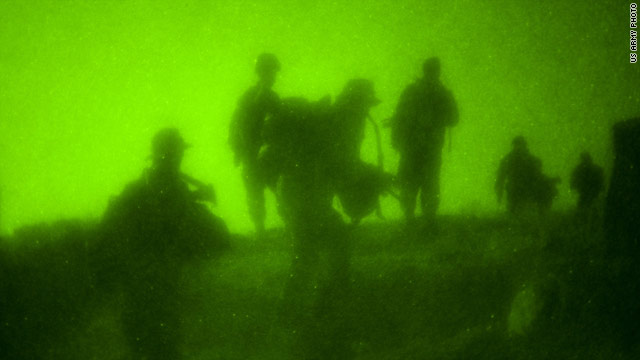
The team had been on a mission in the Wardak Province of Afghanistan, part of an operation intended to capture or kill leaders from an insurgent cell that was holed up in the region. The Chinook carrying them, along with 23 other Americans, and eight Afghan troops, had crashed and exploded after a single rocket propelled grenade struck its aft rotor blade.

Questions surrounded the crash: Why were so many from our most elite military unit on one helo? The most credible view is that it was a lucky shot, but some speculated that it might have somehow been retaliation at the same unit that had only a couple months earlier taken out Bin Laden.

As of today, some family members remain unsatisfied with the investigation. A few days after the crash, I attended Kevin Houston’s funeral, then began transcribing the interviews, haunted as I listened to their voices and read their reflections on life and on death.

As they had talked about Adam Brown, they had unknowingly defined themselves: humble, selfless, and fearless.

With the one-year anniversary of that tragedy upon us, I think of them, and their families, often.

My mind wanders to the inside of that helicopter, envisioning their final moments. It’s a dark place filled with questions — mainly the questions I didn’t ask when I interviewed each of them just weeks before they were killed — but the one thing I know for certain is that they died honorably: serving their country, doing what they believed in.

I have no doubt that they died well.


Eric Blehm is the author of FEARLESS: The Undaunted Courage and Ultimate Sacrifice of SEAL Team SIX Operator Adam Brown, which is dedicated to the memory of the men who were killed on August 6, 2011. See www.fearlessnavyseal.com

Παρασκευή 17 Αυγούστου 2012

The Makin Island Raid

Makin Island as seen from the periscope of USS Nautilus during the raid of August 17-18, 1942.
The Makin Island Raid (occurred on 17–18 August 1942) was an attack by the United States Marine Corps on Japanese military forces on Makin Island (now known as Butaritari Island) in the Pacific Ocean. The aim was to destroy Japanese installations, take prisoners, gain intelligence on the Gilbert Islands area, and divert Japanese attention and reinforcements from the Allied landings on Guadalcanal and Tulagi.

The raid was among the first American offensive ground combat operations of World War II. The force was drawn from the 2nd Raider Battalion and comprised a small battalion command group and two of the Battalion's six rifle companies. Because of space limitations aboard ship, each company embarked without one of its rifle sections. Battalion headquarters, A Company and 18 men from B Company—totaling 121 troops—were embarked aboard the submarine Argonaut and the remainder of B Company—totaling 90 men—aboard Nautilus. The raiding force was designated Task Group 7.15 (TG 7.15).

The Makin Atoll garrison consisted of the Japanese seaplane base led by Sgt. Major Kanemitsu with 73 naval air force personnel with light weapons.
 
Execution of the raid 
 
The Marines were launched in LCRLrubber boats powered by small, 6 hp(4.5 kW) outboard motors shortly after 00:00 (midnight) on 17 August. At 05:13, Companies A and B of the 2nd Raider Battalion—commanded by Lt. Col. Evans Carlson—successfully landed on Butaritari. The landing had been very difficult due to rough seas, high surf, and the failure of many of the outboard motors. Lt. Col. Carlson decided to land all his men on one beach, rather than two beaches as originally planned. At 05:15, Lt. Oscar Peatross and a 12-man squad landed on Butaritari. In the confusion of the landing, they did not get word of Carlson's decision to change plans and land all the Raiders on one beach. Thus, Peatross and his men landed where they originally planned. It turned out to be a fortunate error. Undaunted by the lack of support, Peatross led his men inland.

At 07:00, with Company A leading, the Raiders advanced from the beach across the island to its north shore before attacking southwestward. Strong resistance from Japanese snipers and machine guns stalled the advance and inflicted casualties. The Japanese then launched two banzai charges that were wiped out by the Raiders, thus killing most of the Japanese on the island. At 09:00, Lt. Peatross and his 12 men found themselves behind the Japanese who were fighting the rest of the Raiders to the east. Peatross's unit killed eight Japanese and the garrison commander Sgt. Major Kanemitsu, knocked out a machinegun and destroyed the enemy radios; but suffered three dead and two wounded. Failing to contact Carlson, they withdrew to the subs at dusk as planned.

At 13:30, 12 Japanese planes—including two flying boats—arrived over Butaritari. The flying boats—carrying reinforcements for the Japanese garrison—attempted to land in the lagoon, but were met with machinegun, rifle and Boys anti-tank rifle fire from the Raiders. One plane crashed; the other burst into flames. The remaining planes bombed and strafed but inflicted no U.S. casualties.


Σάββατο 11 Αυγούστου 2012

The History of the 10th Special Forces Group


YouTube user MH6M posted a video explaining the long and prestigious history of the 10th Special Forces Group (Airborne). Oh, you’ve never heard of them? They’re only the first ever special forces group in the US Army. No big deal. 

The origin of the unit can be traced back to the Lodge-Philbin Act of 1950, which allowed the US military to recruit foreign nationals. Half of the members of the 10SFG would be American, and the other half would be anti-communist foreign nationals. In theory, this diversity would give the group an edge if they ever needed to conduct partisan warfare behind Soviet lines. 

Luckily, the Cold War remained cold, but the 10SFG persisted as the US military’s most elite group of soldiers. They continued training both at home and abroad, exchanging unconventional combat tactics with allies such as the UK, Germany, France, Greece, Italy, Spain, and Norway. 

In the ‘60s, they saw action as they evacuated civilians from the newly-independent Congo, safely moving 239 civilians without a single casualty in just nine days. From there, individual soldiers worked alongside other special forces groups in the Vietnam War.

Budget cuts hit the military after the Vietnam War ended, but that didn’t slow down the 10SFG one bit. They continued to train abroad with NATO allies, and they deployed 17 mobile training teams to support the Lebanese Army. They’re also credited by General John Galvin as saving half a million Kurdish people from death at the hands of Saddam Hussein. 

In 1995, members of the 10SFG were among the first US soldiers to cross the border into Bosnia. Shortly after that, they provided reconnaissance and completed search-and-rescue missions for seven years in Kosovo. As you might expect, they also has a powerful presence in Iraq -- they were the first to enter Iraq prior to the invasion. Under the exceptional leadership of Col. Charles Cleveland, they executed Operation Viking Hammer, overcoming a lack of surveillance and a shortage of vehicles to accomplish the mission without a single loss of us service member. 

Are you impressed by their extensive resumé, yet? That’s barely the half of it. Watch the video for a complete run-down of this incredible special forces unit. The motto of the 10th Special Forces Group (Airborne) is simply, “The Best.” Yeah, we’d have to agree.


Παρασκευή 10 Αυγούστου 2012

Special Operations forces risk being overused, misused, former chief says


The use of military Special Operations Forces has been a proven success in Iraq, Afghanistan and - with last year's raid on Osama bin Laden's compound - in Pakistan, but that success has some people concerned. Will the forces become the tool of choice for a president?

The former head of the U.S. Special Operations Command told the Aspen Security Forum Thursday he fears there could be a misuse of the highly trained specialists.

"It's a real danger," retired Adm. Eric Olson said. "They come to be thought of as a utility infielder, sometimes a utility infielder with guns, and they may be asked to solve problems that are not necessarily special operations problems."

Olson cited cases of Special Operations Forces being asked to provide security for individuals overseas.

The high demand has strained the elite forces. Last year, Olson warned the units were "beginning to show some fraying around the edges."

With the opposition gaining some ground in Syria in its battle to overthrow the Assad regime, some members of Congress are pressing the Obama administration to do more to help the insurgents, who are still not united or well-organized.

In a quick interview with CNN's Security Clearance on the sidelines of the security forum, Michael Sheehan, the assistant secretary of defense for special operations, said the potential use of Special Operations Forces in Syria is not a focus of his right now.

Sheehan also said there are no U.S. Special Operations Forces in Mali, where internal strife has left the northern part of the country ungoverned and where al Qaeda sympathizers have moved in, a development Sheehan called very troubling.

He said the United States is considering options, but no decisions have been made.

Special Operations Forces are at work around the world, Olson's successor, Adm. William McRaven, told CNN's Wolf Blitzer on Wednesday.


McRaven said Special Operations Forces are in 79 countries, with the largest contingent in Afghanistan. Sixty-six thousand people are part of Special Operations Command, half of them active forces. Approximately 10,000 to 12,000 are deployed at any given time, with 7,000 currently in Afghanistan and more than 3,000 elsewhere, he said.

Sheehan said the forces can operate anywhere and the numbers can range from just one or two in a country to dozens or several hundreds. The goal is to help the host nations handle their own security operations.

Πέμπτη 9 Αυγούστου 2012

Stabilizing the wild southwest of Afghanistan

A Marine assigned to the 1st Marine Special Operations Battalion from Camp Pendleton works with the local Afghan Local Police in Puzeh.


Marine special operations forces realized the security situation had changed dramatically in their stretch of the upper Sangin river valley this summer when village boys started playing policeman instead of Taliban insurgent.

Matt, leader of the team from Camp Pendleton’s 1st Marine Special Operations Battalion now stationed in Puzeh, compared it to the old days of the American West.

Back then, “it wasn’t cool to be a sheriff. It was cool to be a bank robber until Wyatt Earp came along and started making a name for himself and for lawmen. That’s kind of what we saw here,” said the team leader, who couldn’t be fully identified because of the sensitive nature of his mission. “You see kids running around now trying to play ALP (Afghan Local Police). So it’s catching on.”

Puzeh flanks a dirt road cutting through desert hills in what might be described as the wild southwest of Afghanistan. The district it’s in, Sangin, has been among the bloodiest of the war for U.S. and British forces. Yet Puzeh is the successful poster child, at the moment at least, for a unique, bottom-up approach to stabilizing the hinterlands that U.S. military commanders describe as probably their most important endeavor.

At its heart is recruitment of Afghan Local Police — villagers armed and paid to protect their hometowns — but the overarching “Village Stability Operations” spearheaded by special operations forces throughout Afghanistan have broader ambitions.

After recruiting the sons and brothers of tribal leaders to serve as local police, the special operators also aim to strengthen governance and economic development by linking them to regular police forces and local councils planning for community needs like roads or wells.

Amid the special operations forces’ more well-known missions — such as raids like the one that killed Osama bin Laden and mentoring of national security forces — the elite troops started opening “platforms” for village stability operations throughout Afghanistan about two years ago.

Lt. Col. Michael Brooks, a Camp Pendleton Marine commander in charge of Special Operations Task Force-West, said the first time he visited Puzeh early in its development, special operations forces were getting shot at by rocket-propelled grenades. The task force oversees special operators from all branches of the armed services stationed in six provinces of Afghanistan.

Several factors contributed to Puzeh’s newfound calm and the strength of its local police program, including tribal dynamics and geography, but the most important was developing strong relationships with the people, he said.

“If they’re just dealing with you and following your routine and your agenda, when you leave it’s going to revert back to what it was before you got there. But if you establish a relationship and they understand what’s going on and they see the opportunity in front of them, they truly do mobilize,” Brooks said.

The special operations forces do that by living among the Afghans, growing beards like the locals and sometimes even fasting during the day in respect for the Muslim holy month of Ramadan that started in late July.

But no matter how closely they work with the villagers, the program has little chance of success in areas where there is no connection to the central government, Brooks said. For instance, after special operations forces stepped back from one of their sites established in 2010 in Badghis province, dozens of local police surrendered last month to the Taliban.

The joint special operations command has not shied away, however, from village stability operations in the most violent areas of the country. Although the chances of success may be better when they are invited by a community, commanders said, they also have fought their way into areas appearing to be unrelenting insurgent strongholds.

One of their newest sites is in Nahr-e Saraj district — the most violent in all Afghanistan. In late June, about 800 troops, including British and U.S. infantry, tankers, engineers and both American and Afghan special operations forces, moved into the Qala-e Gaz area of the upper Gereshk valley in Nahr-e Saraj to establish a new base for village stability operations and local police. Several Marines were killed during the operation, which included the 1st Battalion, 7th Marine Regiment out of Twentynine Palms.

The idea is to eliminate irreconcilable insurgents, convince the half-hearted that there’s another way and help the Afghan government arm the rest against Taliban attacks and infiltration.

Maj. Gen. David Berger, the commanding general overseeing conventional Marine ground forces in southwestern Afghanistan, said the local police are critical to rehabilitating the country’s most war-torn areas. They are more effective at spotting signs an American might overlook, like the Pakistani sandals on a militant’s feet, he said, and they have more credibility than coalition or even Afghan national forces who usually hail from other areas of the country and don’t speak the same language as the villagers.

“What probably was a tight-woven fabric has been broken apart. Where that fabric has frayed, some of the glue is the local police. Because if the three of us are nominating our sons, we have some skin in the game,” Berger said. He cautioned, however: “It’s not a quick process. People want to wake up tomorrow and have nirvana, but it takes many months.”

New ones are still being established, but many of the existing programs are reaching maturity, commanders said, and are being transferred to Afghan control as the local police are put on the Ministry of the Interior payroll.

Critics deride the local police as militias susceptible to human rights abuses and warlordism of the kind that spawned the Taliban takeover. But Marine commanders say this approach may be the best hope for long-term peace in a country with a weak central government and strong history of tribalism.

About a year and a half after the forces moved into Puzeh, the area has about 120 local police, a functioning community council that interacts with the district, a refurbished school and a mosque under construction. Three civilians were injured by insurgent bombs in the last couple months — historically a low number for the area — and the main road is regularly trafficked and long since cleared of explosives.

Insurgents remain an active threat on the outskirts, as the memorial under construction last month in Puzeh to seven local policemen killed in action attests. But the program helping the village secure itself is virtually on auto pilot now, with U.S. special operations forces remaining on site as a quick reaction force and Afghan troops handling most recruit training to replace ones fired by local elders.

Puzeh is so calm that Matt and his Afghan counterpart, a 27-year-old special forces commander named Qurbaan, don’t wear body armor when they roll in their all-terrain vehicle out the metal gates of their compound to take the pulse and chat with villagers.

Qurbaan stands on the road wearing rubber slippers, bouncing a baby girl on his hip as he grips hands and grins and fobs off pleas for gasoline. “My daughter,” he jokes in English, with perfect political pitch.

The Puzeh local police scored two of their biggest victories this summer. In June they repelled an attack by upwards of 75 insurgents. Then in mid-July they tracked several Taliban commanders and pinned them against a cliff with gunfire until a coalition air strike finished them off.

One of the insurgents, a 30-something named Zahid easily recognized by the metal brace on his leg, had terrorized the village. After being wounded 11 times, “he had kind of taken on a boogie man persona,” said Ryan, the Marine special operations team chief.

When the Afghan local police paraded his body through town on a donkey, hundreds of people thronged the road. Afghan men approached the gates of the special operations forces compound with tears in their eyes and fired guns in celebration.

“The boogie man was dead,” Ryan said, and it wasn’t the Americans who found him. “It was Afghan Local Police.”


Τετάρτη 8 Αυγούστου 2012

US rifles for Indian special forces


American M-4 assault rifles — used by the US Navy SEALS to eliminate al-Qaida chief Osama Bin Laden — are being inducted into the Indian Army's special forces battalions for use in counter terrorists operations here.

India had recently signed a deal with the US worth several crore rupees for procuring these M-4 carbine rifles for the Army's eight special forces battalions, Army sources revealed. These guns have been used extensively by the US special forces in operations across Iraq andAfghanistan and are now being inducted into the eight battalions of Army's special forces, they said.

The guns were used by the US Navy SEALS to shoot down Osama Bin Laden in Pakistan's Abottabad in Operation Geronimo carried out in May last year.

Sources said the new guns will not be a replacement for the existing inventory of Israeli Tavor-21, Uzi and mini-Uzi rifles but will supplement the armoury. The Tavor-21s were also inducted only a few years ago into the SF battalions which were using the AK-47s till then. The Special Forces have been given responsibility to handle any 26/11 type attacks.

Τρίτη 7 Αυγούστου 2012

This Is The Jeep Israeli Special Forces Would Take To The Negev Desert


"Who Dares Wins," or so goes the motto ofSayeret Matkal, one of the Israel Defense Force's special units. Israeli truck customizer AIL of Nazareth has dared with the Jeep J8-based Storm 3 Type R, and it looks like they may win... a lucrative army contract, that is.

A journo from jeepolog.com took one out for a spin in the searing heat of the Negev Desert this summer, and according to the off-duty, but very salty army guys who drove it with him, Storm 3 Type R is an ass kicker.


A stock Jeep Rubicon is already a pretty capable vehicle, but AIL had to figure out how to make it do something that the Humvees the Israeli army currently uses don't. By stuffing a 194 hp, 2.8-liter four pot turbo diesel between the fenders, they created something light and strong that has all of the offroad prowess of a Hummer without all the noise and with way better handling and maneuverability.

The only problem the old soldiers could see with Storm 3 Type R was it has a lower cargo capacity than the big AM General (although most sourcesI found showed that the HMMWV has a muchlower cargo capacity than what AIL claims the Storm 3 Type R can handle), but they said it would be a good candidate for border patrol, pursuit, and deep strike missions. And that's why the IDF has been testing them all around Israel, a country which, although it's only about the size of New Jersey, has incredibly varied terrain.


Storm 3 Type R's suspension is more or less stock, with an extra leaf stuffed into the shackles over a Trac-Lok Dana 44 front axle and a beefy Trac-Lok Dana 60 rear. Offroad tires are mounted on non-beadlocking steel wheels, but maybe bead locks would be advisable if the truck is deployed on terrorist chasing missions. Tipping the scales at 4,451 pounds, Storm 3 Type R can carry a 2,756-pound payload and tow 7,716 pounds.


Consensus among those who care about such things suggests that the maximum load a 6.2 V8 diesel-equipped Hummer can tow is 4,200 pounds, and that its top interior payload capacity (in certain configurations) is about the same. Plus, the four banger Jeep has a 22.5 gallon fuel tank — the Hummer, which weighs nearly 10,000 pounds empty, can hold only a few more gallons of refined black gold — so it probably has a pretty decent range.

Jeep Custom of Nazareth's creation sure looks good on paper, but we'll let the Israeli government sort that one out.